


Mystery of King Tut’s jars solved? Yale researchers find opium clues
Scientists examining an ancient alabaster vase in the Yale Peabody Museum’s Babylonian Collection detected chemical traces of opiates. The
Scientists examining an ancient alabaster vase in the Yale Peabody Museum’s Babylonian Collection detected chemical traces of opiates. The Yale Ancient Pharmacology Program (YAPP) says this is the strongest evidence so far that opium use was widespread in ancient Egyptian society.
Andrew J. Koh, YAPP’s principal investigator and the study’s lead author, said the results also point to a bigger possibility. Similar ancient Egyptian alabaster vessels (all made of calcite mined from the same quarries in Egypt) including several remarkable examples from the tomb of Pharaoh Tutankhamun could also still carry traces of ancient opiates.
“Our findings combined with prior research indicate that opium use was more than accidental or sporadic in ancient Egyptian cultures and surrounding lands and was, to some degree, a fixture of daily life,” said Koh, a research scientist at the Yale Peabody Museum. “We think it’s possible, if not probable, that alabaster jars found in King Tut’s tomb contained opium as part of an ancient tradition of opiate use that we are only now beginning to understand.”
The study appeared in the Journal of Eastern Mediterranean Archaeology. It was coauthored by Agnete W. Lassen, associate curator of the Yale Babylonian Collection, and Alison M. Crandall, YAPP’s lab manager.
A Vase Linked to Xerxes and Written in Four Ancient Languages
The alabaster vase bears inscriptions in four ancient languages: Akkadian, Elamite, Persian, and Egyptian. The text is dedicated to Xerxes I, who ruled the Achaemenid Empire from 486 to 465 BCE. Centered in Persia, that empire at its peak included Egypt, Mesopotamia, the Levant, Anatolia, and parts of Eastern Arabia and Central Asia.
Another inscription on the vessel is written in Demotic script, a simplified form of ancient Egyptian writing. It states the vase holds about 1,200 millimeters. (It is 22 centimeters tall.) The researchers noted that intact inscribed ancient Egyptian alabaster vessels are extremely rare, likely fewer than 10 in museum collections worldwide.
The team said the origins of these intact vessels are generally uncertain. Even so, the surviving examples appear to span the reigns of Achaemenid emperors Darius, Xerxes, and Artaxerxes, covering 550 to 425 BCE. Yale’s vase has been in the Babylonian Collection since shortly after the university established the collection of about 40,000 ancient artifacts in 1911.
How YAPP Studies Ancient Residues in Museum Vessels
YAPP is based at the Peabody Museum and combines ethnography, science, and technology to investigate everyday life thousands of years ago. The group focuses on organic residues left on or inside ancient containers, which can reveal details about diet and lifestyle. To do this work, the program developed methods designed for residues that deteriorate over time and that can be contaminated, whether the objects come from museum collections or recent excavations.
“Scholars tend to study and admire ancient vessels for their aesthetic qualities, but our program focuses on how they were used and the organic substances they contained, knowledge that reveals a great deal of information about the daily lives of ancient peoples, included what they ate, the medicines they used, and how they spent their leisure time,” Koh said.
Koh’s attention was first drawn to the vase after he noticed dark-brown aromatic material inside it.
Chemical Biomarkers Confirm Opium Compounds
YAPP’s testing found strong evidence of noscapine, hydrocotarnine, morphine, thebaine, and papaverine. These compounds are well-known diagnostic biomarkers for opium.
Researchers said the results align with earlier work that identified opiate residues in Egyptian alabaster vessels and Cypriot base-ring juglets. Those items came from a typical tomb in Sedment, Egypt, south of Cairo, believed to belong to a merchant family. That burial dates to the New Kingdom, when the Egyptian empire lasted from the 16th to the 11th century BCE.
Koh said these two discoveries, separated by more than a millennium and connected to different socio-economic groups, make it plausible that opium could be present in the many alabaster vessels found in Tutankhamun’s tomb in the Valley of the Kings.
Opium Use Beyond Medicine and Into Ritual Life
Koh noted that historical signals of opium use often go beyond healing and into spiritual or ritual contexts across antiquity, from ancient Mesopotamia to Egypt and through the Aegean. During Tutankhamun’s lifetime, for instance, people in Crete were linked to the so-called “poppy goddess” in clearly ritualistic settings. The poppy plant is also referenced in several ancient texts, including the Ebers Papyrus, Hippocrates, Dioscorides’s De Materia Medica, and Galen.
King Tut’s Tomb, Sticky Residues, and an Unfinished Investigation
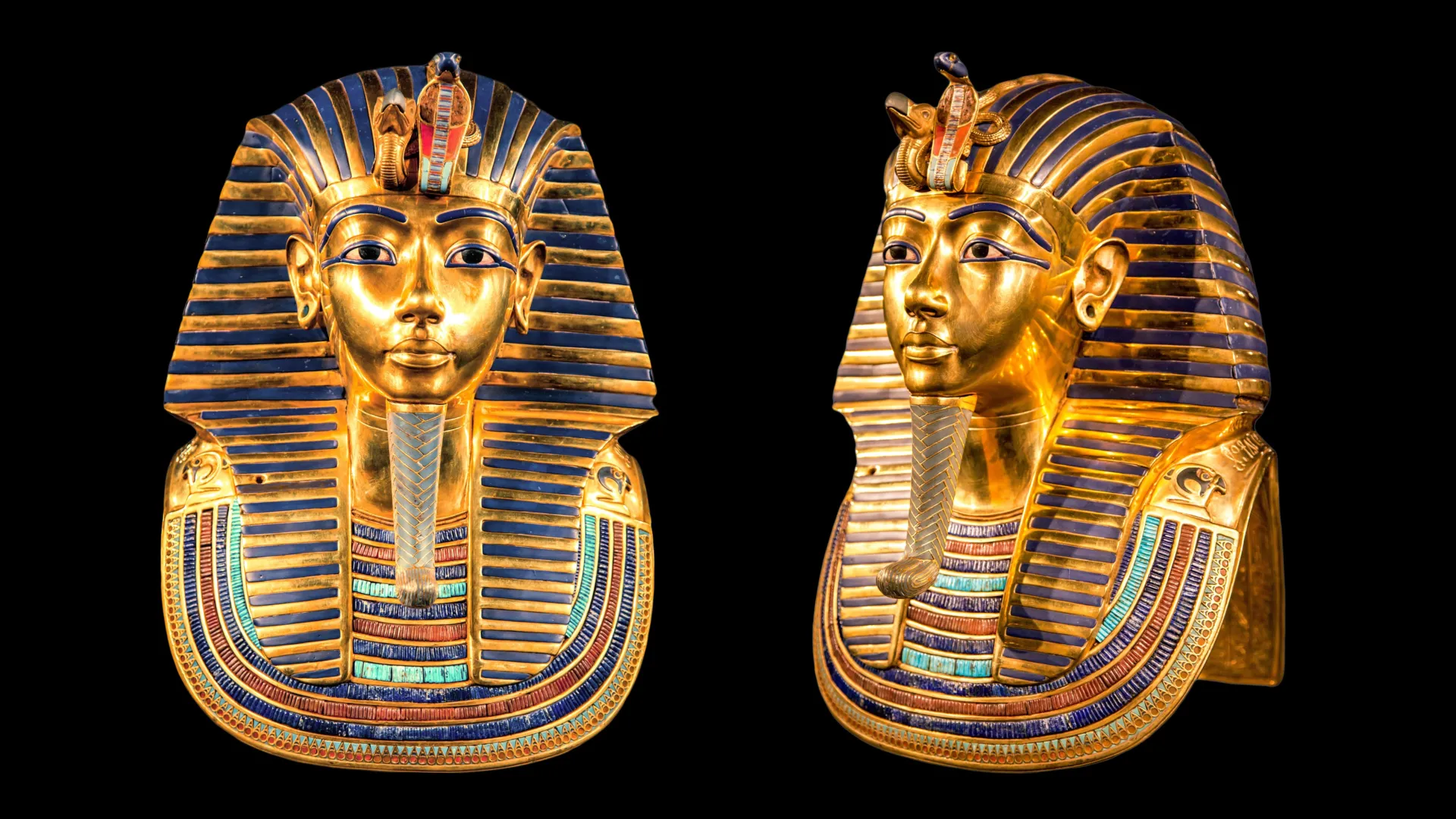
Howard Carter, the Egyptologist and archaeologist, discovered Tutankhamun’s tomb in November 1922. The find included an enormous collection of artifacts, among them many exquisitely preserved Egyptian alabaster vessels that likely represented the finest available during Tutankhamen’s reign, which last from 1,333 to 1,323 BCE.
In 1933, analytical chemist Alfred Lucas, who worked with Carter’s team, carried out a limited chemical study of the vessels. Many contained sticky, dark brown, aromatic organic material. Lucas could not identify the substances at the time, but he concluded most were not unguents or perfumes.
“That Lucas questioned whether any of the vessels contained perfumes or unguents at all and did not identify the remaining vessel contents as primarily aromatic in nature is significant given that the prevailing conventions at the time would have pressured him to do so,” Koh said.
No additional testing of those organic materials has been done since Lucas’ early effort. The vessels (along with most other artifacts from Tutankhamun’s tomb) are now housed at the Grand Egyptian Museum in Giza, Egypt.
Looters Targeted the Contents, Not Just the Containers
The researchers said Carter recorded evidence of an ancient looting episode that focused on what was inside the alabaster vessels. Finger marks inside some jars suggest looters tried to scrape out the contents as completely as possible. Many of the looted vessels held the same kind of dark-brown aromatic material that Lucas concluded was not perfume. A small number of jars were not looted and still contain their original contents.
Koh said whatever was stored in these vessels was considered valuable enough to accompany Tutankhamen into the afterlife, and important enough that grave robbers were willing to risk an attempted theft.
He added that it seems unlikely people would have treated ordinary unguents and perfumes of the period as that valuable.
“We now have found opiate chemical signatures that Egyptian alabaster vessels attached to elite societies in Mesopotamia and embedded in more ordinary cultural circumstances within ancient Egypt,” Koh said. “It’s possible these vessels were easily recognizable cultural markers for opium use in ancient times, just as hookahs today are attached to shisha tobacco consumption. Analyzing the contents of the jars from King Tut’s tomb would further clarify the role of opium in these ancient societies.”