
Mathematicians unified key laws of physics in 2025
The equations that govern fluids can be tricky to handle Vladimir Veljanovski / Alamy In 1900, mathematician David Hilbert
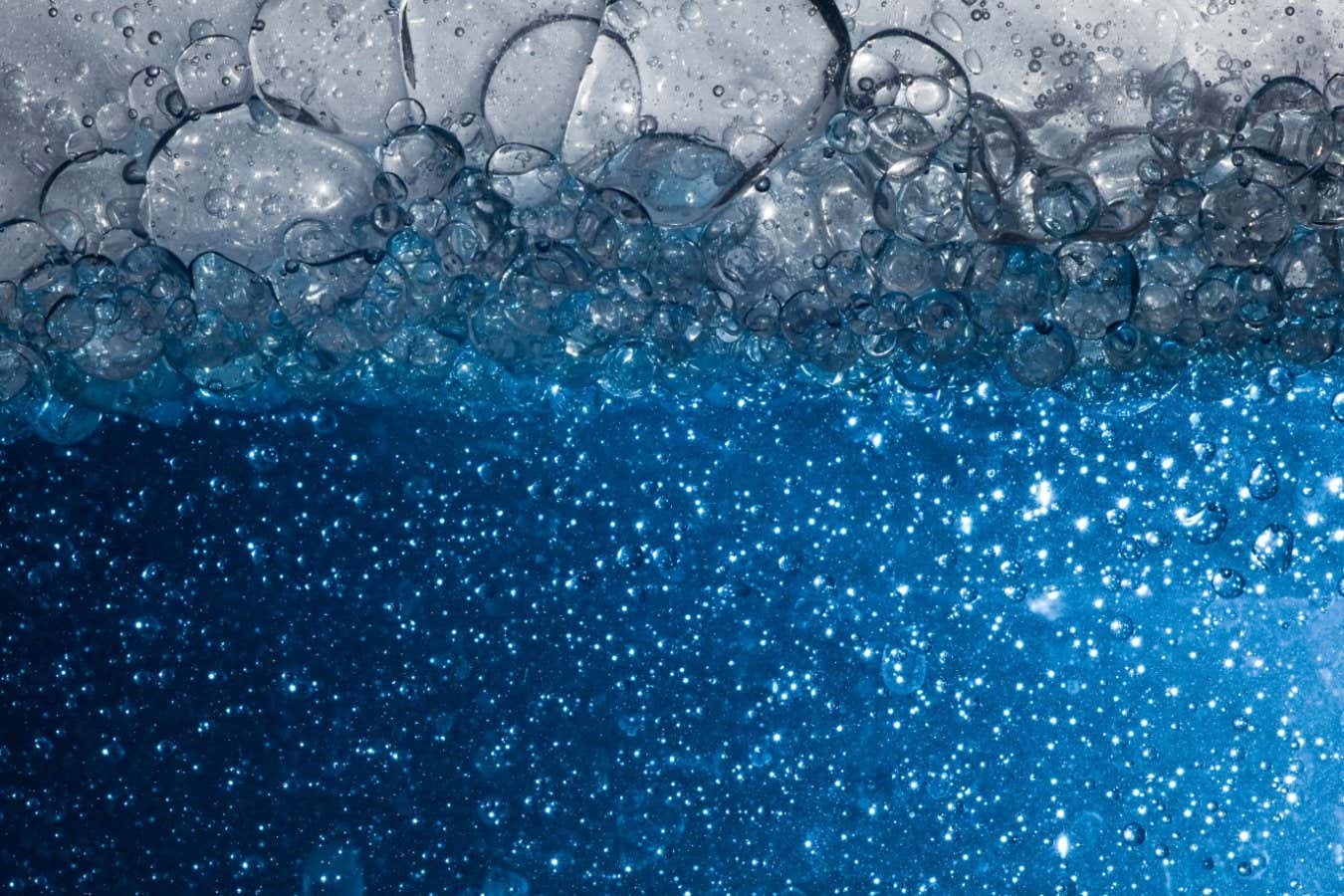
The equations that govern fluids can be tricky to handle
Vladimir Veljanovski / Alamy
In 1900, mathematician David Hilbert presented his colleagues with a list of problems he believed both captured the present state of mathematics and the shape of its future. This year, 125 years later, Zaher Hani at the University of Michigan and his colleagues solved one of Hilbert’s problems – and unified several laws of physics in the process.
Hilbert was a proponent of deriving all laws of physics from mathematical axioms – statements that mathematicians take to be basic truths. The sixth problem on his list was to derive laws of physics that dictate the behaviour of fluids from such axioms.
Until 2025, physicists actually had three distinct ways of describing fluids, depending on their scale. Different rules governed the microscopic scale of single particles, the mesoscopic world populated by collections of particles and the macroscopic realm filled with fully fledged fluids like water flowing in a sink. Researchers had made strides in finding links between them, but the three were never stitched together seamlessly until Hani and his colleagues figured out how.
The researchers’ breakthrough came in part because they worked out how to use a diagram-based technique physicist Richard Feynman developed for the seemingly very different domain of quantum field theory. And this was hard work – their papers from earlier this year mark a high point in a half-decade-long project.
“We heard from a lot of people regarding the result, especially from the leaders in the field who have checked the work very carefully,” says Hani. The work, which was made available as a preprint, is now on track be published in a prestigious mathematics journal, he says.
Beyond being a notable feat of mathematics, the team’s work also stands a chance of advancing our understanding of complex fluid behaviours in the atmosphere and the oceans. Hani says they are now also pursuing the quantum version of the problem where the mathematics of the microscale allows for much odder and richer particle behaviours.
Topics: