
125 million-year-old dinosaur with never before seen hollow spikes discovered in China
[ad_1] For more than two centuries, paleontologists have studied a group of plant eating dinosaurs known as Iguanodontia. These
[ad_1]
For more than two centuries, paleontologists have studied a group of plant eating dinosaurs known as Iguanodontia. These dinosaurs were first identified in the early 1800s and are famous for their beaked mouths and strong hind legs. Now, that long established branch of the dinosaur family tree has gained a surprising new member. Researchers have identified a previously unknown species that carried a type of body covering never before documented in any dinosaur.
Scientists from the CNRS and collaborating institutions made the discovery in China, where they uncovered the fossilized remains of a remarkably well preserved young iguanodontian. What makes this specimen extraordinary is not just its skeleton, but its preserved skin. Soft tissues rarely survive for millions of years, yet in this case, even microscopic details endured.
Fossilized Skin and 125 Million Year Old Cells
Using advanced imaging techniques such as X ray scanning and high resolution histological analysis, which involves examining ultra thin slices of tissue under a microscope, the team was able to study the fossil at the cellular level. They found that individual skin cells had been preserved for approximately 125 million years. This level of detail allowed scientists to reconstruct the structure of unusual hollow spikes embedded in the skin.
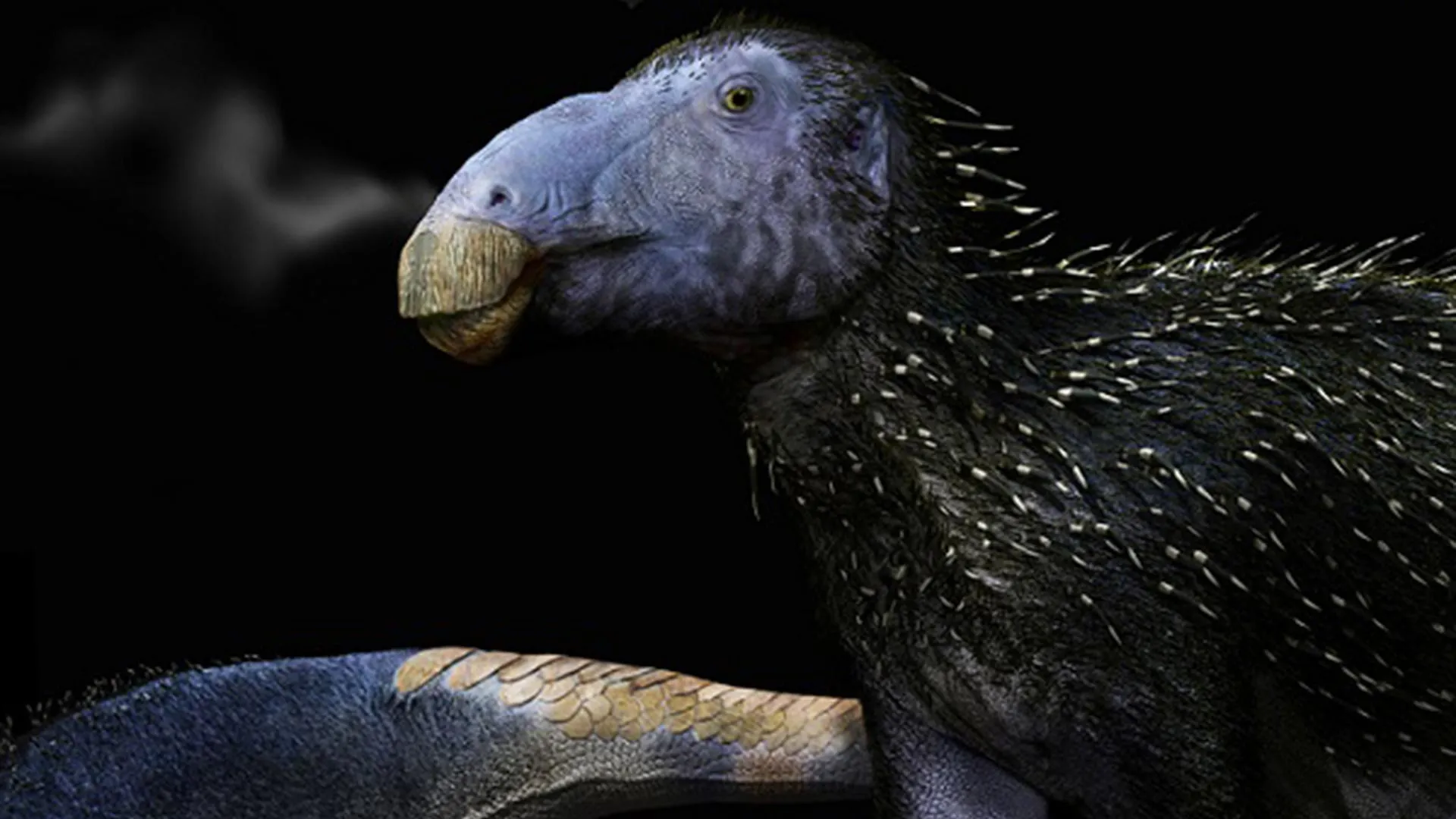
These spikes, described as cutaneous because they originate in the skin, covered much of the dinosaur’s body. Unlike horns or bony plates, they were not solid extensions of bone. Instead, they were hollow structures, a feature that has never previously been observed in dinosaurs. The newly identified species has been named Haolong dongi, honoring Dong Zhiming, a pioneering Chinese paleontologist who made major contributions to dinosaur research in China.
Porcupine Like Defense and Possible Additional Functions
Haolong dongi was a herbivore, meaning it fed on plants rather than other animals. During the Early Cretaceous period, when it lived, small carnivorous dinosaurs hunted in the same ecosystems. The hollow spikes may have served as a defensive adaptation, functioning in a way similar to the quills of a porcupine by discouraging predators from attacking.
However, defense may not have been their only purpose. Researchers suggest the spikes could also have helped regulate body temperature, a process known as thermoregulation. Structures that increase surface area can assist with releasing or conserving heat. Another possibility is that the spikes had a sensory role, helping the dinosaur detect movement or environmental changes around it.
A First of Its Kind Discovery
Until this fossil came to light, there was no evidence that dinosaurs possessed hollow skin based spines of this kind. Because the specimen is a juvenile, scientists cannot yet confirm whether adult individuals of the species retained the same structures as they matured. Further discoveries will be needed to answer that question.
The findings, published in Nature Ecology & Evolution on February 6, 2026, introduce an entirely new feature to the known diversity of dinosaur anatomy. This discovery not only adds a new species to the Iguanodontia group, but also reveals that dinosaur skin and body coverings were more varied and innovative than previously understood.
[ad_2]
Source link