


Trump’s Venezuela takeover fuels fresh angst about a US Greenland grab
COLOGNE, Germany — As European governments grapple to understand the implications of a proclaimed U.S. takeover of Venezuela over
COLOGNE, Germany — As European governments grapple to understand the implications of a proclaimed U.S. takeover of Venezuela over the weekend, renewed fears here swirl around President Donald Trump’s threats to make the Danish territory of Greenland part of the United States.
Danish Prime Minister Mette Frederiksen released a statement on Sunday after The Atlantic published an interview with Trump in which he reiterated the claim that the United States “needs” Greenland for national security.
“I have to say this very directly to the USA,” Frederiksen wrote. “It makes absolutely no sense to talk about the need for the USA to take over Greenland. The USA has no right to annex one of the three countries in the Commonwealth.”
U.S. forces already have access to key military installations on Greenland, facilitated by the Danish government, she added.
“I would therefore strongly urge the USA to stop the threats against a historically close ally and against another country and another people, who have very clearly said that they are not for sale,” Frederiksen said.
Finnish President Alexander Stubb backed up Frederiksen in a post on the social media platform X later on Sunday, sharing her statement with the comment: “No one decides for Greenland and Denmark but Greenland and Denmark themselves.”
RELATED
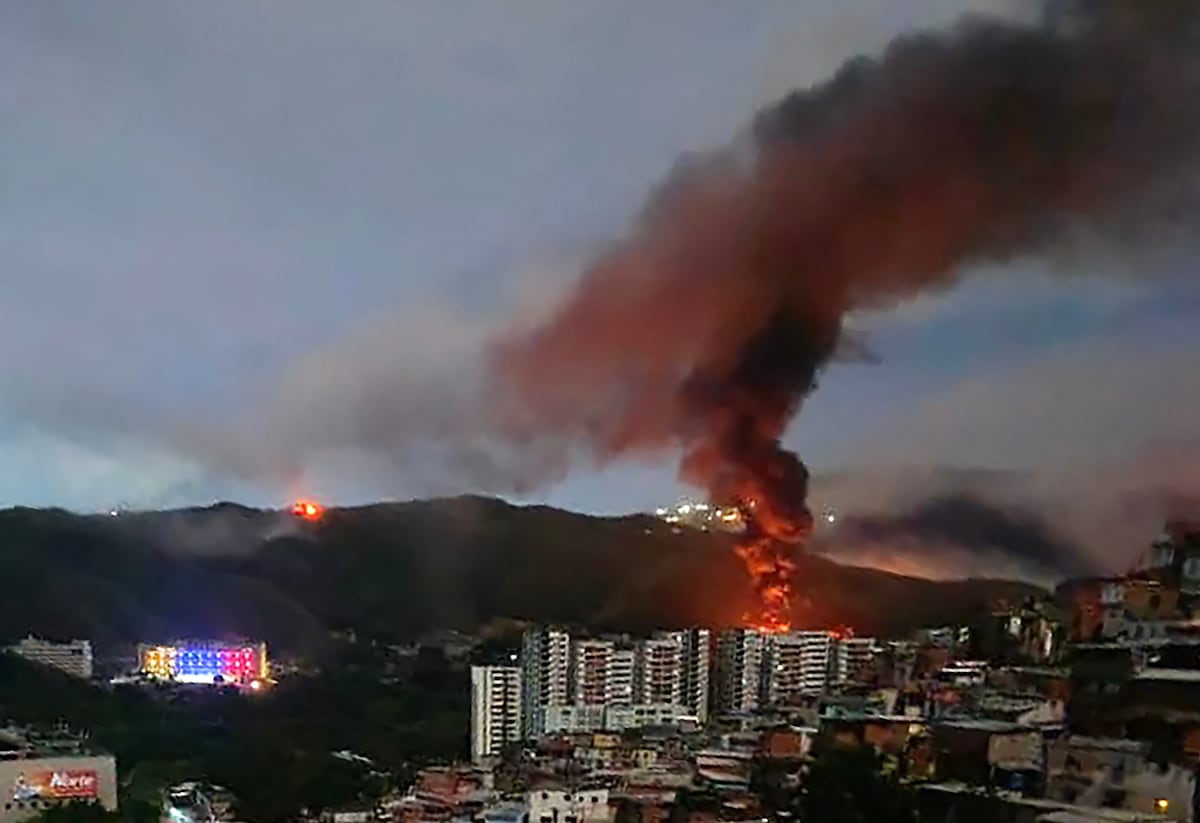
The transatlantic dispute has taken on a new flavor after U.S. forces conducted a daring nighttime raid in the capital of Caracas against President Nicolas Maduro early Saturday, capturing the authoritarian ruler and taking him to New York for trial on drug-related charges.
Trump and his ministers have used the episode, in essence, to tell foes and friends alike that American interests justify any action imaginable.
Plans for U.S. officials to “run” Venezuela post-Maduro, as they said, remained opaque on Monday, with Trump seemingly banking on the cooperation second-string leaders left in place there.
The threat of a more intense bombing campaign or a ground invasion would ensure compliance with America’s demands, the thinking in Washington goes.
“There is a high degree of volatility and unpredictability in Trump 2.0,” said Giuseppe Spatafora, a research analyst at the EU Institute for Security Studies. “This makes it hard to predict what happens next.”
It’s possible that the Trump administration could expand the campaign against other governments perceived as hostile, such as Cuba, or even Colombia, Spatafora said.
Analyst Nathalie Tocci, the director of the Rome IAI think tank, said that the vague, vacillating responses by many European states to the U.S. operation in Venezuela would encourage President Trump to carry out more, similar operations.
“I think Europeans should be reacting just like the group of Latin American countries are,” she said, noting that Brazil, Colombia, Mexico, Uruguay and Chile had jointly opposed the military operation and any attempts by the U.S. at expropriating Venezuela’s resources.
“Through our ambiguity and silence we’re behaving as colonies, which can only tickle Trump’s imperial ambitions,” she added.
Tom Kington in Rome and Rudy Ruitenberg in Paris contributed to this report.
Sebastian Sprenger is associate editor for Europe at Defense News, reporting on the state of the defense market in the region, and on U.S.-Europe cooperation and multi-national investments in defense and global security. Previously he served as managing editor for Defense News. He is based in Cologne, Germany.