



The hidden timing system that shapes how you think
The human brain is always at work, handling information that arrives on very different timelines. Some signals demand instant
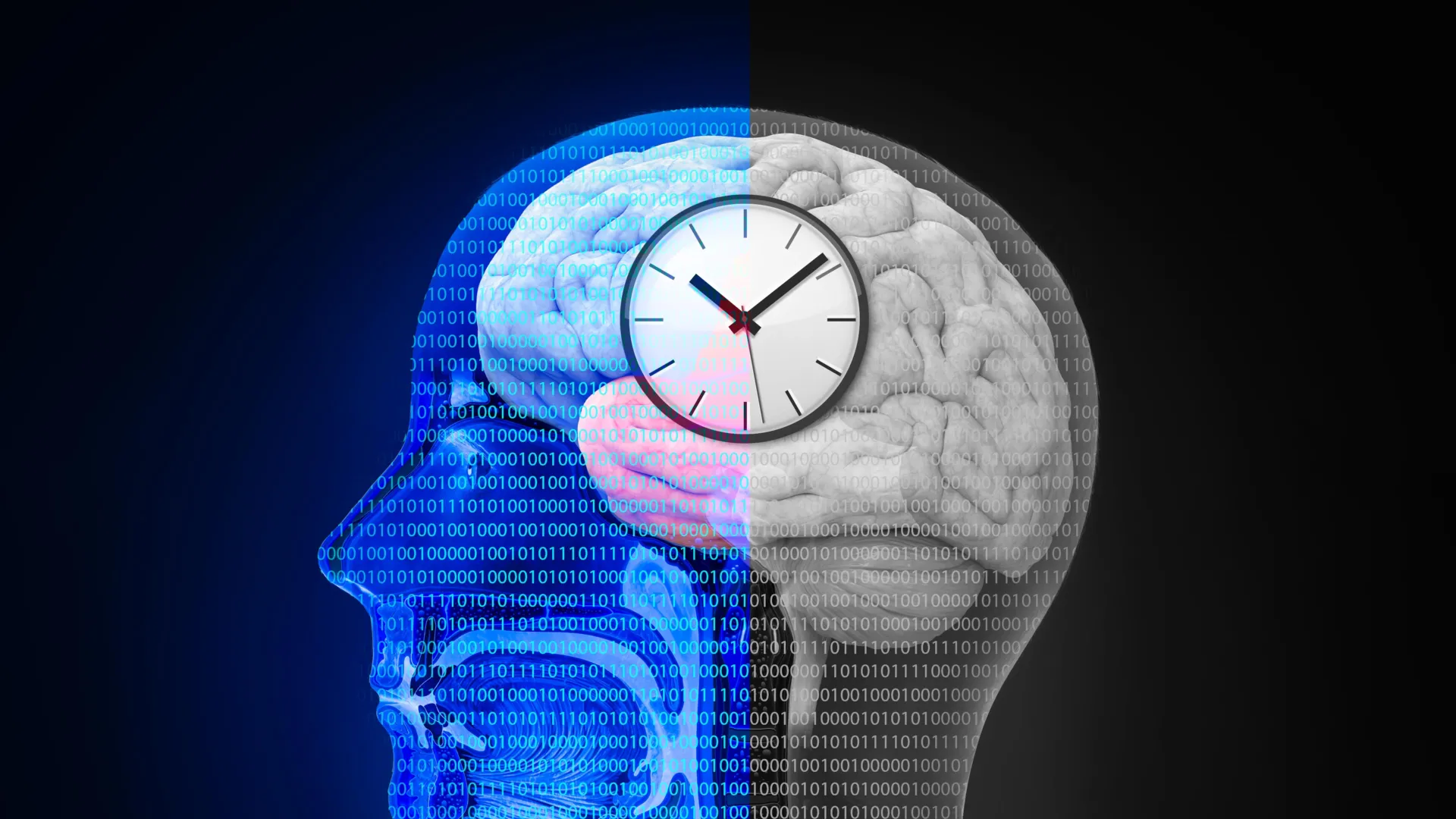
The human brain is always at work, handling information that arrives on very different timelines. Some signals demand instant reactions to changes in the environment, while others unfold more slowly as we interpret meaning, context, or intent.
A new study from Rutgers Health, published in Nature Communications, explores how the brain brings these fast and slow signals together. The research focuses on how networks of white matter connections allow different brain regions to communicate, supporting thinking, decision making, and behavior.
Brain Regions Run on Different Internal Clocks
Not all parts of the brain process information in the same way or at the same pace. Each region operates over a characteristic time window, known as intrinsic neural timescales, or INTs for short. These timescales reflect how long a region holds onto information before moving on to the next signal.
“To affect our environment through action, our brains must combine information processed over different timescales,” said Linden Parkes, assistant professor of Psychiatry at Rutgers Health and the senior author of the study. “The brain achieves this by leveraging its white matter connectivity to share information across regions, and this integration is crucial for human behavior.”
Mapping Brain Connectivity in Nearly 1,000 People
To understand how this integration works, Parkes and his colleagues examined brain imaging data from 960 individuals. Using this information, they created detailed maps of each person’s brain connections, known as connectomes. The team then applied mathematical models that describe how complex systems evolve over time to track how information moves through these networks.
“Our work probes the mechanisms underlying this process in humans by directly modeling regions’ INTs from their connectivity,” said Parkes, a core member of the Rutgers Brain Health Institute and the Center for Advanced Human Brain Imaging Research. “This draws a direct link between how brain regions process information locally and how that processing is shared across the brain to produce behavior.”
Why Timing Differences Matter for Cognition
The researchers found that how neural timescales are arranged across the cerebral cortex plays a key role in how efficiently the brain shifts between large scale patterns of activity tied to behavior. This timing organization was not the same for everyone.
“We found that differences in how the brain processes information at different speeds help explain why people vary in their cognitive abilities,” Parkes said.
The study also showed that these timing patterns are connected to genetic, molecular, and cellular features of brain tissue, tying the findings to basic biological processes. Similar links were seen in the mouse brain, suggesting that these mechanisms are shared across species.
“Our work highlights a fundamental link between the brain’s white matter connectivity and its local computational properties,” Parkes said. “People whose brain wiring is better matched to the way different regions handle fast and slow information tend to show higher cognitive capacity.”
Implications for Mental Health Research
Building on these results, the research team is now applying the same approach to neuropsychiatric conditions such as schizophrenia, bipolar disorder, and depression. The goal is to understand how changes in brain connectivity might disrupt the way information is processed over time.
The study was conducted in collaboration with Avram Holmes, an associate professor of psychiatry and a core member of the Rutgers Brain Health Institute and the Center for Advanced Human Brain Imaging Research, along with postdoctoral researchers Ahmad Beyh and Amber Howell, as well as Jason Z. Kim from Cornell University.