
Taiwan-US ‘firepower’ center to hone asymmetric warfare tactics
HONG KONG — The United States and Taiwan are expected to roll out their latest hardware and use elite
HONG KONG — The United States and Taiwan are expected to roll out their latest hardware and use elite Taiwanese troops under a joint project to prepare for asymmetric warfare in case the island government’s long-time political rival China attacks, according to military experts.
That effort, the Joint Firepower Cooperation Center, as first reported by Taiwan’s United Daily News late last month, would help coordinate a Taiwanese defense against the People’s Liberation Army forces ahead of 2027, when some American think tanks believe China will have sufficient attack capability.
The United States would likely offer military equipment made by some of its major contractors to the Joint Firepower Cooperation Center, the latest preparedness measure as Beijing steps up military pressure, according to Taiwanese media reports and analysts in Taipei.
Northrop Grumman, for example, has already installed a medium-caliber ammunition test range in Taiwan, letting the island’s defense ministry run tests on “global industry standards” and allowing transfers of technology to support home-grown hardware, the de facto U.S. embassy, the American Institute in Taiwan, wrote on its website on Jan. 22.
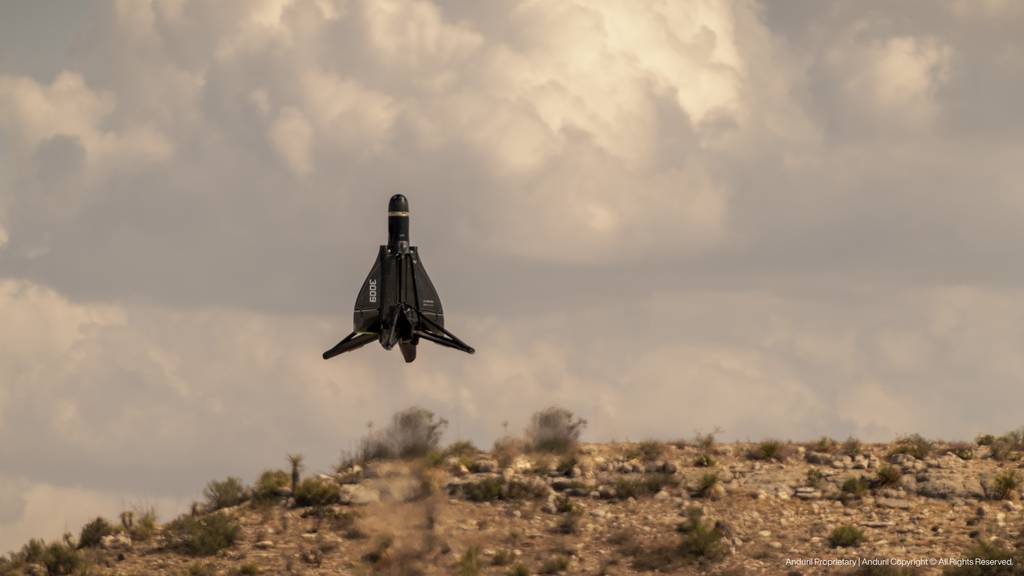
Fellow American contractor Anduril has also set up an “initiative” to find local suppliers for key components for its Ghost-X autonomous air vehicle, the website says.
Deliveries from previously agreed U.S. arms sales from Taiwan could be added to the cooperation effort as those deals lead to deliveries, said Huang Chung-ting, assistant research fellow with the Institute for National Defense and Security Research in Taipei.
Taiwan, for its part, would contribute “elite troops,” and Washington might assign personnel in Guam or elsewhere in the Indo-Pacific region to help as “they understand Taiwan’s military status,” Huang said.
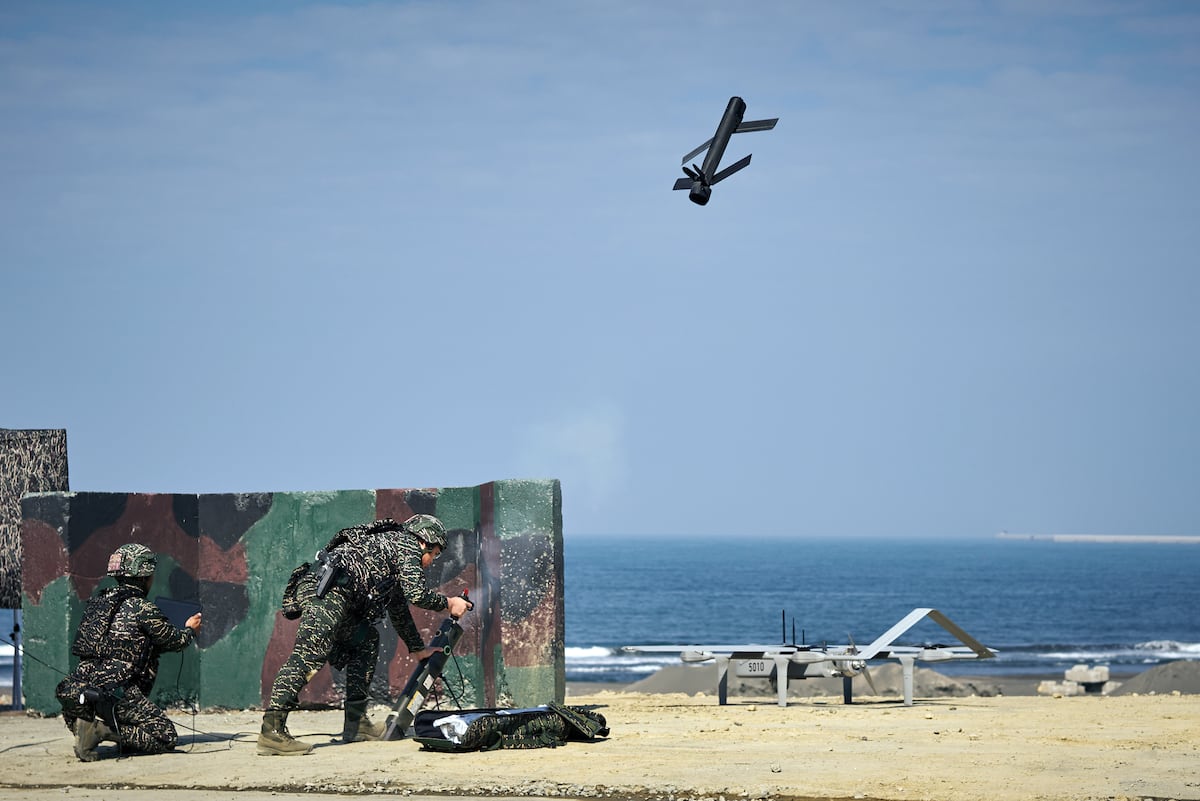
The big idea is to help Taiwan practice asymmetric air and sea warfare, the strategy where a numerically weaker force fights off a stronger one through unconventional means, analysts say. China’s military is significantly larger than Taiwan’s.
“In the event of a kinetic conflict with China, Taiwan has no chance of succeeding at a traditional strategy of air superiority,” said Bethany Allen, head of China investigations with the Australian Strategic Policy Institute.
“But as we’ve seen in Ukraine, a militarily weaker actor can successfully defend against an invasion through air denial,” Allen said. “In Taiwan’s case, a strategy of air denial could be especially effective, since Taiwan is an island and no invasion by land route can occur. To that end, surface to air missiles, drone swarms, and other anti-aircraft weapons could be very effective.”
Taiwan, though it has missiles and batteries, lacks certain military intelligence, surveillance and reconnaissance “capacity,” said Alexander Huang, strategic studies professor at Taiwan’s Tamkang University. The military could particularly use improvements in interceptions and early warnings, he added.
“I think a joint collaboration would provide Taiwan with better targeting and better signaling,” the professor said.
China, about 100 miles away from Taiwan at its closest point, sees the self-ruled island as part of its territory and has not ruled out military force if other unification efforts fail. Since August 2022 it has flown military aircraft near the island almost daily and carried out seven large-scale drills at sea.
“We’d need to avoid letting the PLA’s units challenge Taiwanese airspace, it would be that kind of goal,” Huang Chung-ting said. If the firepower cooperation effort worked out, he said, “coordination between weapons and personnel would be all the better”.
Neither side’s military has elaborated.
The U.S. Indo-Pacific Command in Hawaii declined to comment in late January but pointed to online news reports indicating that the United States would not deploy troops to the joint firepower center.
A media liaison with Taiwan’s Ministry of National Defense said last week it was “inconvenient to disclose details” about the cooperation center but that it had already “systemized” and “deepened” cooperation with the U.S. military to strengthen its capabilities.
Since 1950, the United States has sold Taiwan nearly $50 billion in defense “equipment and services”, the Council on Foreign Relations think tank says in a 2024 study. The U.S. government had troops in Taiwan until 1979, the year it switched diplomatic recognition to Beijing, but Washington still considers the island a quiet security partner in view of China’s growing strength.
Beijing has indicated that it’s unfazed.
Taiwanese weapons, even if “coordinated” under the firepower cooperation center, “are not that advanced” and “no match for the Chinese People’s Liberation Army”, the Beijing-based Global Times said Jan. 26, quoting a Chinese military expert.