
South Korea’s Hyundai feeds rapid naval upgrades in the Philippines
CHRISTCHURCH, New Zealand — Once reliant on aging, second-hand vessels from the United States, a steady drumbeat of new
CHRISTCHURCH, New Zealand — Once reliant on aging, second-hand vessels from the United States, a steady drumbeat of new warships is beginning to enter Philippine Navy service.
The new capabilities are part of a rapid modernization program there, prompted by aggressive Chinese tactics and territorial claims in the adjacent South China Sea.
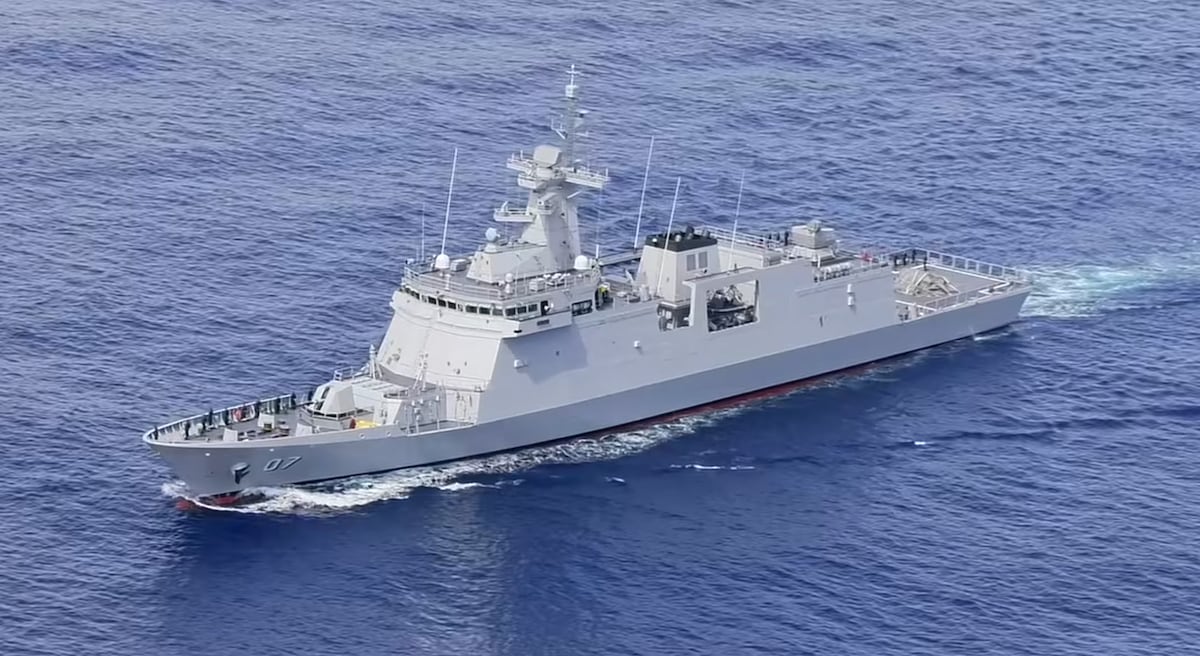
The world’s largest shipbuilder, South Korea’s HD Hyundai Heavy Industries (HHI), is the primary supplier of these new vessels, and the latest warship to enter Philippine service is a second HDF-3200 Hybrid frigate.
The Philippine Navy – or PN for short – commissioned BRP Diego Silang on Dec. 2. The milestone came just six and half months after the first-of-class BRP Miguel Malvare entered service.
The two frigates had been ordered from HD HHI via a 28 billion peso ($550 million) contract inked in 2021. Displacing 3,200 tons and measuring 118.4m in length, they are the most sophisticated warships ever owned by the Philippines.
Rear Adm. Roy Vincent Trinidad, the Navy spokesperson for the West Philippine Sea, said at the Diego Silang commissioning ceremony: “This will add to the capital ships of the PN that are capable of patrolling all the way up to our exclusive economic zone and even beyond. It will be the most modern warship that we have.”
These are also the first Philippine warships boasting a vertical launch system for missiles, with the frigates possessing 16 cells of VL MICA missiles from MBDA. They also carry eight SSM-700K C-Star anti-ship missiles from Korean missile house LIG Nex1.
The pair joins two other frigates previously constructed by the Korean shipbuilder. Those two 2,600-ton Jose Rizal-class frigates were inducted in 2020-2021, marking the start of a lucrative relationship between Hyundai and its Philippine customer.
In a tour of Hyundai’s Ulsan shipyard earlier this year, Defense News observed Diego Silang under construction, as well as a first offshore patrol vessel (OPV) for the Philippines. A company spokesperson indicated that the latter should be handed over to Manila in March 2026, following sea trials and final outfitting.
Under a 2022 order, Hyundai is constructing six such HDP-2200+ OPVs for the Philippine Navy. The second vessel in the class – Rajah Lakandula – was launched on Nov. 20, and all six are meant to be operational by 2028.
Philippine naval ambitions continue to advance even further.
Spokesperson Trinidad said discussions are under way for a further pair of frigates. Under the armed forces’ Re-Horizon 3 program, the sea service has set aside 43 billion pesos (US$294 million) for two new frigates and their weapons.
The navy has not selected a platform yet, but Hyundai is proffering an updated version of the HDF-3200 or the larger HDF-3500. A contract award could happen soon, and choosing Hyundai again would bring advantages in commonality.
HD Hyundai describes the Philippines as a “strategic customer.” One executive told Defense News: “Commercial ships are our major business, and naval ship revenue is around 10% at HHI. Although the revenue proportion is small, our pride and technology are not small, as it even surpasses the commercial ship business.”
The other major naval shipbuilder in South Korea is Hanwha Ocean. It is currently promoting KSS-III diesel-electric submarines for an emerging Philippine requirement.
Because these two shipbuilding rivals have been competing directly against each other in overseas competitions, the country’s Defense Acquisition Program Administration decided to mediate.
To prevent business overlaps, the three parties signed a memorandum of understanding on Feb. 25 to create a “One Team” formation that unites their marketing campaigns.
Hanwha Ocean is supposed to take the lead on submarine export campaigns, while the Hyundai shipyard is responsible for surface warships.
Regardless, that agreement has done little to ease intra-Korean competition. The two companies are currently competing for both Saudi and Thai frigate requirements, for example.
Hyundai is promoting its 6,500-ton HDF-6000 frigate, and Hanwha its Ocean 4500 design for Saudi Arabia.
Meanwhile, at last month’s Defense & Security 2025 exhibition in Bangkok, Hyundai displayed scale models of HDF-3200, HDF-3600 and HDF-4000 frigates as suitable solutions for the Royal Thai Navy. Likewise, Hanwha Ocean showcased its 4,000-ton Ocean-40F frigate for Thailand.
Even as many Western navies struggle with or cancel warship programs – the U.S. Navy’s Constellation-class frigates are a case in point – South Korean shipbuilders such as HD Hyundai Heavy Industries point to a track record of delivering on time and within budget.
For 2025, the company predicts delivery of 48 commercial vessels and two naval ships to customers. This will bring to 149 the number of naval vessels the shipbuilder has built to date.
Gordon Arthur is an Asia correspondent for Defense News. After a 20-year stint working in Hong Kong, he now resides in New Zealand. He has attended military exercises and defense exhibitions in about 20 countries around the Asia-Pacific region.