



Scientists just found the best places to look for ancient life on Mars
Long before Mars became the cold, dry world we see today, rain once fell across its surface. Water gathered
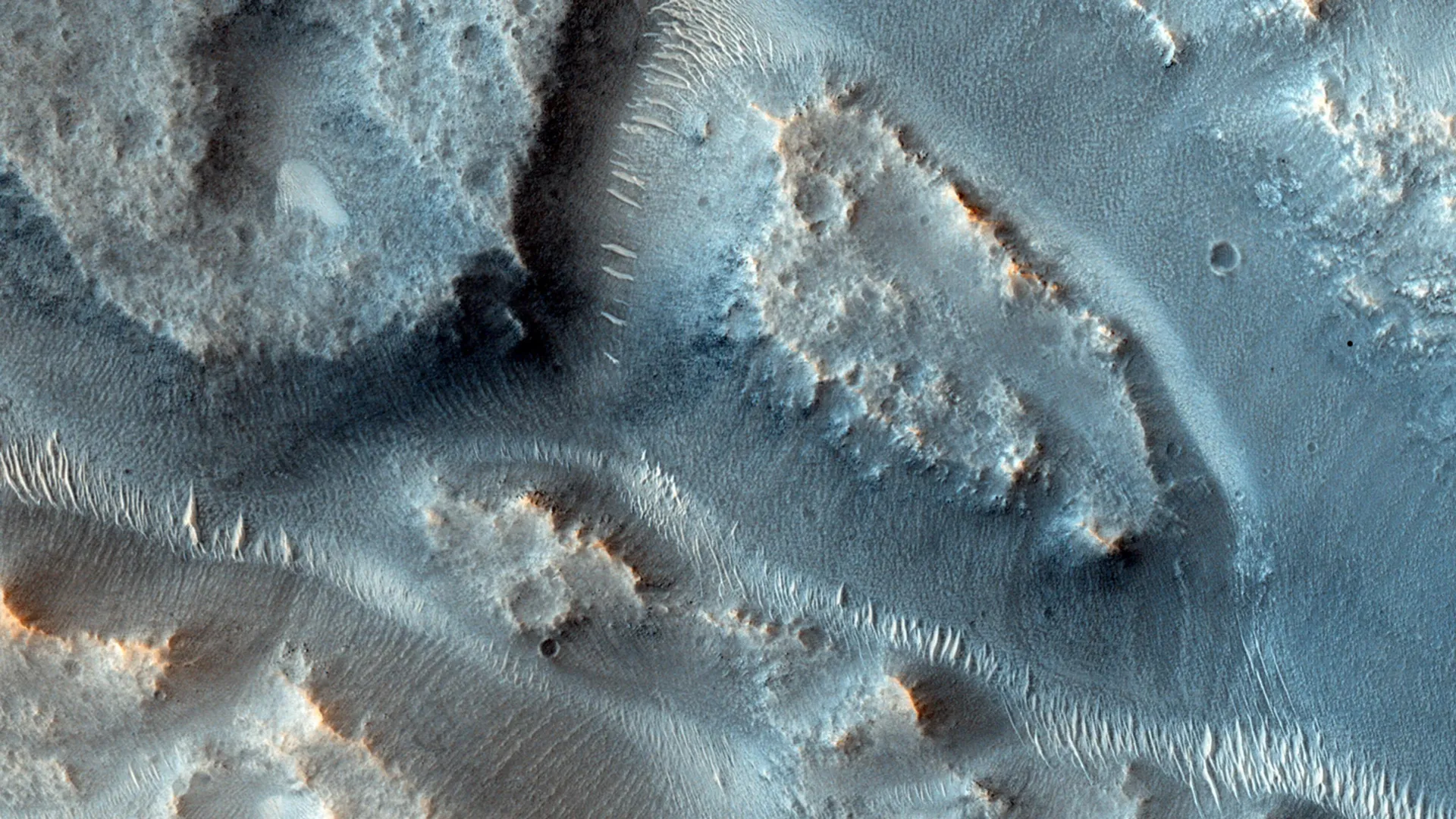
Long before Mars became the cold, dry world we see today, rain once fell across its surface. Water gathered in low-lying valleys and river channels, overflowed crater rims, and rushed through canyons. Some of that water may have traveled far enough to reach a vast ocean that once covered part of the planet.
On Earth, regions shaped by large river systems are some of the richest ecosystems on the planet — the Amazon River basin alone supports tens of thousands of known species. Scientists believe similar environments on ancient Mars could have provided favorable conditions for life during periods when liquid water was present.
Mapping Mars’ Largest Ancient River Systems
In a study published in PNAS, researchers from The University of Texas at Austin report the first detailed identification of large river drainage systems on Mars. Their analysis pinpointed 16 extensive river basins that would have offered the most promising settings for life on the red planet.
“We’ve known for a long time that there were rivers on Mars,” said co-author Timothy A. Goudge, an assistant professor in the Department of Earth and Planetary Sciences at the UT Jackson School of Geosciences. “But we really didn’t know the extent to which the rivers were organized in large drainage systems at the global scale.”
Combining Data for a Planet-Wide View
Goudge and postdoctoral researcher Abdallah S. Zaki assembled previously published data on Martian valley networks, lakes, and river features. By merging these datasets, they were able to trace how individual features connected and calculate the total size of the resulting drainage systems.
Their work revealed 19 major groupings of valleys, streams, lakes, canyons, and sediment deposits. Of these, 16 formed interconnected watersheds covering at least 100,000 square kilometers. On Earth, that size marks the lower limit of what scientists define as a large drainage basin. This marks the first systematic, planet-wide effort to identify large river basins on Mars.
“We did the simplest thing that could be done. We just mapped them and pieced them together,” said Zaki, who led the research.
How Mars Compares to Earth
Large watersheds are far more common on Earth than on Mars. Our planet has 91 drainage basins that exceed 100,000 square kilometers. The Amazon River basin, the largest on Earth, spans roughly 6.2 million square kilometers. Texas’ Colorado River basin narrowly meets the threshold at 103,300 square kilometers.
Wherever large river systems exist, life tends to follow. Bigger rivers transport greater amounts of nutrients, helping sustain diverse ecosystems. That is why the world’s largest drainage basins host extraordinary biodiversity. Some, including the Indus River basin, are also regarded as birthplaces of human civilization.
Why Mars Has Fewer Large Watersheds
On Earth, tectonic forces constantly reshape the landscape, creating mountains, valleys, and varied terrain that guide water flow and link river systems together. This geological activity plays a key role in forming large drainage networks. Mars, by contrast, lacks active tectonics, which helps explain why its river systems are fewer and generally smaller.
Even so, the researchers found that Mars’ largest drainage systems played an outsized role in shaping the planet. Although they cover only about 5% of ancient Martian terrain, these regions account for roughly 42% of all material eroded by rivers on Mars.
Because sediment carries nutrients, these locations are considered prime targets in the search for evidence of past life, Zaki said, though more research is needed to determine exactly where those sediments ultimately settled.
“The longer the distance, the more you have water interacting with rocks, so there’s a higher chance of chemical reactions that could be translated into signs of life,” he said.
Key Targets for Future Mars Missions
Much of Mars is made up of a patchwork of smaller drainage systems. Each may have supported habitable conditions at one time. Still, the researchers say the 16 largest drainage basins stand out as especially valuable targets for future exploration focused on habitability.
“It’s a really important thing to think about for future missions and where you might go to look for life,” Goudge said.
Broader Impact of the Research
Department Chair Danny Stockli said the study highlights the ongoing contributions of the Jackson School to planetary science.
“Tim Goudge and his team continue to be leaders in the field, making groundbreaking contributions to the understanding of Mars’ planetary surface and hydrologic processes,” he said.
The study also includes co-author David Mohrig, a professor in the Department of Earth and Planetary Sciences.