



Scientists finally uncover why statins cause muscle pain
Many people who are prescribed statins to lower cholesterol end up stopping the medication because of muscle pain, weakness,
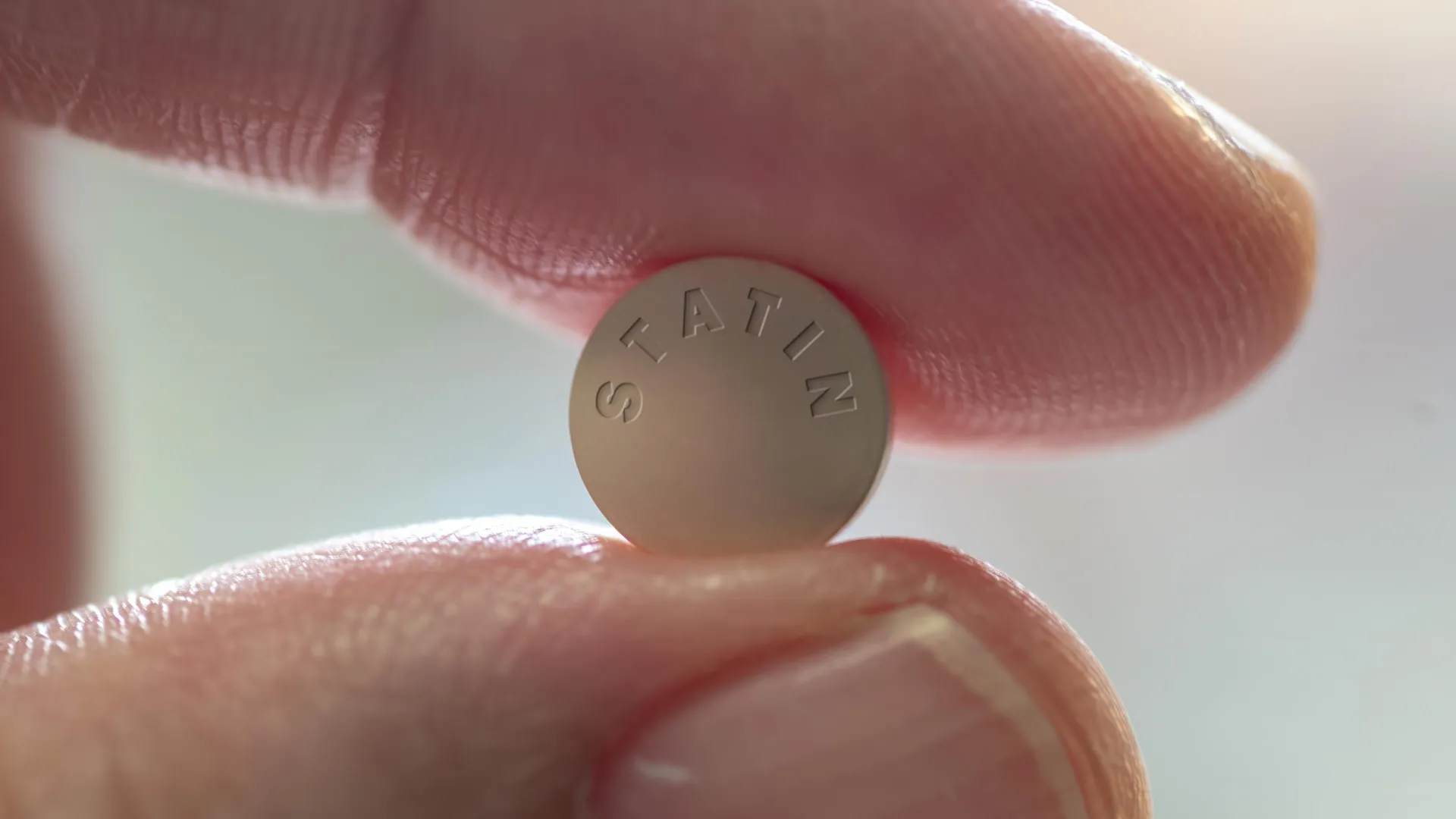
Many people who are prescribed statins to lower cholesterol end up stopping the medication because of muscle pain, weakness, or ongoing fatigue. These symptoms are among the most common reasons patients abandon the drugs.
New research from Columbia University suggests a possible explanation for why this happens in some individuals. The study indicates that certain statins can attach to a protein inside muscle cells, triggering a leak of calcium ions that disrupts normal muscle function.
“It is unlikely that this explanation applies to everyone who experiences muscular side effects with statins, but even if it explains a small subset, that’s a lot of people we could help if we can resolve the issue,” says Andrew Marks, chair of the Department of Physiology and Cellular Biophysics at the Vagelos College of Physicians and Surgeons.
Statins are widely used in the United States. Roughly 40 million adults take them to control cholesterol levels, and about 10 percent develop muscle related side effects.
“I’ve had patients who’ve been prescribed statins, and they refused to take them because of the side effects. It’s the most common reason patients quit statins, and it’s a very real problem that needs a solution,” Marks says.
A Longstanding Puzzle Around Statin Muscle Pain
Scientists have been trying to understand statin related muscle problems since the drugs first became available in the late 1980s. Statins work by binding to an enzyme involved in cholesterol production, but they can also attach to other unintended targets in the body.
Earlier research hinted that muscle side effects might occur when statins interact with a specific protein in muscle tissue. Until now, the details of that interaction were unclear.
Using cryo-electron microscopy, a powerful imaging method that allows researchers to see structures down to individual atoms, the Columbia team was able to directly observe how a statin interacts with muscle cells.
Calcium Leaks Inside Muscle Cells
The images showed that a commonly prescribed statin, simvastatin, binds to two specific sites on a muscle protein known as the ryanodine receptor. This binding opens a channel in the protein, allowing calcium to leak into areas of the cell where it does not normally flow.
According to Marks, this calcium leak may explain muscle pain and weakness linked to statins. The excess calcium can weaken muscle fibers directly or activate enzymes that gradually break down muscle tissue.
Toward Safer Cholesterol Drugs
The findings point to new possibilities for reducing statin side effects. One approach would be to redesign statins so they continue to lower cholesterol but no longer bind to the ryanodine receptor in muscle cells.
Marks is currently working with chemists to develop statins that avoid this unwanted interaction.
Another potential strategy focuses on stopping the calcium leak itself. The researchers showed that in mice, statin related calcium leaks can be closed using an experimental drug created in the Marks laboratory for other disorders involving abnormal calcium flow.
“These drugs are currently being tested in people with rare muscle diseases. If it shows efficacy in those patients, we can test it in statin-induced myopathies,” Marks says
Study Details and Disclosures
Andrew Marks is also the Clyde and Helen Wu Professor of Medicine at Columbia University Vagelos College of Physicians and Surgeons, a professor of biomedical engineering, and director of the Wu Center for Molecular Cardiology.
The study was published Dec. 15 in “Structural basis for simvastatin-induced skeletal muscle weakness associated with RyR1 T4709M mutation,” in the Journal of Clinical Investigation.
The full author list includes Gunnar Weninger, Haikel Dridi, Steven Reiken, Qi Yuan, Nan Zhao (University of Rochester), Linda Groom (University of Rochester), Jennifer Leigh (University of Rochester), Yang Liu, Carl Tchagou, Jiayi Kang, Alexander Chang, Estefania Luna-Figueroa, Marco C. Miotto, Anetta Wronska, Robert T. Dirksen (University of Rochester), and Andrew R. Marks.
Funding for the research came from the NIH (R01HL145473, R01DK118240, R01HL142903, R01HL140934, R01NS114570, R01AR070194, R01AR078000 , R25HL156002, R25NS076445, P01HL164319, and T32HL120826.
Marks owns stock in RyCarma Therapeutics Inc., which is developing compounds that target the ryanodine receptor, and is a coinventor on U.S. patent nos. US8022058 and US8710045. Gunnar Weninger, Haikel Dridi, Marco Miotto, and Marks are also inventors on the patent application titled “STATIN INNOVATION FOR MUSCLE-FRIENDLY CHOLESTEROL MANAGEMENT” [Invention Report (IR) #CU24350], which will be filed by Columbia University.