Russia-US nuclear pact set to end in 2026 and we won’t see another
Russia shows off its weaponry at a military parade in Moscow Mikhail Svetlov/Getty Images In February 2026, for the
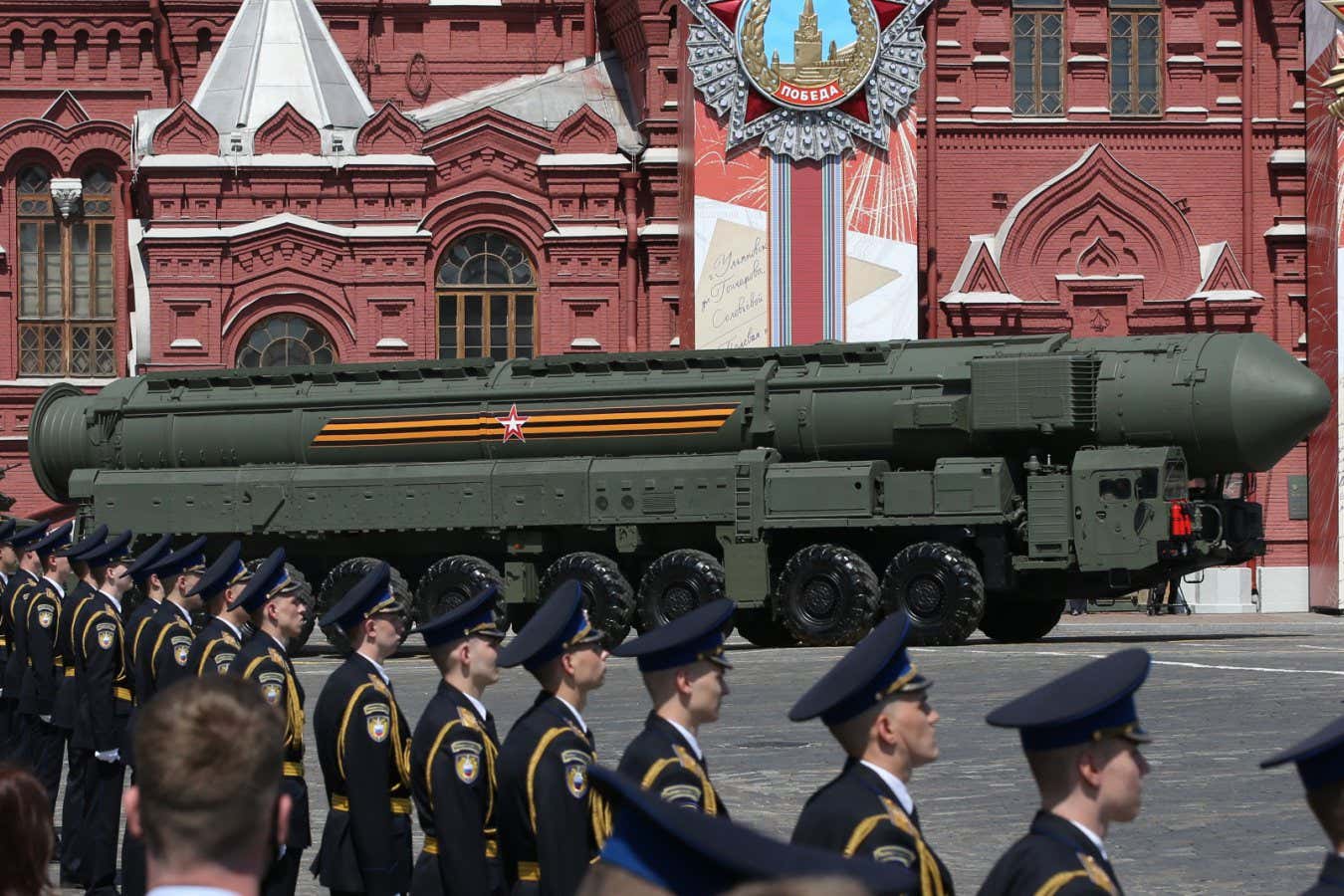
Russia shows off its weaponry at a military parade in Moscow
Mikhail Svetlov/Getty Images
In February 2026, for the first time in decades, there will be no active treaty limiting the size of the US and Russian nuclear arsenals. Experts are divided on whether the New START treaty genuinely made the world safer, but there is far more agreement on one thing: a replacement is unlikely.
The US and Russia first agreed to place limits on their nuclear weapons and allow each to inspect the other’s stockpiles with the START I treaty in 1991, and this was succeeded by New START in 2011. In 2021, Joe Biden and Vladimir Putin agreed to extend the treaty by five years. It is now due to expire on 5 February and talks on a replacement have faltered.
Tension between Russia and the US had already been ratcheting up when the former staged a full-scale invasion of Ukraine in 2022. Just months later, Russia pulled out of weapons inspections, prompting the US to reciprocate. Now, there is talk from both states about a resumption of nuclear testing – a bellicose bit of theatre with no practical purpose. A replacement for New START seems more unlikely now than ever.
Mark Bell at the University of Minnesota says a new treaty that caps US weapons at a similar number to Russia is unlikely to appeal to the US, which fears that it needs enough to deter both Russia and China at once. China has 600 nuclear weapons, far fewer than the 5000-plus that the US and Russia both hold, but it is growing its arsenal rapidly. Meanwhile, Russia is unlikely to accept a cap that follows this argument and seeks to allow it fewer bombs than the US. And China won’t want to be dragged into a new deal if it caps bombs at current levels, preventing eventual parity with Russia and the US. Treaties are never easy, but this is a knotty starting point, says Bell.
START I and New START have broadly been seen as a success. They certainly aren’t perfect, but they are a pragmatic and stabilising influence. But Bell is sceptical about whether they have actually done much to make the world safer. “Did they save both of the superpowers a bit of money? Maybe. Did they provide a forum that was useful for cooperation? Yes. But did they fundamentally change the probability of war? I don’t think so,” he says.
With or without a treaty, there will always be a real risk of nuclear war, says Bell. In many ways, the threat of mutually assured destruction is the best insurance we have now that the atom has been split, and it is the unthinkable results of nuclear conflict rather than treaties that actually prevent wars, he says. “The stabilising effect comes from the danger, and you can’t get rid of that. That’s a feature, not a bug, of nuclear deterrence,” he says.
But some with insider knowledge are more concerned about the treaty’s end. Stephen Herzog is an academic at the Middlebury Institute of International Studies in Monterey, California, but prior to that worked on arms control at the US Department of Energy. He told New Scientist in no uncertain terms that the loss of New START makes nuclear war more likely.
“It makes the world a less safe place because of the lack of transparency, because it allows for unrestrained competition by leaders who seem to want to rely on nuclear weapons,” says Herzog. “In a situation where Russia is increasingly unpredictable, and in a situation where the administration of the United States is unfortunately increasingly unpredictable, not having a vital, confidence-building and transparency measure that essentially tamps down the arms race is really scary to me.”
There are still some treaties covering nuclear weapons. The ambitious Treaty on the Prohibition of Nuclear Weapons aims to totally eradicate them and is attracting signatories – but notably not from nuclear powers. Several nuclear states have signed the Treaty on the Non-Proliferation of Nuclear Weapons, but that does little to limit the number of bombs in existence. It was only New START that really held the nuclear superpowers to account.
Herzog believes that if Donald Trump and Putin were willing, they could agree to a substantially similar deal immediately. Indeed, there have been suggestions from Putin, which were warmly received by Trump, that an informal, year-long extension could be agreed. But no negotiations have taken place and such a deal would be, at best, a short-term solution for the problem.
Philipp Bleek at the Middlebury Institute of International Studies says a continuation could be useful if the extra time were used to negotiate a new treaty, but the prospects of longer-term arms control are dim. “The one-year extension might make the Russians feel like they’ve kicked the can down the road and might make them less likely to engage [in future talks],” says Bleek.
Treaty negotiations are complex tussles involving politicians, militaries and spy agencies, with opportunities to crowbar tiny but potentially vital strategic advantages into the small print, says Herzog. Many key personnel – weapons inspectors, negotiators and nuclear experts – have been fired, made redundant or encouraged to resign by the Trump administration, he says, which could give Russia the upper hand.
“If we were to go hard to the mat and try and negotiate a new treaty, I think that there are certain things that we probably don’t have the staffing and personnel to do,” says Herzog.
Topics: