
Pumas are back in Patagonia and Penguins are paying the price
Should conservation efforts focus on protecting one iconic species if that protection may harm another, especially in landscapes still
Should conservation efforts focus on protecting one iconic species if that protection may harm another, especially in landscapes still recovering from human activity? This question lies at the center of a growing conservation challenge at Monte Leon National Park on Argentina’s Patagonian coast.
The situation highlights the complexity of restoring ecosystems that were altered for decades and are now undergoing rapid change.
Pumas Return and Penguins Face a New Threat
After cattle ranching ended in southern Argentina in 1990, pumas (Puma concolor) gradually began reclaiming parts of their historic range. Their return brought them into contact with Magellanic penguins (Spheniscus magellanicus) for the first time in modern history.
The penguins had previously moved from offshore islands to the mainland, taking advantage of the absence of land predators. With few defenses against large carnivores, they became easy prey once pumas arrived. Until recently, however, scientists did not know how much this new interaction was affecting penguin population numbers.
Long Term Monitoring in Monte Leon National Park
Since the park was established in 2004, penguin colonies have been closely observed by researchers from the Centro de Investigaciones de Puerto Deseado of the Universidad Nacional de la Patagonia Austral, working alongside rangers from Monte Leon National Park. Over a four year period (2007-2010), they recorded penguin carcasses linked to puma attacks.
For the latest study, the team partnered with researchers from Oxford University’s Wildlife Conservation Research Unit (WildCRU) to analyze the data and assess the long term implications for the colony.
Thousands of Penguins Killed
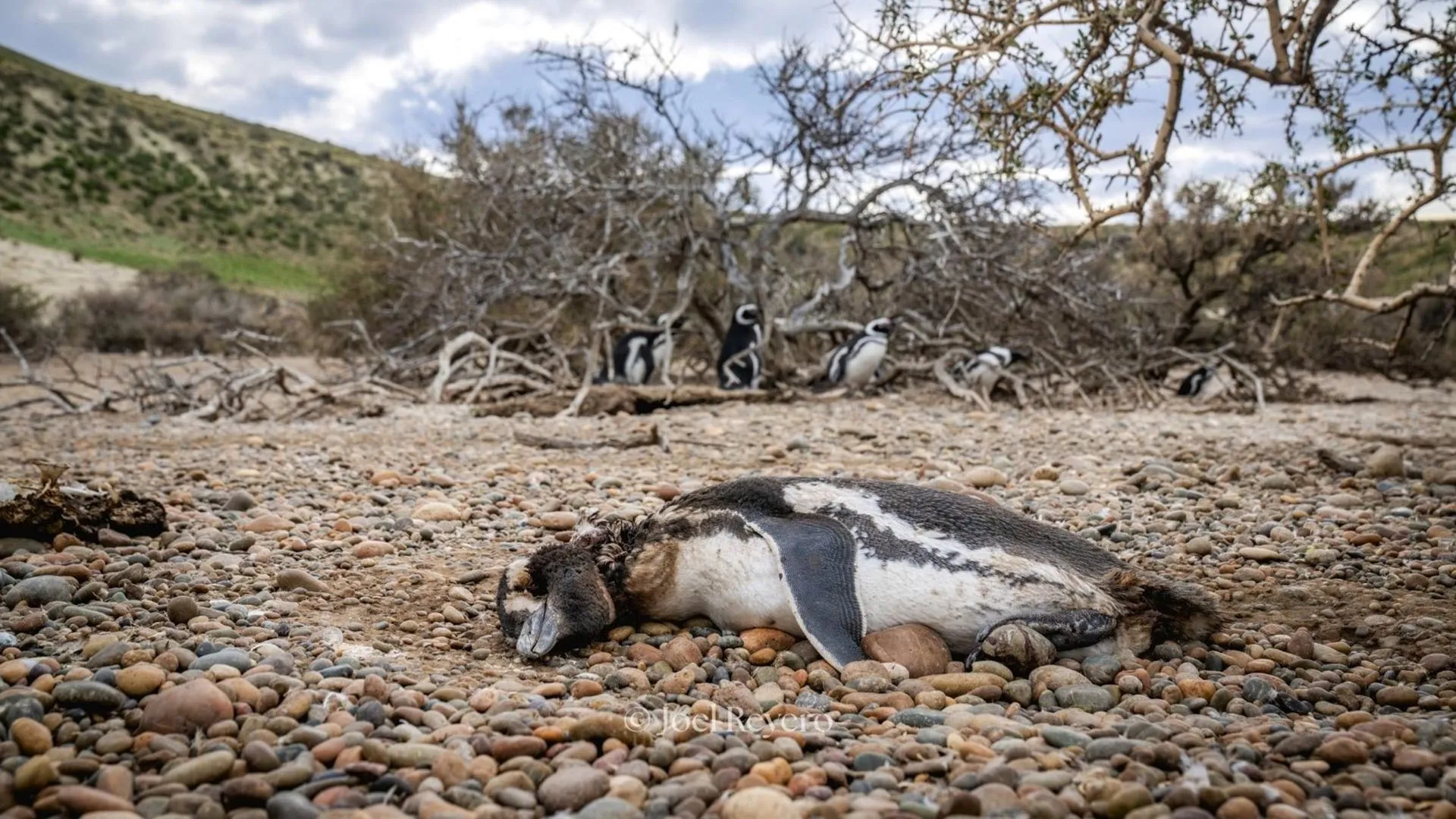
Using carcass counts, the researchers estimated that more than 7,000 adult penguins were killed during the four year study period. Many of the birds were only partially eaten or not eaten at all, indicating that the killings were not solely for food. This figure represents about 7.6% of the adult population (around 93,000 individuals).
Lead author Melisa Lera, a postgraduate student at WildCRU, Oxford University said: “The number of carcasses showing signs of predation we found in the colony is overwhelming, and the fact that they were left uneaten means pumas were killing more penguins than they required for food. This is consistent with what ecologists describe as ‘surplus killing’. It is comparable to what is seen in domestic cats when prey are abundant and/or vulnerable: ease of capture can lead to cats hunting more birds, even when they do not end up actually eating them. We needed to understand if the penguin colony’s persistence could be threatened due to this behavior.”
What the Population Models Revealed
When the research team applied population models to the data, the results showed that puma predation alone was unlikely to drive the Monte Leon penguin colony to extinction. Instead, the models pointed to other factors as far more influential, particularly breeding success and the survival of juvenile penguins.
Extinction was projected only in hypothetical scenarios where very low juvenile survival occurred, with around 20% failing to reach adulthood, combined with extremely poor reproduction limited to a maximum of one chick per pair. In those cases, high levels of puma predation made the situation worse but were not the primary cause.
Study co-author Dr. Jorgelina Marino (WildCRU, Oxford University) said: “This study captures an emerging conservation challenge, where recovering carnivores are encountering novel prey. Understanding how these dietary shifts affect both predators and prey is essential to inform conservation.”
Climate Change and Broader Pressures
Because breeding success and juvenile mortality play such a critical role in population stability, the researchers emphasize the need to better understand how environmental conditions affect penguin reproduction. Factors such as nutrient availability, food supply, and temperature, known to be influenced by climate change, may strongly shape the colony’s future.
Similar challenges are emerging elsewhere as land predators move into coastal environments. Mainland seabird colonies and other coastal species may become increasingly vulnerable. For example, non-native feral hogs are now major predators of loggerhead sea turtle eggs along the Georgia coast, USA, while coyotes in eastern North America are expanding onto coastal barrier islands, altering those ecosystems.
Why Continued Monitoring Matters
The authors stress that ongoing monitoring is essential to detect early signs of population decline and to guide management decisions before serious ecological damage occurs. At Monte Leon National Park, authorities continue to closely track both puma and penguin populations as they navigate the complex consequences of ecosystem recovery.