Philippine Navy scrambles to shield vital undersea cables from spies
MANILA, Philippines — The Philippine Navy is exploring ways to monitor subsea cables as part of larger efforts to
MANILA, Philippines — The Philippine Navy is exploring ways to monitor subsea cables as part of larger efforts to protect underwater infrastructure from sabotage and spying.
Numerous submarine cables crisscross the Philippines’ underwater domain, including cables that connect Southeast Asia to the United States, India and Hong Kong. Data that passes through these channels is vital for economics, trade and communications.
Navies across Southeast Asia have raised concerns over cable-cutting incidents reported in the Taiwan Strait, the Red Sea and the Baltic Sea.
For Philippine authorities, the sheer volume of reported incidents “exceeds the scope of accidents that are expected to be natural or incidental,” said Nestor Gerico, deputy director general of the Philippines’ National Security Council.
“These incidents are not random,” Gerico said. “These are potential acts of aggression.”
High-level policy discussions between the government and the country’s security forces about countermeasures have already begun, according to Navy chief Rear Adm. Roy Vincent Trinidad. Ultimately, the responsibility of protecting subsea infrastructure will fall under the purview of the sea service.
While specific capabilities have not been disclosed, Trinidad said that surveillance would entail capturing detailed imagery of underwater terrains to establish seabed profiles and monitor environmental changes over time.
“That would give us further reasons to focus on specific areas,” Trinidad said. “It is still in the exploratory stages, but we have been conducting exercises on this with other navies, especially with our defense treaty ally, the United States,” he added.
In 2024, the Philippines acquired four MANTAS T-12 unmanned surface vessels from the United States to boost maritime surveillance. The small, electric, submersible drones are capable of monitoring underwater territories and are equipped with cameras, sonars, lidars and modems.
Besides the outright destruction of seafloor lines of communication, the Philippine Navy is wary of another threat: adversaries hacking or tapping into the cables to steal data flowing through them.
Although reports are limited, submarine cable tapping has taken place in the Mediterranean Sea, and according to Trinidad, this could also happen in the Philippines.
Forensic investigations of underwater drones discovered along key maritime corridors could be linked to the apprehension of suspected sleeper agents and espionage operations across the archipelago in previous years, he said.
“There are ways to listen to what is being transferred in different undersea cables. And hostile groups could tap into those cables,” Trinidad said.
Lawmakers here have claimed to have information on a large network of sleeper agents from China and the presence of members of the People’s Liberation Army within the country.
The Chinese Embassy in Manila called the allegations“baseless speculation and accusation.”
Unclaimed drones
After a pivot to external defense, the Philippines has undertaken several measures to protect critical infrastructure. In 2024, the defense department and the military banned the use of Chinese social media apps among soldiers, a prelude to a long-running crackdown on espionage activities.
Local courts are currently adjudicating cases involving 13 Chinese nationals, along with five Filipino and one Cambodian accomplice, who have been apprehended on suspicion of espionage.
Suspects were caught taking photos of critical military infrastructures in Luzon and of American ships docking in Subic Bay.
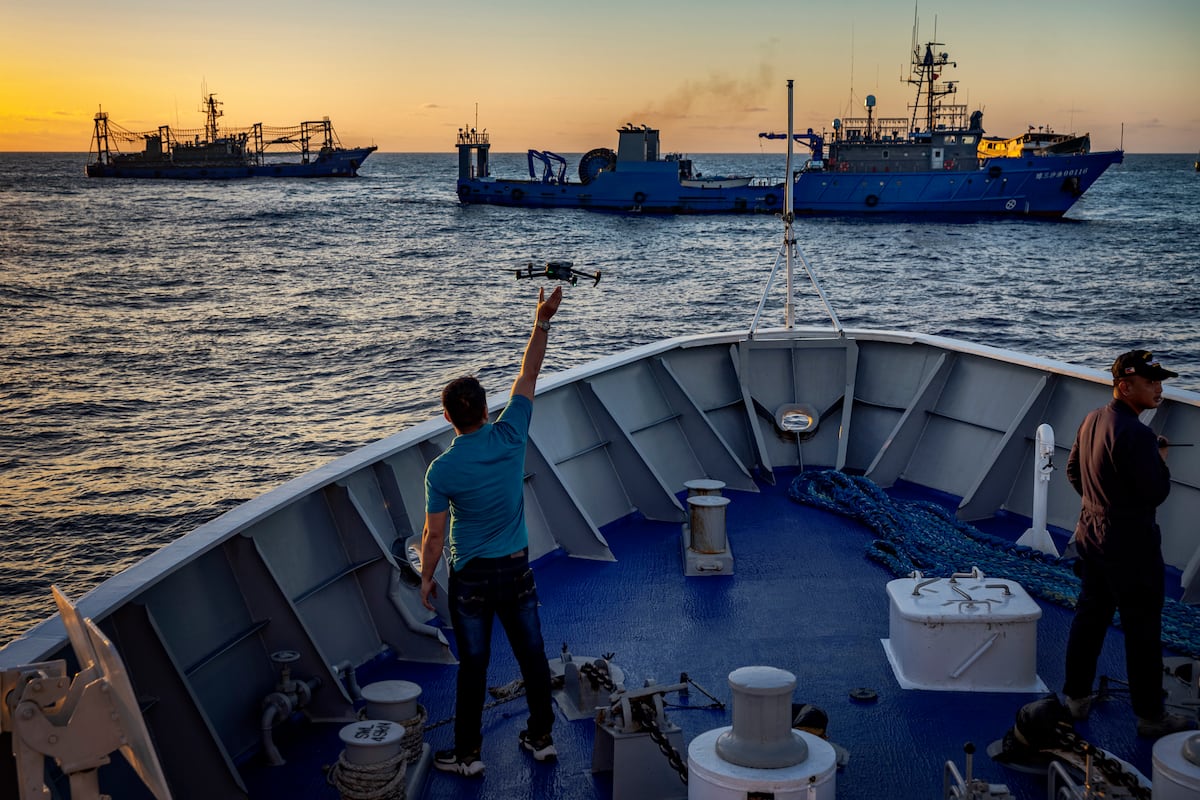
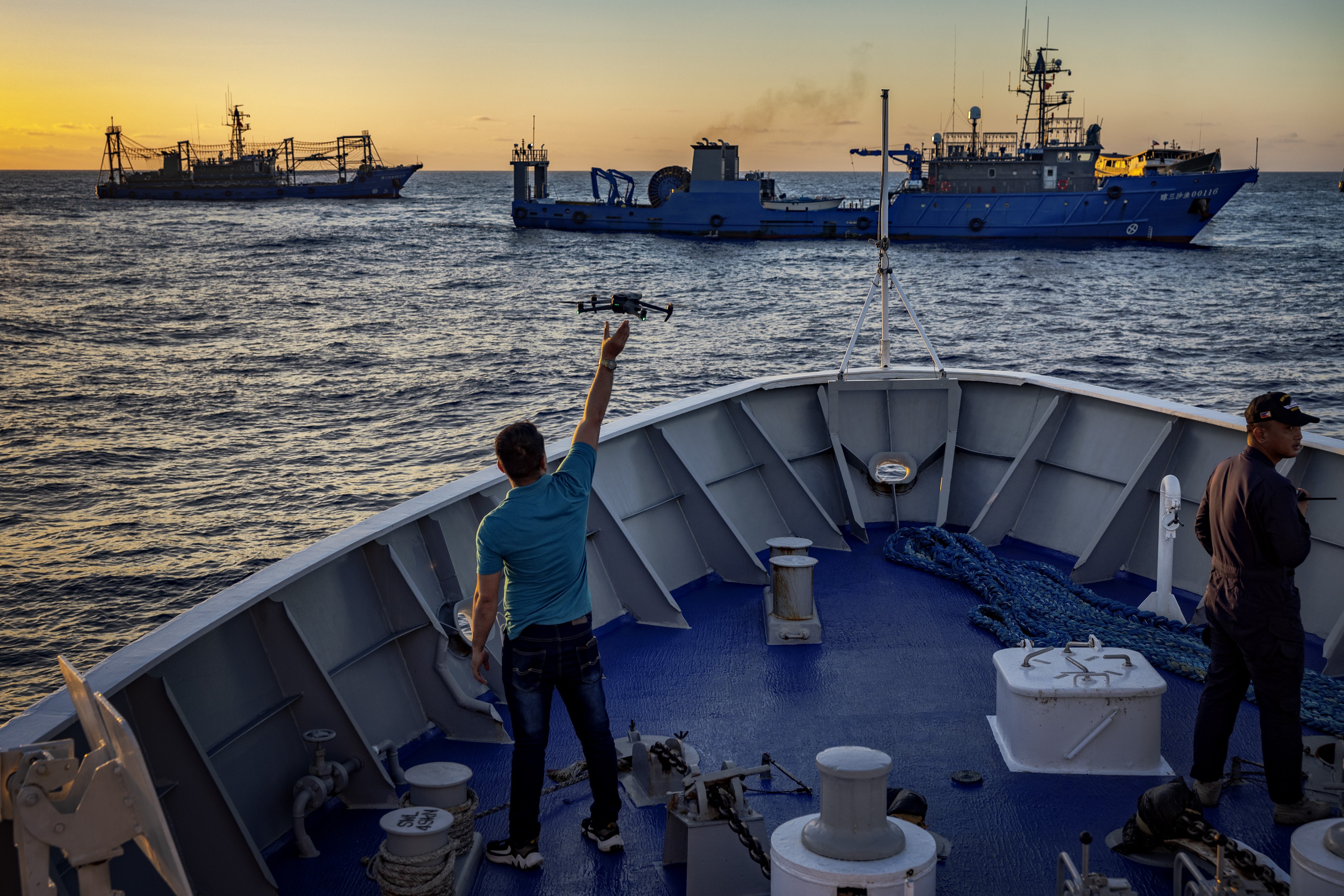
The underwater domain faces similar threats, authorities say, after six to seven drones with Chinese markings were washed ashore and collected by fishermen in previous years.
The Navy had received reports of drone activities as early as five years ago, but incidents only raised suspicions in 2023 after a drone was sighted in the Kalayaan Island Group, a chain of Philippine-controlled maritime features including Pag-asa Island (Thitu Island) in the South China Sea.
Drones have also been collected from the Philippine Sea in the country’s east, which flows into the East China Sea and the Pacific. The waterways saw increased traffic from Chinese research vessels and warships, including the PLA Navy’s Liaoning aircraft carrier.
Forensic investigation indicates that one of these drones sent information to a private firm in China. The naval drones collect dual-use information which could be used for research. But experts believe they are being released in Philippine waters to map out major mobility corridors for military use.
That data is a prerequisite for naval assets, like submarines, to safely enter Philippine waters, Rommel Jude Ong, professor at the Manila-based Ateneo de Manila University, told Defense News. Ong is a former rear admiral of the Philippine Navy and retired as vice commander in 2019.
“If the drones are for scientific purposes and launched without malice, operators should have claimed them after military reports, but nobody came out and claimed the drones, so it’s not for scientific reasons — these are covertly released for naval and military reasons,” Ong said.
In recent years, the Navy here has increased surveillance and monitoring operations and has steadily expanded its surface fleets and missile systems. The military has developed drone units and officials mentioned plans to acquire counter-drone tech, but specifics are sparse.
The defense department did not disclose planned acquisitions in the ongoing third phase of its modernization plan. But Trinidad said the shopping list includes both manned and unmanned platforms for subsea monitoring since the “underwater domain is a necessary capability.”
Leilani Chavez is an Asia correspondent for Defense News. Her reporting expertise is in East Asian politics, development projects, environmental issues and security.