
Norway to spend $6.4 billion on two more submarines, long-range strike
PARIS — Norway plans to spend 65 billion Norwegian kroner, or $6.4 billion, to buy two additional submarines on
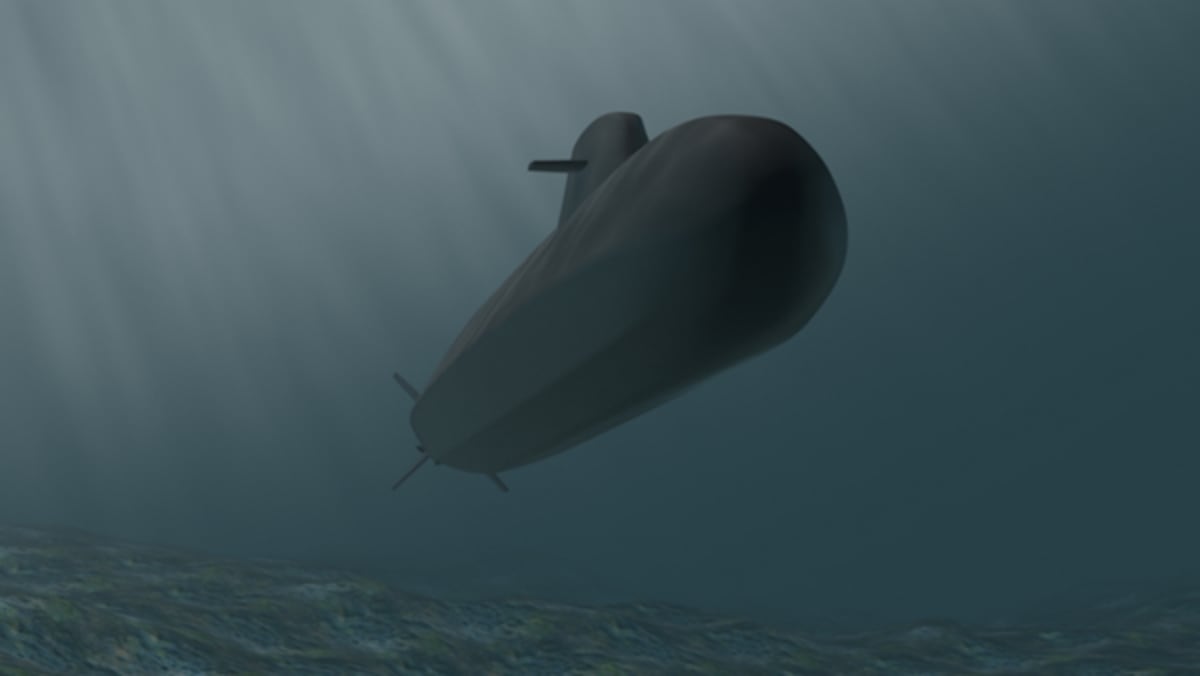
PARIS — Norway plans to spend 65 billion Norwegian kroner, or $6.4 billion, to buy two additional submarines on top of four already ordered from Germany’s TKMS, as well as acquire a long-range precision strike capability for the Army.
The government proposes to parliament to increase the cost framework for Norway’s submarine program by 46 billion kroner to cover the expense of adding two boats, it said in a statement on Friday. Norway will help finance a second production line in Germany to ensure the new submarines can be built quickly enough.
The Norwegian plans come amid ongoing Russian provocations including airspace violations of NATO allies, and worries that Russia will shift attention to the Baltic region after Ukraine. President Vladimir Putin was quoted as saying this week his country was ready for war with Europe should the continent seek a fight.
“Norway is a coastal and maritime nation, and submarines are absolutely central to the defense of our country,” Defense Minister Tore O. Sandvik said in a statement. “With six submarines, the armed forces will be able to operate more vessels in more locations at any given time. This will have a strong deterrent effect on any potential adversary.”
The country is seeing increased activity from Russian forces in the North Atlantic and the Barents, the minister said. Additional submarines will help strengthen NATO’s overall ability to ensure control and defense in the North Atlantic and the northern areas, according to Sandvik.
“As NATO’s eyes and ears in the north, this places greater demands on our ability to show presence, monitor, and deter in our neighboring areas,” Sandvik said. “In this context, submarines are absolutely indispensable.”
In neighboring Denmark, the country’s Arctic commander warned that he expects Russia to turn to arming in the High North if and when the Ukraine war ends, in an interview published this week.
The so-called Bear Gap in the waters north of Norway, between Svalbard and the Norwegian mainland, is considered a key transit area for Russian ballistic-missile submarines moving from the relatively shallow waters of the Barents Sea to the deeper waters of the Norwegian Sea and the Atlantic Ocean.
Norway earlier this year agreed to buy at least five British-made Type-26 frigates, which are optimized for anti-submarine warfare, in a deal worth around $13.5 billion. The United Kingdom and Norway earlier this week announced an agreement to operate a joint fleet of the frigates to hunt Russian submarines and protect the North Atlantic.
Two of the four submarines previously ordered by Norway from TKMS in 2021 are under construction in Germany, with the first expected to be delivered in 2029, the government said.
The unit price of the submarines and associated weapon systems has increased as a result of critical raw materials and equipment becoming more expensive from when the contract for the first four submarines was signed in 2021, Norway said. Weapon systems and upgrades for the six submarines are also adding to the cost, as well as an exchange-rate impact, according to the government.
The government is also proposing to spend 19 billion kroner on long-range precision fires for the Army that are able to hit targets up to a distance of 500 kilometers, without providing details on what equipment Norway plans to buy.
The proposed budget includes launchers and missiles as well as training and support systems, the government said.
“We live in increasingly turbulent times, and it is important that we have defense capabilities that can deter a potential adversary,” Sandvik said. “Long-range precision weapons have a deterrent effect because they can strike targets deep inside an adversary’s territory if necessary.”
Denmark said in September it needed long-range strike weapons to strengthen its defense posture as well as the collective deterrence of NATO, with details on the planned systems still to be decided.
Rudy Ruitenberg is a Europe correspondent for Defense News. He started his career at Bloomberg News and has experience reporting on technology, commodity markets and politics.