



Networks Keeping NASA’s Artemis II Mission Connected
NASA’s Artemis II mission will transport four astronauts around the Moon, bringing the agency one step closer to sending
NASA’s Artemis II mission will transport four astronauts around the Moon, bringing the agency one step closer to sending the first astronauts to Mars. Throughout Artemis II, astronaut voice, images, video, and vital mission data must traverse thousands of miles, carried on signals from NASA’s communications systems.
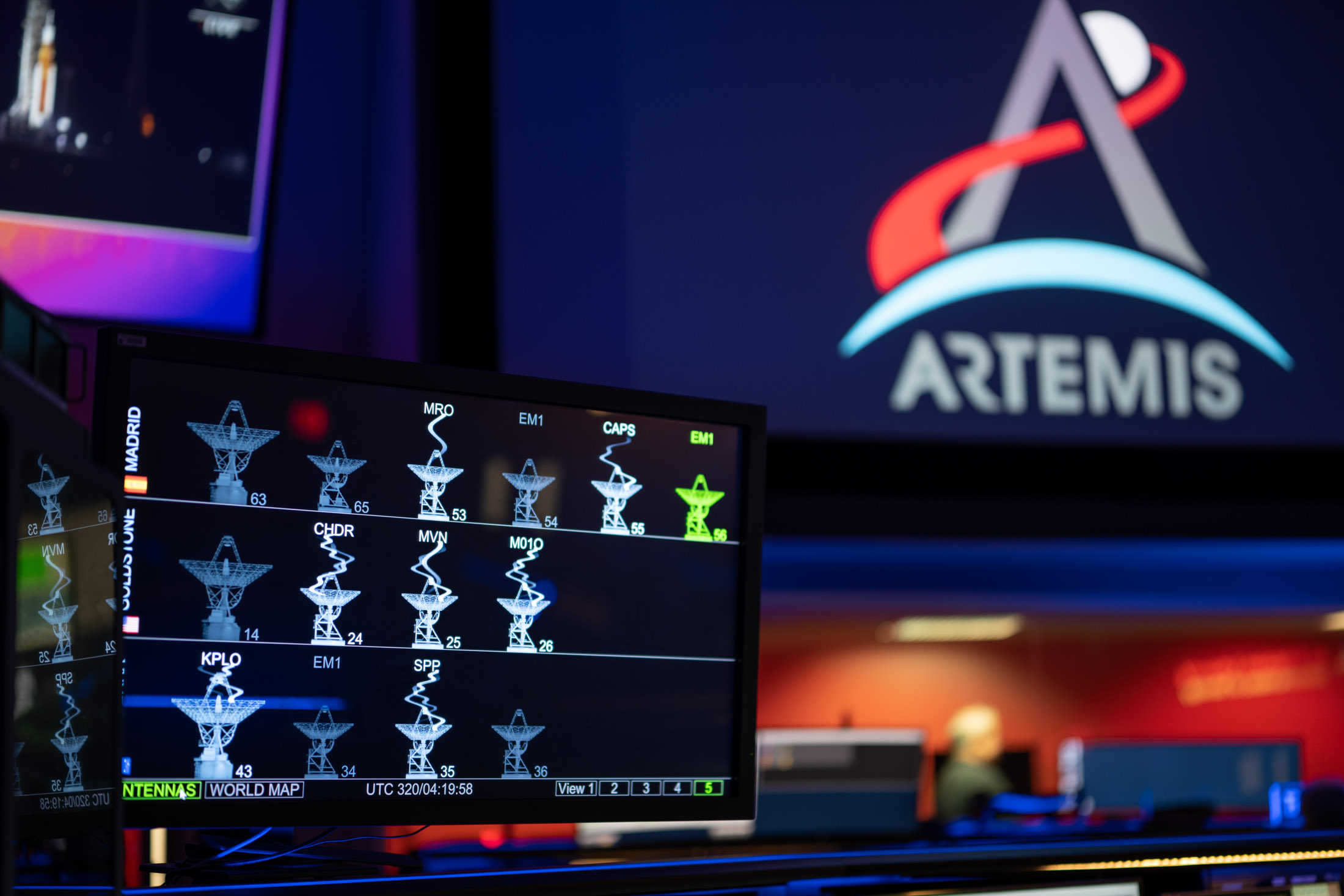
Through Artemis, NASA is establishing an enduring presence in space and exploring more of the Moon than ever before. To achieve this, Artemis missions rely on both the Near Space Network and the Deep Space Network. These networks, with oversight by NASA’s SCaN (Space Communications and Navigation) Program office, use global infrastructure and relay satellites to ensure seamless communications and tracking as Orion launches, orbits Earth, travels to the Moon, and returns home.
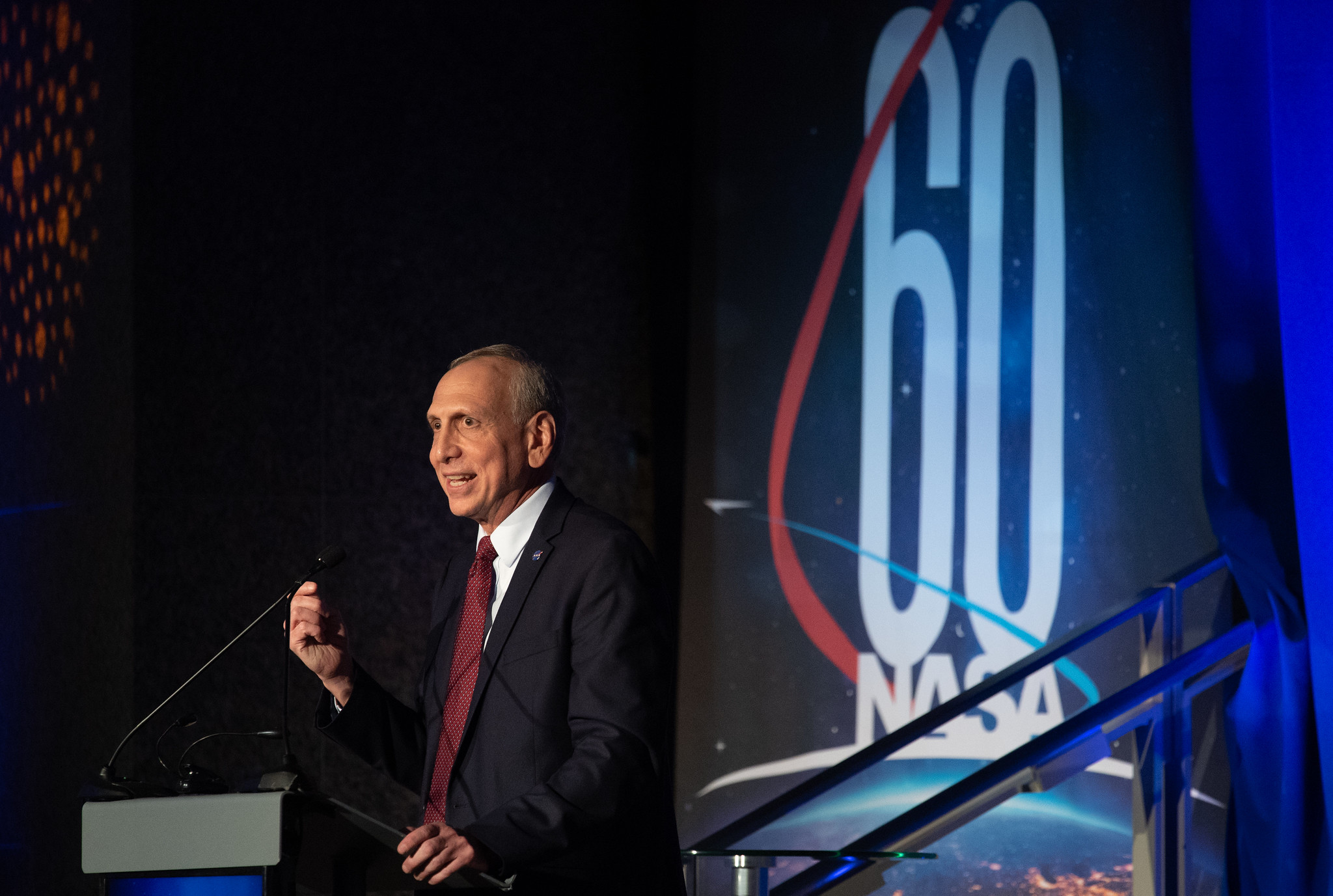
“Robust space communications aren’t optional; they’re the essential link that unites the crew and the exploration team on Earth to ensure safety and mission success, as I learned firsthand living and working aboard the International Space Station,” said Ken Bowersox, associate administrator for NASA’s Space Operations Mission Directorate at the agency’s headquarters in Washington. “From real-time conversations with mission controllers, to the data that drives critical decisions and research, and even calls home — space communications keep astronauts connected to mission managers, technical experts, loved ones, and everyone on Earth who wants to share in the excitement of our exploration missions. As we push farther into deep space, reliable communications links will enable more challenging missions and maximize the benefit for all of us on Earth.”
Ken Bowersox
Associate Administrator for NASA’s Space Operations Mission Directorate
Specialists will operate its networks in tandem to enable data exchange between spacecraft and mission controllers on Earth. NASA’s Mission Control Center at the agency’s Johnson Space Center in Houston will track the Space Launch System rocket, Interim Cryogenic Propulsion Stage, and Orion spacecraft through coordinated handoffs between the networks’ multiple assets on Earth and in space for the duration of the mission.
Using ground stations around the globe and a fleet of relay satellites, the Near Space Network will provide communications and navigation services during multiple stages of the Artemis II mission operations. The network, managed by NASA’s Goddard Space Flight Center in Greenbelt, Maryland, has a long legacy of supporting human spaceflight missions near Earth.
After Orion’s translunar injection burn, which will set the spacecraft on its planned orbit around the Moon, primary communications support will transition to the Deep Space Network, managed by NASA’s Jet Propulsion Laboratory in Southern California. The network’s international array of giant radio antennas, located in California, Spain, and Australia, provides a near-continuous connection to Orion and its crew.
“Reliable communications are the lifeline of human spaceflight,” said Kevin Coggins, deputy associate administrator for the SCaN Program at NASA Headquarters. “Our networks help make missions like Artemis II possible and set the stage for even more ambitious space exploration in the years ahead. These achievements are driven not only by NASA’s infrastructure but also by strong collaboration with our commercial partners, who play a critical role in advancing the capabilities and resilience of space communications.”
In addition to traditional radio network support, the spacecraft will host the Orion Artemis II Optical Communications System, a laser communications terminal that will transmit real science and crew data over laser links. Demonstrations like the recent Deep Space Optical Communications payload have proven laser communications systems can send more than 100 times more data than comparable radio networks, even millions of miles away from Earth. While laser communications will not be on Artemis III, the Orion Artemis II Optical Communications System could pave the way for future laser communications systems at the Moon and Mars.
The Orion Artemis II Optical Communications System payload is only one piece of NASA’s larger mission to improve lunar and deep space communications. Orion will experience a planned communications blackout lasting approximately 41 minutes. The blackout will occur as the spacecraft passes behind the Moon, blocking radio frequency signals to and from Earth. Similar blackouts occurred during the Apollo-era missions and are expected when using an Earth-based network infrastructure. When Orion reemerges from behind the Moon, the Deep Space Network will quickly reacquire Orion’s signal and restore communications with mission control. These planned blackouts remain an aspect of all missions operating on or around the Moon’s far side.
Each Artemis mission will build upon existing capabilities, including data processing and handling. For the Artemis II flight test, data from Orion will be compressed after it reaches Earth to manage the large amount of information. Data compression will reduce image and video quality and give priority to crew communications and mission data.
Looking ahead, NASA’s Lunar Communications Relay and Navigation Systems project is collaborating with industry to eliminate blackouts and support precise navigation by placing relay satellites around the Moon. This network of orbiting satellites will deliver persistent, high-bandwidth communications and navigation services for astronauts, landers, and orbiters on and around the lunar surface. In 2024, NASA selected Intuitive Machines to develop the first set of lunar relays for demonstration during the Artemis III lunar surface mission.
From liftoff to splashdown, NASA’s evolving networks will serve as the crew’s link home, ensuring that humanity’s return to the Moon stays connected every step of the way.