
NASA Announces 32nd Annual Human Exploration Rover Challenge Winners
NASA’s 32nd annual Human Exploration Rover Challenge, one of the agency’s longest-standing student challenges, culminated April 10-11 with its
NASA’s 32nd annual Human Exploration Rover Challenge, one of the agency’s longest-standing student challenges, culminated April 10-11 with its final excursion event at the U.S. Space & Rocket Center near NASA’s Marshall Space Flight Center in Huntsville, Alabama.
Spanning nine months, the challenge tasks student teams from around the world to design, build, and test a lunar rover powered by either human pilots or remote control. The annual competition concluded with an awards ceremony recognizing the top-performing teams.
In the human-powered division, Parish Episcopal School in Dallas, Texas earned first place in the high school division, while the University of Central Missouri in Warrensburg, Missouri, won the college and university title. In the remote-control division, Gould Academy in Bethel, Maine, earned the top award in the middle and high school division, and The University of Alabama in Huntsville in Huntsville, Alabama, secured the college and university title.
More than 500 students representing 42 teams from around the world participated in the 32nd annual competition. Teams included students from 28 colleges and universities, 13 high schools, and one middle school across 18 U.S. states, Puerto Rico,
Teams were scored on their ability to navigate a half-mile obstacle course, complete mission-specific task challenges, and pass multiple safety and design reviews conducted by NASA engineers, with awards presented across human-powered and remote-control divisions.
“This challenge gives students a hands-on opportunity to think like engineers and problem-solvers, applying real-world design principles to complex exploration scenarios,” said Vemitra Alexander, who leads the Human Exploration Rover Challenge for NASA’s Office of STEM Engagement at Marshall. “By encouraging innovation and teamwork, we’re helping prepare the next generation to contribute to missions that will take us farther into space.”
Here is the full list of winners:
- First Place: Parish Episcopal School, Dallas, Texas
- Second Place: Kealakehe High School, Kailua-Kona, Hawaii
- Third Place: Debbie Smith Career and Technical Education Academy, Reno, Nevada
- First Place: University of Central Missouri, Warrensburg, Missouri
- Second Place: Rhode Island School of Design, Providence, Rhode Island
- Third Place: The University of Alabama in Huntsville, Huntsville, Alabama
- First Place: Gould Academy, Bethel, Maine
- Second Place: SoulPhamm, South Plainfield, New Jersey
- Third Place: Space and Engineering Technologies Academy, San Antonio, Texas
- First Place: The University of Alabama in Huntsville, Huntsville, Alabama
- Second Place: South Dakota State University, Brookings, South Dakota
- Third Place: Florida Atlantic University, Boca Raton, Florida
- Gould Academy, Bethel, Maine
- Remote-Control
- Middle School/High School Division: Gould Academy, Bethel, Maine
- College/University Division: The University of Alabama in Huntsville, Huntsville, Alabama
- Human-Powered
- High School Division: Parish Episcopal School, Dallas, Texas
- College/University Division: Rhode Island School of Design, Providence, Rhode Island
- Queen’s University, Kingston, Ontario, Canada
- Human-Powered
- High School Division: Parish Episcopal School, Dallas, Texas
- College/University Division: Rhode Island School of Design, Providence, Rhode Island
- Remote-Control
- Middle School/High School Division: Gould Academy, Bethel, Maine
- College/University Division: University of the District of Columbia, Washington, D.C.
- Human-Powered
- High School Division: Parish Episcopal School, Dallas, Texas
- College/University Division: University of Central Missouri, Warrensburg, Missouri
- Remote-Control
- Middle School/High School Division: SoulPhamm, South Plainfield, New Jersey
- College/University Division: The University of Alabama in Huntsville, Huntsville, Alabama
- Human-Powered
- High School Division: Erie High School, Erie, Colorado
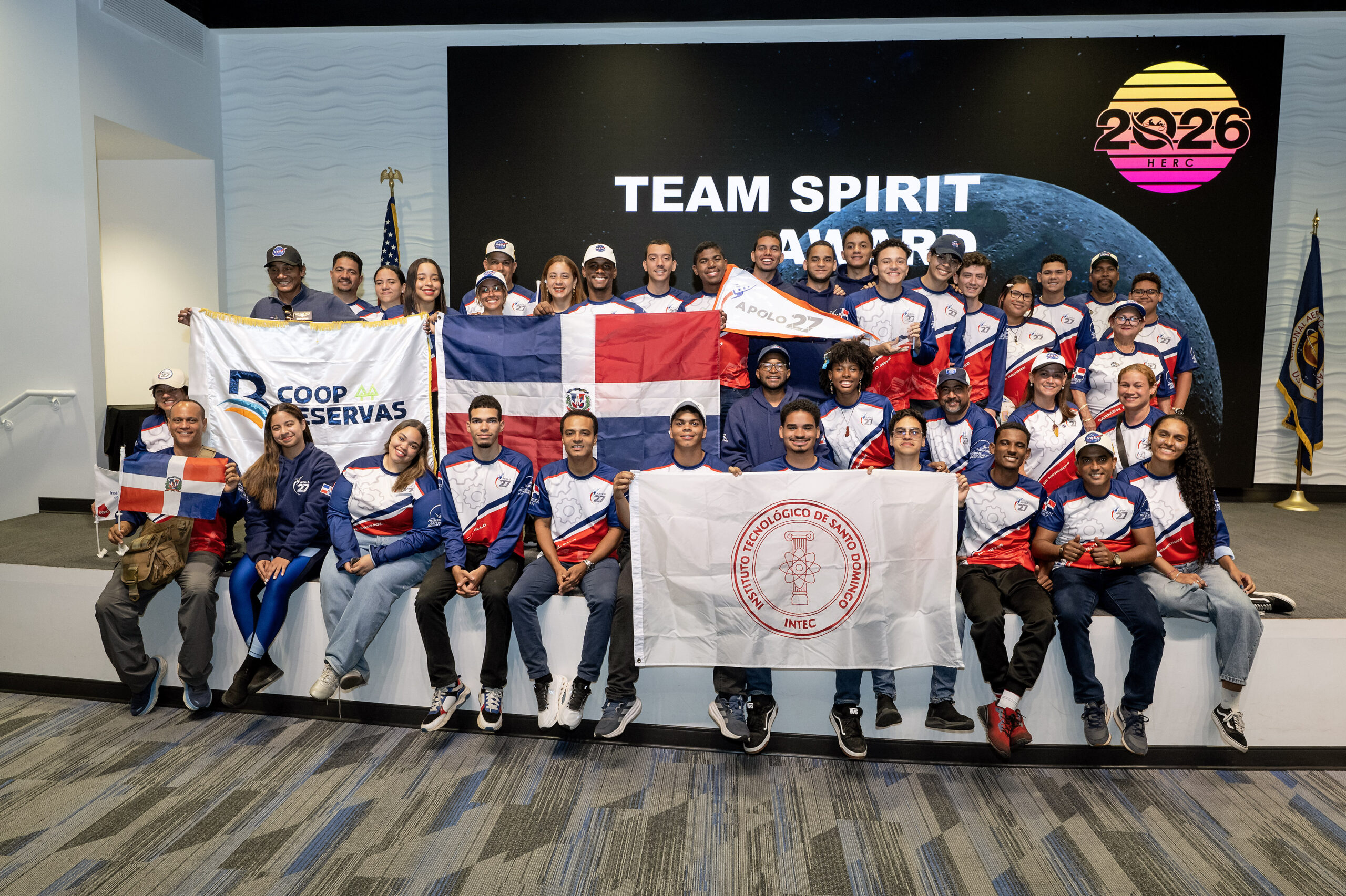
- College/University Division: Instituto Tecnológico de Santo Domingo, Santo Domingo, Dominican Republic
- Remote-Control
- Middle School/High School Division: Gould Academy, Bethel, Maine
- Human-Powered
- High School Division: Debbie Smith Career and Technical Education Academy, Reno, Nevada
- College/University Division: Universidad Aeronáutica en Querétaro, Coyote, Mexico
- Remote-Control
- Middle School/High School Division: Chaminade High School, Mineola, New York
- College/University Division: ATLAS SkillTech University, Mumbai, India
- Human-Powered
- High School Division: Albertville Innovation Academy, Albertville, Alabama
- College/University Division: Instituto Tecnológico de Santo Domingo, Santo Domingo, Dominican Republic
- Remote-Control
- Middle School/High School Division: Space and Engineering Technologies Academy, San Antonio, Texas
- College/University Division: ATLAS SkillTech University, Mumbai, India
- Instituto Tecnológico de Santo Domingo, Santo Domingo, Dominican Republic
- The University of Alabama in Huntsville (Human Powered), Huntsville, Alabama
- Human-Powered
- High School Division: Kealakehe High School, Kailua-Kona, Hawaii
- College/University Division: The University of Alabama in Huntsville, Huntsville, Alabama
- Remote-Control
- Middle School/High School Division: Gould Academy, Bethel, Maine
- College/University Division: Campbell University, Buies Creek, North Carolina
- High School Division: Parish Episcopal School, Dallas, Texas
- College/University Division: University of Central Missouri, Warrensburg, Missouri
- High School Division: Erie High School, Erie, Colorado
- College/University Division: Campbell University, Buies Creek, North Carolina
- Campbell University, Buies Creek, North Carolina
The rover challenge is one of NASA’s eight Artemis Student Challenges reflecting the goals of the Artemis program, which will land Americans on the Moon while establishing a long-term presence for science and exploration, preparing for future human missions to Mars. NASA uses such challenges to encourage students to pursue degrees and careers in the fields of science, technology, engineering, and mathematics.
The competition is managed by NASA’s Office of STEM Engagement at NASA Marshall. Since its inception in 1994, more than 15,000 students have participated – with many former students working at NASA, or within the aerospace industry.
Learn more about the Human Exploration Rover Challenge.