




How to spot the lunar X and V
The lunar X, seen from Tokyo in February 2025 The Yomiuri Shimbun via AP Images/Alamy The first time I
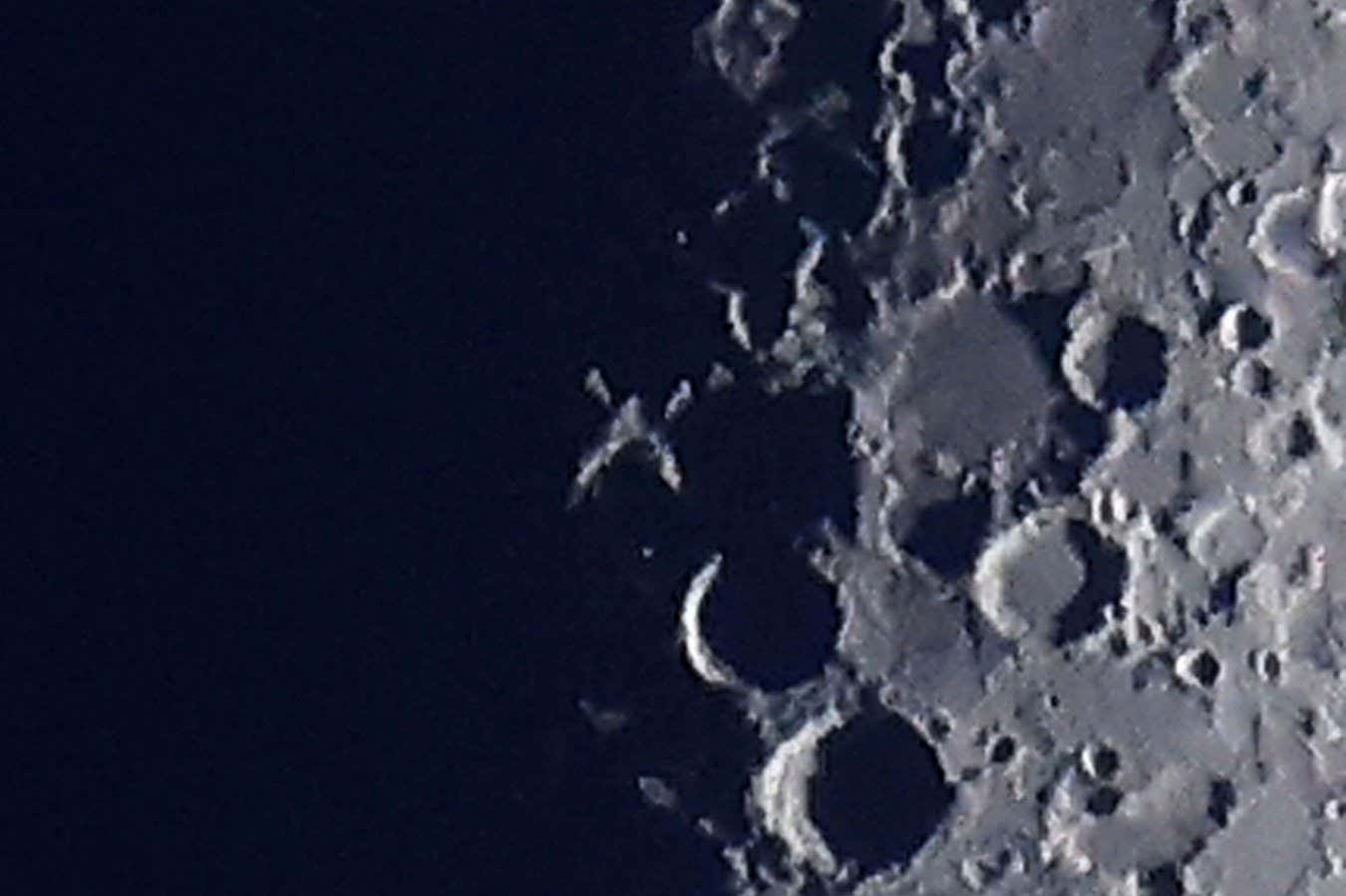
The lunar X, seen from Tokyo in February 2025
The Yomiuri Shimbun via AP Images/Alamy
The first time I took a photograph of the moon through my telescope was almost a decade ago. It was a very amateur set-up. I held up my phone camera to the eyepiece and after capturing a dozen fuzzy images, my shaky hands managed to stay steady for long enough that I got a clear picture of the moon’s surface. I was so proud of the photo that I posted it online.
I hadn’t realised it back then, but I was photographing the moon during a very specific 4-to-6-hour window that comes around each month. It wasn’t until someone replied to my post that I realised, by sheer chance, I had captured two fleeting features on the lunar surface known as the lunar X and V.
These marks on the surface of the moon are optical illusions, created by the way sunlight hits the rims of specific craters. And they are only visible during the moon’s first quarter phase, when the line between light and shade – known as the terminator – sits at exactly the right spot.
The lunar X (pictured) is, as you might imagine, a bright X shape that appears because light falls on the rims of three craters named La Caille, Blanchinus and Purbach. The V is also bright and comes about because of the way light hits a crated called Ukert and other smaller craters nearby.
To see the lunar X and V, you will need access to a telescope. Other than that, timing is everything. The time to look will always vary depending on where you are in the world – as will the moon’s visibility.
The next first quarter of the moon will be on 26 January at around 5am GMT, but if you live in the UK, the moon will be below the horizon then, so don’t set your alarms. A good place to look from on the night of 25 January into the next morning will be New York, where the first quarter will be around midnight. This means the X and V will be visible from around 10pm to 2am. In other parts of the world, it will be daylight, so the moon won’t be visible. From Sydney, for example, the January first quarter will be at around 3pm.
If you hope to see the lunar X and V, your best bet is to find a first quarter moon that falls within a good window for observing the moon from where you live – in other words, when it’s dark and the moon is high in the sky. You can use software such as Stellarium to check whether the moon will be visible at a specific time and date, and where it will be in the sky.
The next first quarters are on 24 February, 25 March and 24/25 April. If you live in the UK, like me, 25 March is a good one to aim for, since it falls at around 7pm local time.
Knowing how many factors must align for the lunar X and V to be visible, I feel incredibly lucky that the first time I managed to take a photo of the moon’s surface, these two tricks of light happened to be on display.
These articles are posted each week at
newscientist.com/maker
Abigail Beall is the specials editor at New Scientist and author of The Art of Urban Astronomy. Follow her @abbybeall
Topics: