

Engineer Richard Wear Proud to Serve During NASA’s Return to the Moon
Richard Wear calls it an honor to be working at NASA’s Stennis Space Center near Bay St. Louis, Mississippi,
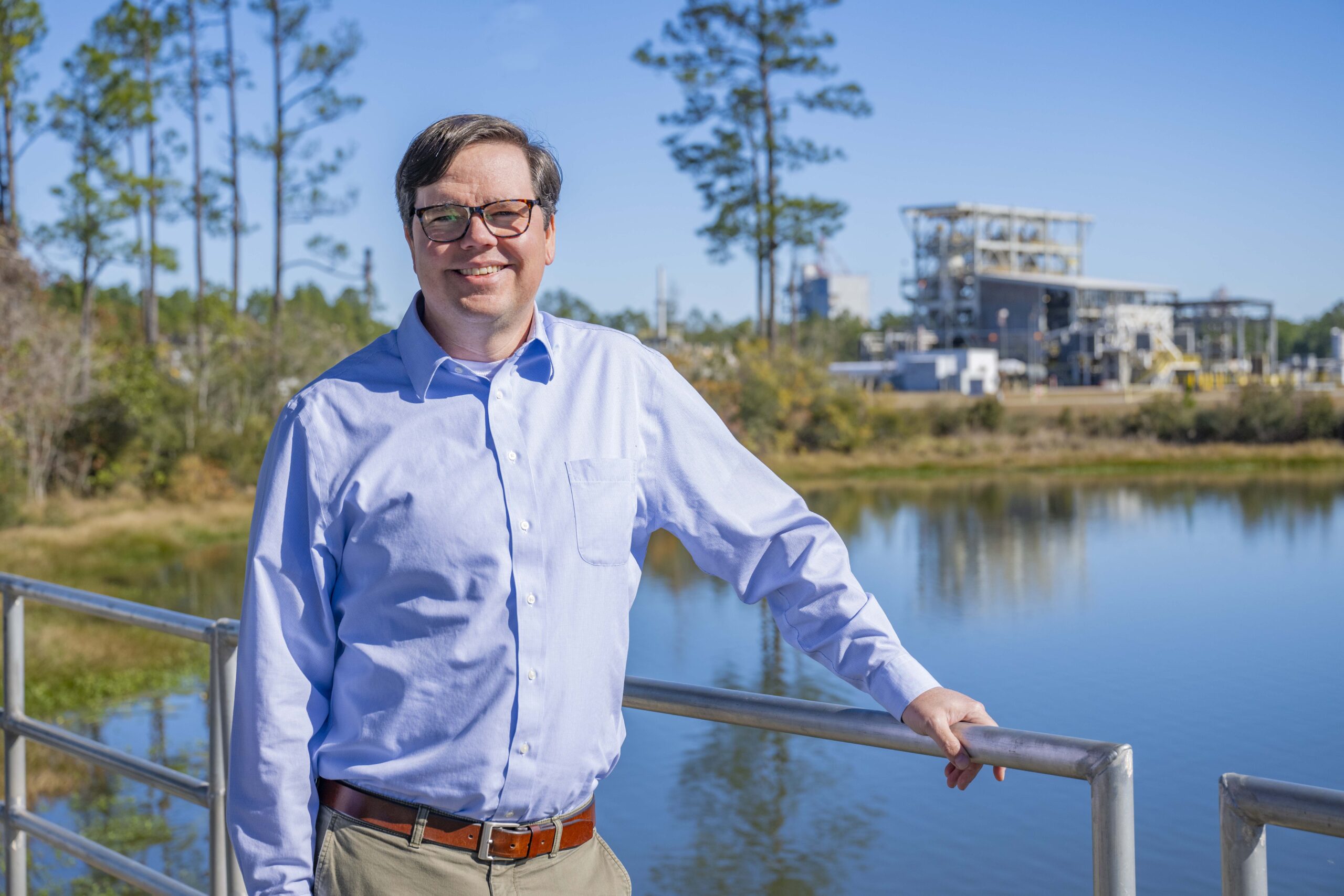
Richard Wear calls it an honor to be working at NASA’s Stennis Space Center near Bay St. Louis, Mississippi, during a historic time as NASA prepares to send astronauts around the Moon for the first time in more than 50 years on the Artemis II mission.
“I have not stopped learning in the 15 years that I have been here,” Wear said.
As acting chief of the Mechanical Engineering Branch, the Slidell, Louisiana, resident primarily supports testing at the E Test Complex, where NASA and commercial companies carry out propulsion test operations.
The complex features four stands with 12 test cells capable of supporting a range of component and engine test activities. The versatility of the complex infrastructure and test team allows it to support projects for commercial aerospace companies, large and small.
“The unique high pressure systems bring customers from all over the country,” Wear said. “I am proud to have been a part of testing for our commercial partners over the years, some of which have become successful and recognized across the world.”
Education was always a priority in Wear’s household. His mom taught math, and his dad majored in chemistry. It influenced the Tuscaloosa, Alabama, native’s decision to pursue engineering.
After earning bachelor’s and master’s degrees in mechanical engineering from the University of Alabama, Wear began his career in 2006 at NASA’s Michoud Assembly Facility in New Orleans as a contractor for Lockheed Martin. He worked in the thermal analysis group to support the space shuttle external tank program. His role focused on studying how heat moved through the tank’s structure and its thermal protection systems.
When NASA needed to fill a thermal analysis role at NASA Stennis in 2010, Wear applied and quickly embraced the challenge. Initially hired to focus on thermal analysis, he soon expanded his expertise to include fluid analysis and thermodynamics. Even in his current supervisory role, Wear continues to contribute technical analysis and support testing.
Wear describes NASA Stennis as a “hands-on, get-it-done center” with a culture that is serious, yet fun.
As a smaller NASA center, everyone has the chance to make a difference.
Wear believes the work environment provides new employees the opportunity to meet developmental goals faster.
“I think that is also true for our test customers and tenants,” Wear said. “Sometimes with our customers at the E Test Complex, they are just starting out, so we can guide them to a successful outcome by sharing our knowledge. We want all our employees and customers to be successful and I think that really shows.”
The mission-focused culture has shaped Wear’s own career.
Since joining NASA Stennis in 2010 as a junior analyst, he advanced to senior analyst, then lead project fluid systems analyst, before being named thermal-fluid subject matter expert in 2018. In 2022, he accepted the deputy chief position in the Mechanical Engineering Branch and has served as acting chief since March 2025.
Even in a supervisor role, Wear continues to find inspiration in the teamwork around him.
“The focus here is always on the mission, not on whose job it is,” he said. “That true team effort motivates me to do my best every day.”
One part of Wear’s role he enjoys is training students. Inspiration came to him during recent interviews with students for the Pathways Internship. The conversations were with several students that have a passion for NASA, its mission, and for space exploration.
“Working hard in school and getting good grades is part of it, but I think persistence and attitude plays a huge part,” Wear said. “For example, we have told our prospective Pathways Interns multiple times that attitude is one of the most important parts of getting a job at NASA Stennis after an internship.”
Wear recommends all students do their research, figure out what he or she does not know, and then find someone who can help fill the gap.
This approach of staying curious and persistent is what put Wear in the right place at the right time as NASA writes a new chapter of space history that will return America to the Moon and beyond.