Cheating just three times massively ups the chance of winning at chess
It isn’t always easy to detect cheating in chess SimpleImages/Getty Just three judiciously deployed cheats can turn an otherwise
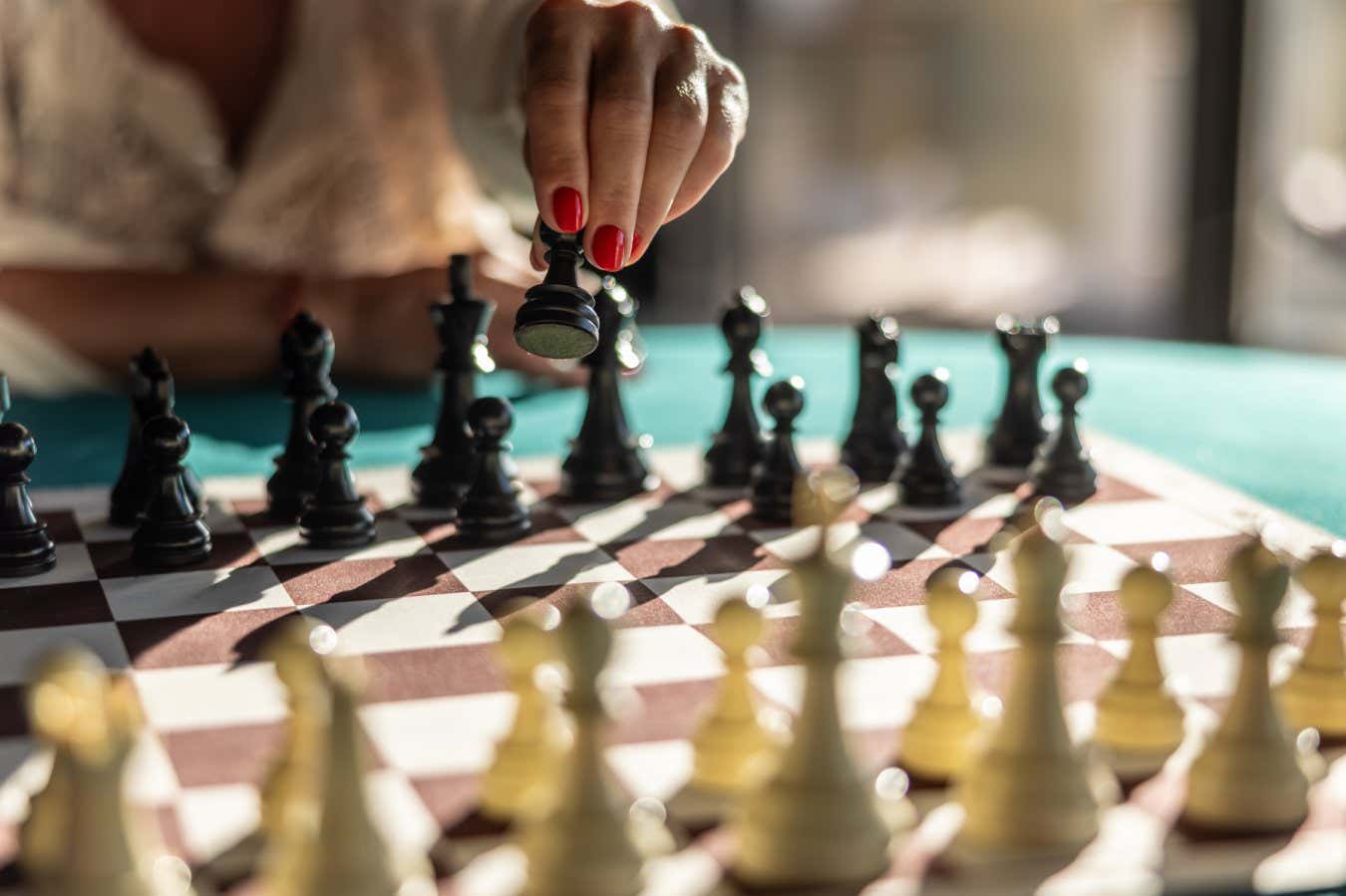
It isn’t always easy to detect cheating in chess
SimpleImages/Getty
Just three judiciously deployed cheats can turn an otherwise equal chess game into a near-certain victory, a new analysis shows – and systems designed to crack down on cheating might not notice the foul play.
Daniel Keren at the University of Haifa in Israel simulated 100,000 matches using the powerful Stockfish chess engine – a computer system that, at its maximum power, is better at playing chess than any human world champion. The matches were played between two computer engines competing at the level of an average chess player – 1500 on the Elo rating scale typically used to calculate skill level in chess. Half the games were logged without any further intervention, while the other half allowed occasional intervention by a stronger computer chess “player” with an Elo score of 3190 – a higher rating than any human player has ever achieved.
Competitors usually have a slim advantage when playing white, with a 51 per cent chance of winning, on average, tied to the fact that they make the game’s first move. But Keren found this advantage could be boosted to a 66 per cent chance of winning on average if the player used a computer chess-playing system like Stockfish for advice on just one move in the game. If the player cheats and asks for advice three times, their chance of victory increases to 84 per cent on average, Keren discovered.
“I thought that one cheat would increase the ratio to 55 per cent and another one to maybe 60 per cent,” he says. “Cheating three times and you reach 84 per cent – to me, that was astounding.”
When you cheat matters, says Keren. One well-timed intervention – for instance, about 30 moves into the game – from a powerful chess-playing engine could improve the chance of victory by 15 percentage points, compared with the 7.5 percentage point improvement seen if five cheats were deployed at random throughout the game.
The study used a system that decided to intervene only when the stronger player’s suggested move improved the win probability substantially compared with the move that the less skilful player was going to select. The criteria for cheating also became more stringent as each match progressed. “It’s kind of lenient in the first cheats, but as you advance, it demands a bigger advantage in order to cheat,” says Keren.
Such a system provides what Keren calls “a measure of camouflage” that could avoid someone being spotted and banned by the automated systems that online chess platforms use to crack down on cheating. Keren says those automated systems could plausibly fail to spot that an unusually good move actually came from a computer because it might conclude that the move was simply the human player having a “brilliant moment of inspiration”.
“A single engine ‘hint’ in the right position can be game-deciding, and because humans can sometimes find the same best move, that kind of selective cheating is unusually difficult to prove from move analysis alone,” says Kim Schu at the University of Mainz in Germany, who says the paper is interesting.
Keren says his work isn’t designed to help people cheat, but to assist chess platforms in understanding the risk from a small amount of carefully deployed deception. “The idea is to see what cheating can do,” he says. “Know thy enemy, right?”
The chess community, which is increasingly playing online, needs to work harder to identify instances of cheating, says Schu. “A strong anti-cheating approach needs to combine multiple signals,” he says, recommending it include analysis of behavioural patterns, timing of moves and the broader history of any online chess accounts.
Topics: