

Bone cancer therapy unexpectedly makes tumours less painful
An artist’s impression of nanomedicine in action ALFRED PASIEKA/SCIENCE PHOTO LIBRARY Cancer that spreads to bones can be deadly,
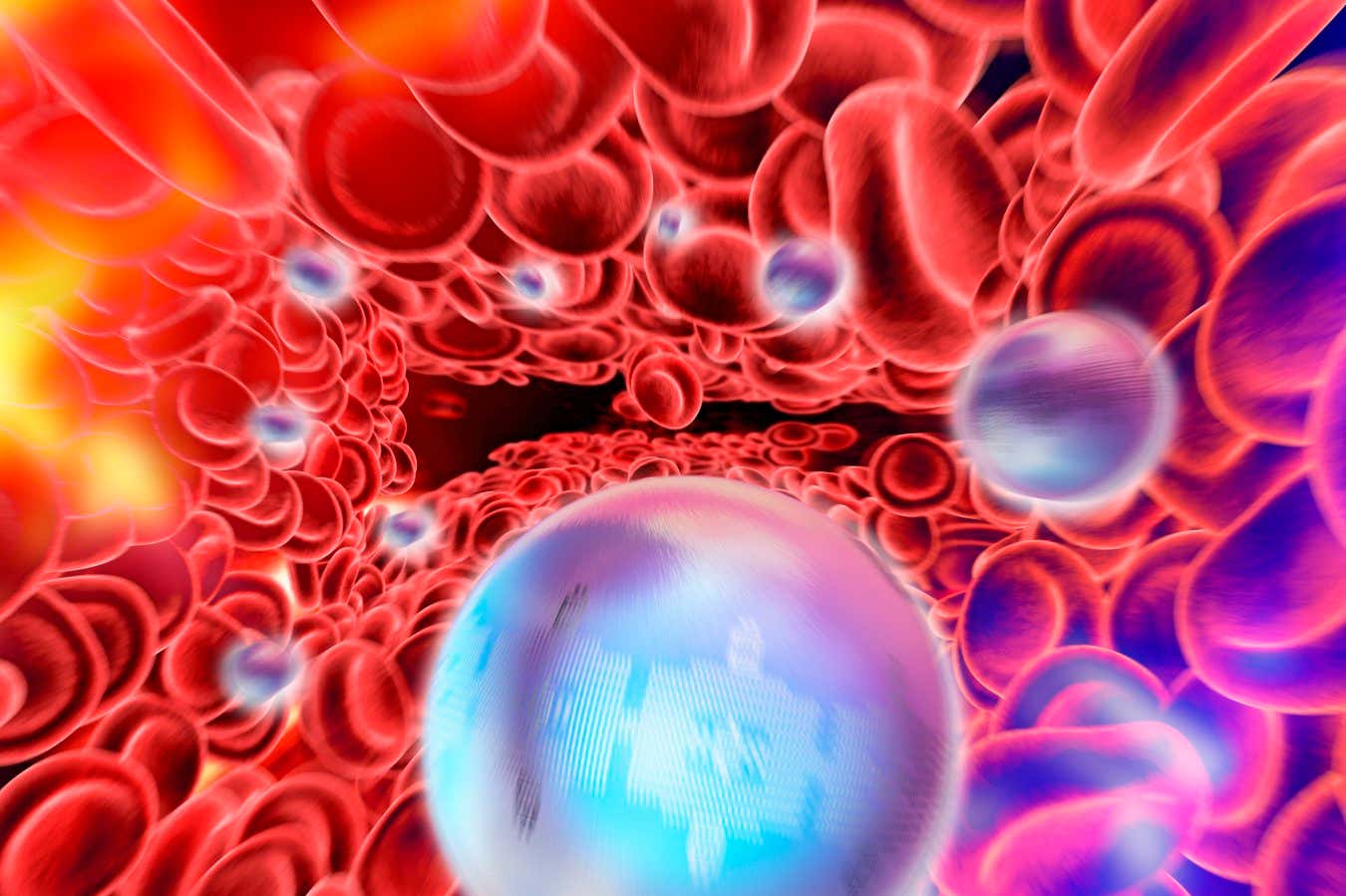
An artist’s impression of nanomedicine in action
ALFRED PASIEKA/SCIENCE PHOTO LIBRARY
Cancer that spreads to bones can be deadly, and it also tends to be painful. Now, a drug seems to address both problems by disrupting the interplay between nerves and tumours, suggesting the approach could provide a more comfortable form of cancer therapy.
“This highlights a new, exciting paradigm where a single cancer therapy can improve mortality and quality of life at the same time,” says William Hwang at Harvard University, who wasn’t involved in the new research.
Between 65 and 80 per cent of people with breast or prostate cancer that has spread to distant sites in the body end up with cancer in their bones. As these skeletal tumours grow, they tend to stimulate nearby pain-sensing nerves.
Radiotherapy, where X-rays are fired at tumours, and chemotherapy, which targets rapidly dividing cells with powerful drugs, are commonly used to shrink such bone growths. But pain often persists because any remaining cancer cells continue to interact with nerves. What’s more, conventional therapies often damage healthy tissue – leading to prolonged use of painkillers like opioids, which carry the risk of addiction, says Jiajia Xiang at Zhejiang University in China.
Now, Xiang and his colleagues have developed a “nanotherapy” made of tiny, fatty capsules containing DNA encoding for the protein gasdermin B, which kills cells by puncturing holes in them. The drug was designed to produce gasdermin B only in cancer cells and not healthy ones, based on the idea that tumour cells can be distinguished from other cells because they have higher levels of certain molecules called reactive oxygen species. The capsules also contain a chemical called OPSA that boosts the body’s natural anti-cancer immune response.
To put their drug to the test, the researchers injected breast cancer cells into one leg each of several mice. Once the cancer cells had grown into bone tumours, each mouse received either the complete nanotherapy, a simpler form of the nanotherapy that contained OPSA but not the gasdermin B gene, or a control saline solution. All treatments were injected into the tail every other day for five days.
Two weeks later, the tumours in the complete nanotherapy group were 94 per cent smaller than those in the control group, on average, while this figure was about 50 per cent in the simpler nanotherapy group. After another couple of weeks, all of the mice that received the complete nanotherapy were alive, whereas just 60 per cent of the mice in the simpler nanotherapy group had survived and only 20 per cent of the control mice did. As expected, the therapy directly killed tumour cells and provoked an anti-tumour immune response, says Xiang.
But the team also noticed that the mice receiving either form of the nanotherapy used their cancerous limbs substantially more than those in the control group, with the complete nanotherapy group seeing larger benefits. This suggested that the nanotherapy might reduce pain associated with bone tumours. When the researchers analysed tumour samples collected from the mice, they were surprised to find that both the nanotherapy treatments reduced the density of nerve cells, or neurons, within the cancerous growths.
The nanotherapy seems to do this by increasing the cancer cells’ ability to uptake calcium ions, which nerves require to grow and transmit pain signals to the brain. “The idea is the cancer cells essentially act as a sponge for all the local calcium, and that depletes the calcium available to nearby sensory neurons,” says Hwang. Further research is needed to tease out exactly how the nanotherapy may be altering calcium uptake in the cancer cells, which could reveal ways to more effectively target this potential pathway, says Hwang.
In another experiment, the team found that the nerves surrounding the tumour actually helped it grow, suggesting the nerve-related effects not only relieved pain, but also slowed the growth of the tumours – although to what extent is unclear, says Xiang.
Together, the findings support the growing idea that targeting the nervous system could transform cancer treatment, says Hwang. But it is generally easier to treat cancer in mice than humans, due in part to differences in the anti-cancer immune response of the rodents and humans, he says. Xiang hopes to start human trials in between five and 10 years.
Topics: