Australia PM announces royal commission into Bondi shooting
Australian Prime Minister Anthony Albanese has announced a royal commission, the country’s most powerful form of independent inquiry, into
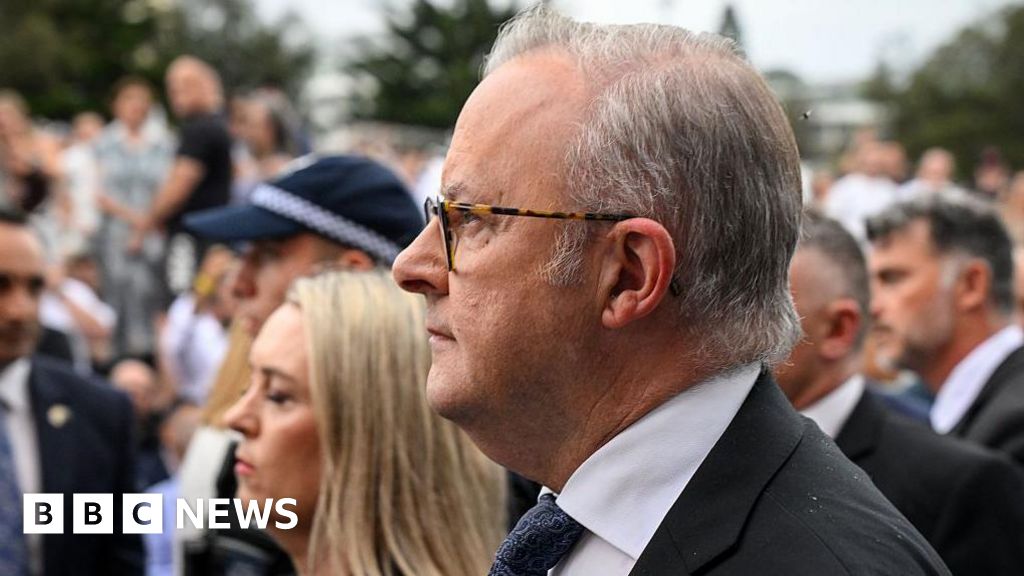
Australian Prime Minister Anthony Albanese has announced a royal commission, the country’s most powerful form of independent inquiry, into last month’s shooting at Bondi Beach.
The attack targeting a Jewish festival left 15 people dead, making it one of the deadliest in the country’s history.
Albanese had previously argued that reforms on gun ownership and hate speech, steps to tackle antisemitism and a review into intelligence and law enforcement agencies offered the quickest response.
But following weeks of public pressure, he said on Thursday that a royal commission was the best way forward after he had taken “the time to reflect” and meet with the Jewish community.
“I’ve repeatedly said that our government’s priority is to promote unity and social cohesion, and this is what Australia needs to heal, to learn, to come together in a spirit of national unity,” he told reporters in Canberra. “It’s clear to me that a royal commission is essential to achieving this.”
Since the 14 December attack, the families of the victims, as well as a chorus of public figures, including lawyers, business people and athletes had led an almost daily campaign calling for him to reverse course and launch a royal commission.
A royal commission has broad powers to investigate, the ability to summon witnesses and compel agencies to produce documents. It can also offer legal protections to whistleblowers.
The commission will examine four key areas, Albanese said. They comprise:
- investigating the “nature and prevalence of antisemitism” and its “key drivers” in Australia
- making recommendations to enforcement, border immigration and security agencies to tackle antisemitism
- examining the circumstances surrounding the Bondi attack
- making any other recommendations for strengthening social cohesion and countering the spread of ideological and religiously motivated extremism
The prime minister said the work of Dennis Richardson, the former spy chief leading a review into intelligence and law enforcement agencies, would be wrapped into the royal commission, with an interim report expected in April.
Former High Court justice Virginia Bell has been appointed to lead the commission, Albanese said, adding that he had asked her to report by December 2026 and that “this won’t be a drawnout process.” Previous royal commissions have taken years.
“This royal commission is the right format, the right duration and the right terms of reference to deliver the right outcome for our national unity and our national security,” Albanese said.
Rumours that Bell was to be appointed had earlier drawn criticism from the Jewish community.
Former treasurer Josh Frydenberg said prior to Albanese’s announcement the prime minister had been told by Jewish leaders there were “serious concerns” about her appointment, without specifying what they were.
Speaking alongside Albanese, Attorney General Michelle Rowland said Bell was “an eminent and highly capable former Justice of the High Court of Australia, and I have no doubt that she will examine the complex issues ahead with impartiality and precision”.
In the days after the attack, state and federal leaders agreed to tighten gun controls, including limits on the number of firearms held by any one individual and on the types of firearms that can be held, as well as a buyback scheme.
Albanese also promised hate speech reform including penalties for preachers and leaders who promote violence and a new federal offence of “aggravated hate speech”.
He previously said his government would adopt the recommendations put forward by antisemitism commissioner Jillian Segal in a July report.
Her report was criticised by some upon its release due to its implications for free speech, such as plans to monitor universities and arts organisations and withhold funding if they were deemed to have failed to act against antisemitism.
Speaking alongside the prime minister on Thursday, Segal said the government’s decision was “the right one and an important one”.
“It does reflect the seriousness of the growth in antisemitism and its impact on our country and our democracy,” she said.