Apple Tests End-to-End Encrypted RCS Messaging in iOS 26.4 Developer Beta
Ravie LakshmananFeb 17, 2026Encryption / Mobile Security Apple on Monday released a new developer beta of iOS and iPadOS
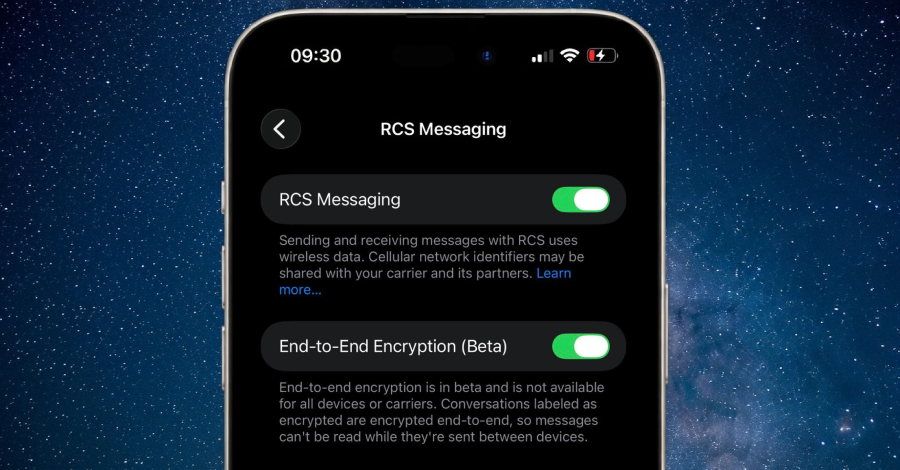
Apple on Monday released a new developer beta of iOS and iPadOS with support for end-to-end encryption (E2EE) in Rich Communications Services (RCS) messages.
The feature is currently available for testing in iOS and iPadOS 26.4 Beta, and is expected to be shipped to customers in a future update for iOS, iPadOS, macOS, and watchOS.
“End-to-end encryption is in beta and is not available for all devices or carriers,” Apple said in its release notes. “Conversations labeled as encrypted are encrypted end-to-end, so messages can’t be read while they’re sent between devices.”
The iPhone maker also pointed out that the availability of RCS encryption is limited to conversations between Apple devices, and not other platforms like Android.
The secure messaging test arrives nearly a year after the GSM Association (GSMA) formally announced support for E2EE for safeguarding messages sent via the RCS protocol. E2EE for RCS will require Apple to update to RCS Universal Profile 3.0, which is built atop the Messaging Layer Security (MLS) protocol.
The latest beta also comes with a new feature that allows applications to opt in to the full safeguards of Memory Integrity Enforcement (MIE) for enhanced memory safety protection. Previously, applications were limited to Soft Mode, Apple said.
MIE was unveiled by the company last September as a way to counter sophisticated mercenary spyware attacks targeting its platform by offering “always-on memory safety protection” across critical attack surfaces such as the kernel and over 70 userland processes without imposing any performance overhead.
According to a report from MacRumors, iOS 26.4 is also expected to enable Stolen Device Protection by default for all iPhone users. The feature adds an extra layer of security by requiring Face ID or Touch ID biometric authentication when performing sensitive actions like accessing stored passwords and credit cards when the device is away from familiar locations, such as home or work.
Stolen Device Protection also adds a one-hour delay before making Apple Account password changes, on top of the Face ID or Touch ID authentication to give users some time to mark their device as lost in the event it gets stolen.