Chernobyl at 40: My life as a meteorologist under Russian occupation
Lyudmila Dyblenko stayed at Chernobyl during the Russian occupation in 2022 Mykhaylo Palinchak As Russian troops rolled across the
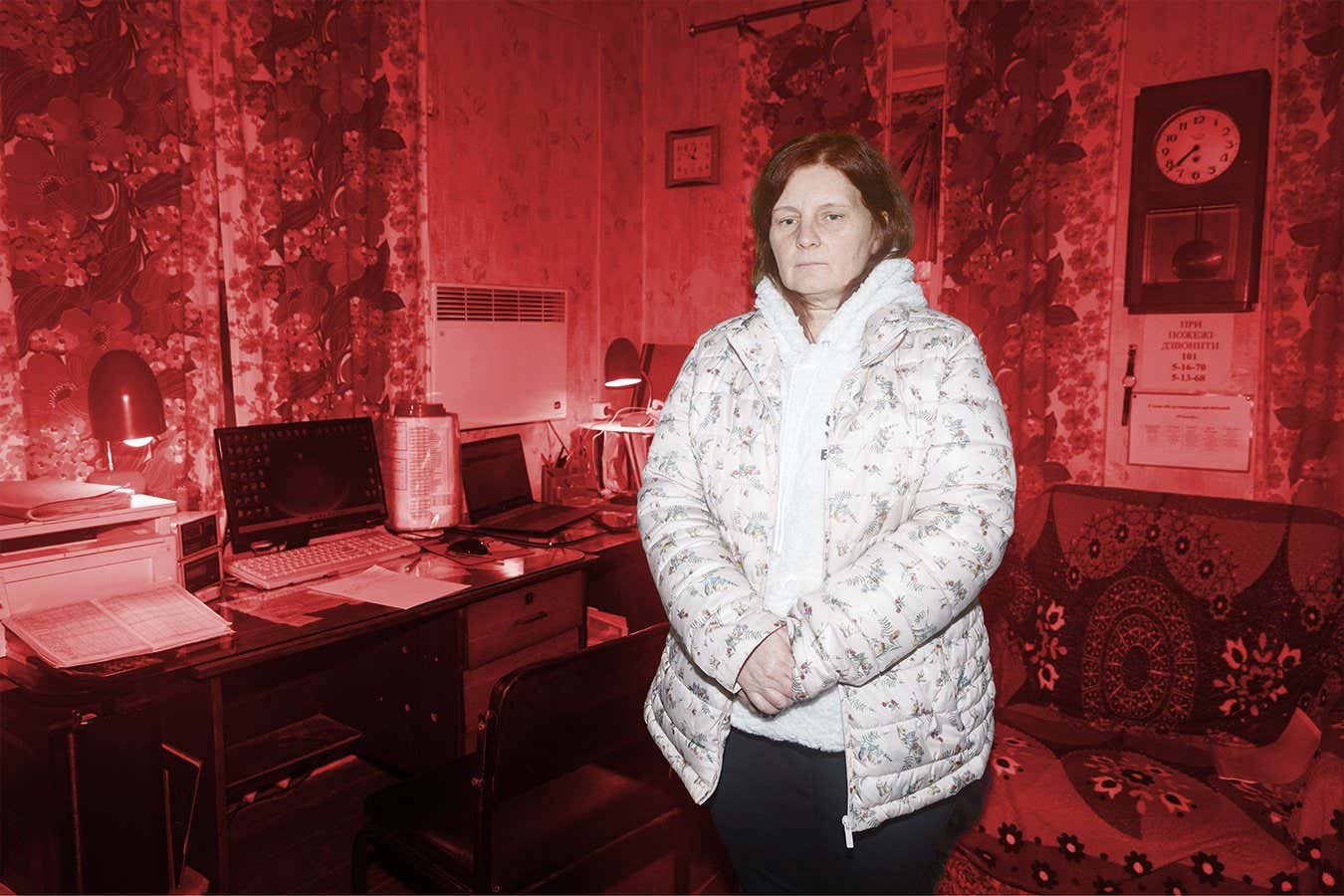
Lyudmila Dyblenko stayed at Chernobyl during the Russian occupation in 2022
Mykhaylo Palinchak
As Russian troops rolled across the Belarusian border into Ukraine on 24 February 2022, Lyudmila Dyblenko, head of the Chernobyl Meteorological Station, told her staff to gather their belongings and flee. But by the time she had done that, her own window to escape was closed; Russia had seized the exclusion zone around the plant.
“I started gathering monitors and equipment, then it was way too late,” says Dyblenko, speaking to me in the small cottage that houses the weather station. Although she had no choice at that point but to hunker down, she heroically decided to keep taking the vital radiation, temperature, wind, rain and other measurements that allow scientists to monitor conditions across Chernobyl. “I decided to continue my work,” she says. “I really love my job, and I really love my country.”
The task of taking and transmitting readings is usually automated, but by 9 March, her electricity supply was cut off. This left her equipment useless and also made heating and cooking virtually impossible. The cottage is the warmest place I experienced during my time at Chernobyl in winter, with a fire on the go that made Dyblenko’s small desk a comfortable place to work. During occupation, it was a different story.
Dyblenko carefully observed Russian patrol schedules, worked out their timings and began slipping out to take measurements manually, then transmitting them on an old mobile phone that she found to have a better aerial than modern smartphones. The meteorological station sits at the high point of Chernobyl, and she discovered a couple of nearby spots – a lorry park and a church – where she could find a weak signal and get her data away.
“I have software in which you put the data and it’s automatically assembled and sent, but it was impossible [during the power outage], so I had to do it manually,” says Dyblenko.
Unfortunately, while Dyblenko worked, the Russian soldiers became bolder. One eventually burst into her home to demand cognac. She decided to treat him like a naughty schoolboy and barked, “Is this a restaurant?” Thankfully, it worked, and he left with his tail between his legs.
Eventually, she realised that a permanent watch had been placed on her when she spotted a tiny red dot of light in the bushes on the far side of the clearing in which the scientific instruments are housed. She decided not to look at it and carry on as before.
Because of her, there is no gap in the data, meaning that scientific analysis of the Chernobyl exclusion zone can be complete and accurate – without a missing period of data during the occupation. Ukraine’s President, Volodymyr Zelenskyy, gave her a medal for her bravery, perhaps the only one that a meteorologist will receive during this war, which she – quite rightly– speaks of with clear pride.
Topics: