
Something supercharged Uranus when Voyager 2 flew past
[ad_1] Scientists at Southwest Research Institute (SwRI) say they may have found an answer to a puzzle that has
[ad_1]
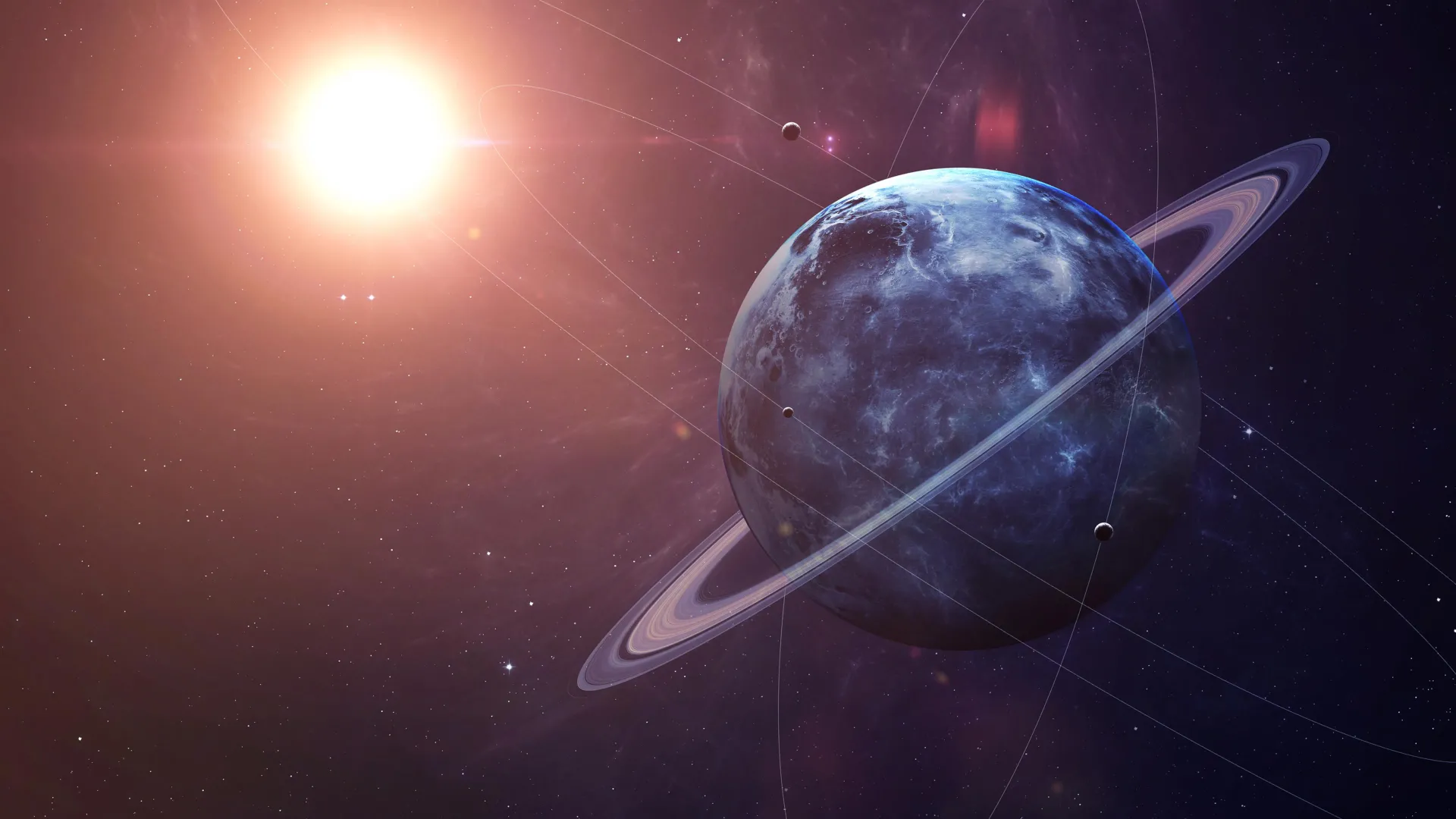
Scientists at Southwest Research Institute (SwRI) say they may have found an answer to a puzzle that has lingered for nearly four decades involving the radiation belts surrounding Uranus.
When NASA’s Voyager 2 spacecraft flew past Uranus in 1986, it made a surprising discovery. Instruments detected an electron radiation belt far stronger than scientists had predicted. Comparisons with other planets suggested Uranus should not have been able to sustain radiation levels anywhere near what Voyager recorded. Ever since that flyby, researchers have struggled to explain how such an unusual planet could trap so much high energy radiation.
Voyager 2 and an Unexpected Space Environment
New research from SwRI points to a possible explanation rooted in space weather. Scientists now believe the conditions Voyager 2 encountered at Uranus may have resembled the powerful solar driven events sometimes seen near Earth. Their analysis suggests that a solar wind structure, known as a co-rotating interaction region, was likely moving through the Uranian system at the time of the flyby. This kind of disturbance could account for the extreme energy levels Voyager 2 measured.
“Science has come a long way since the Voyager 2 flyby,” said SwRI’s Dr. Robert Allen, lead author of a paper outlining this research. “We decided to take a comparative approach looking at the Voyager 2 data and compare it to Earth observations we’ve made in the decades since.”
How Space Weather Can Supercharge Radiation
The study indicates that Uranus may have been experiencing a significant space weather event during Voyager 2’s visit. This event appears to have generated intense high frequency waves, the strongest detected during the entire Voyager 2 mission. At the time, scientists believed these waves would scatter energetic electrons, causing them to fall into Uranus’s atmosphere and disappear. Since then, however, research has shown that under certain conditions the same waves can do the opposite by accelerating electrons and injecting even more energy into a planet’s radiation belts.
“In 2019, Earth experienced one of these events, which caused an immense amount of radiation belt electron acceleration,” said SwRI’s Dr. Sarah Vines, a co-author of the paper. “If a similar mechanism interacted with the Uranian system, it would explain why Voyager 2 saw all this unexpected additional energy.”
Why Uranus Still Holds More Secrets
While the findings help resolve the original mystery, they also open the door to new questions. Scientists still need to understand the exact physics and sequence of events that allow such powerful waves to form and transfer energy so efficiently.
“This is just one more reason to send a mission targeting Uranus,” Allen said. “The findings have some important implications for similar systems, such as Neptune’s.”
[ad_2]
Source link