F-15 progresses in Asia, but without Indonesia
[ad_1] SINGAPORE — Official updates on Indonesia’s adoption of Boeing’s F-15EX fighter jet have been scant, since Jakarta announced
[ad_1]
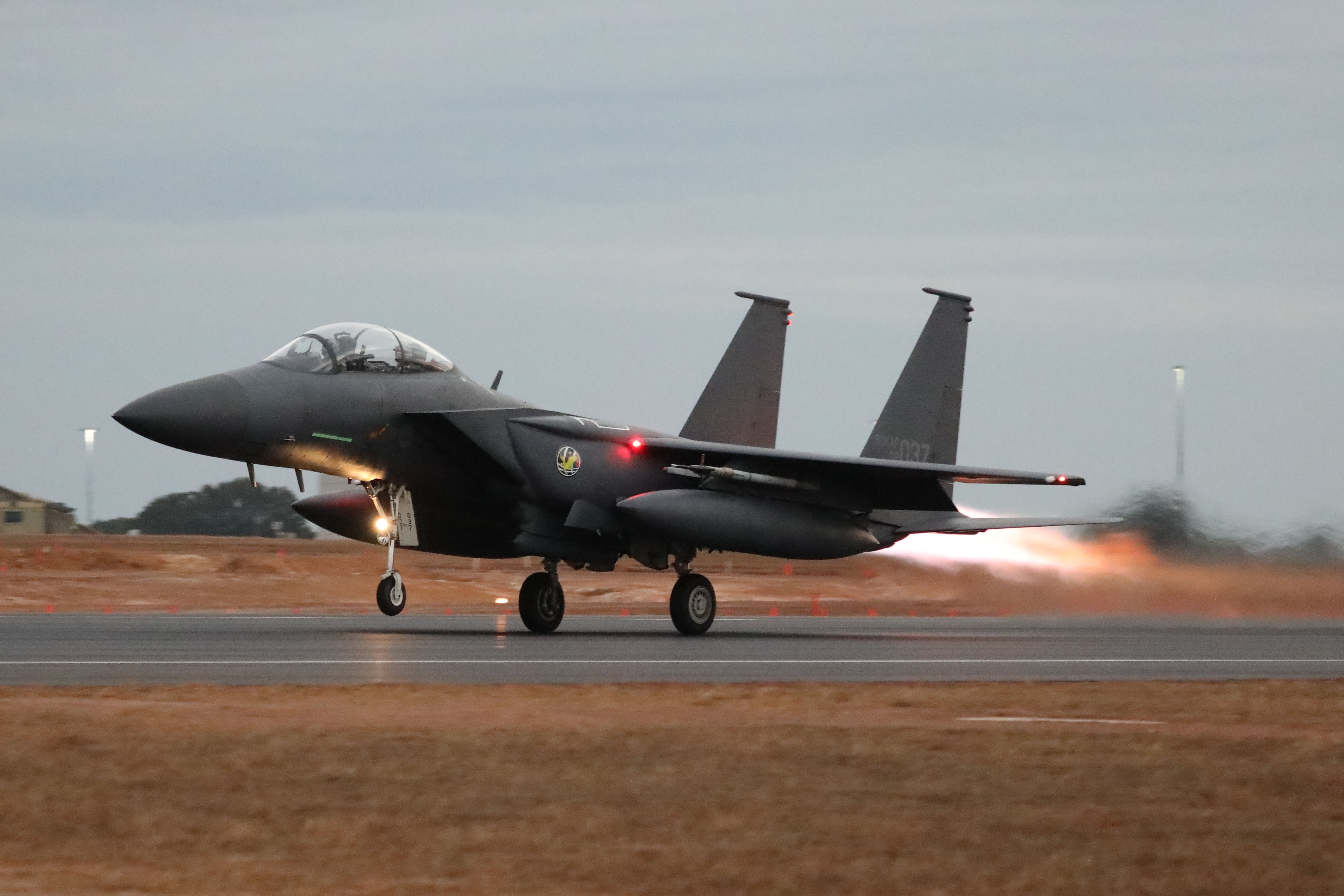
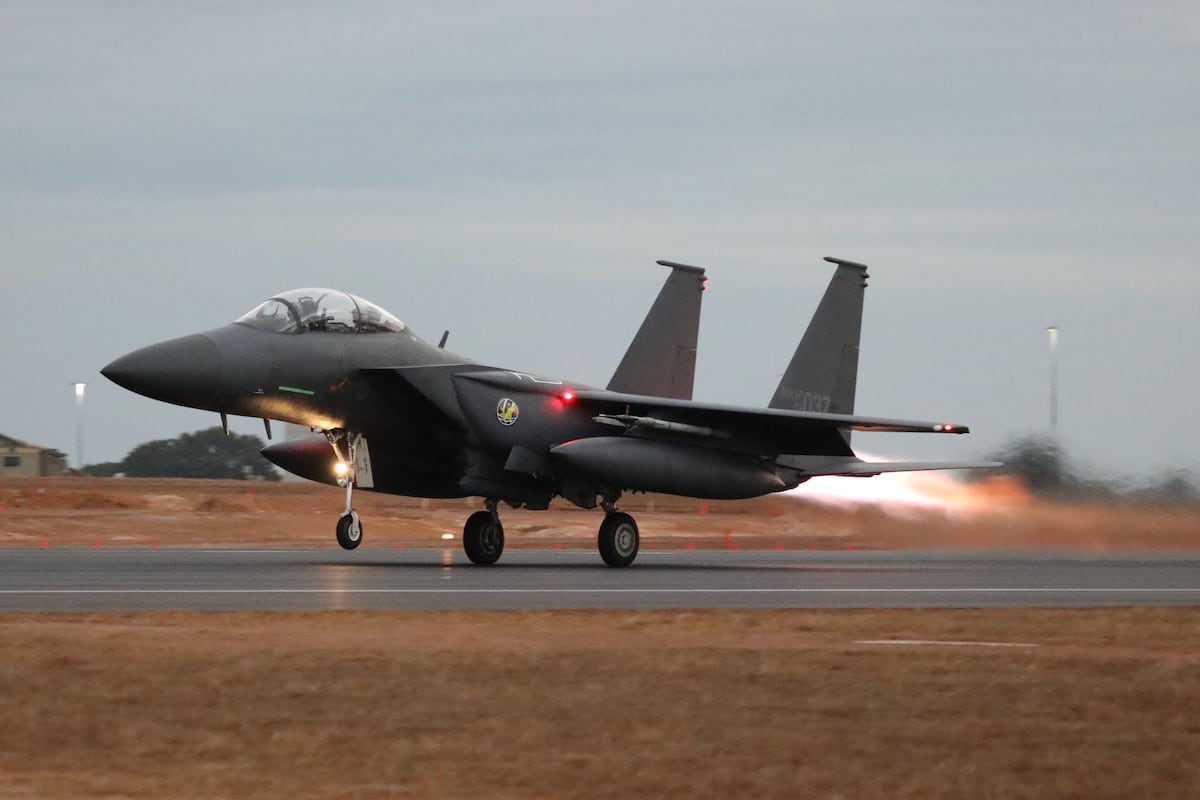
SINGAPORE — Official updates on Indonesia’s adoption of Boeing’s F-15EX fighter jet have been scant, since Jakarta announced a memorandum of understanding for up to 24 aircraft back in August 2023. Boeing officials have now admitted the prospective sale is dead in the water.
“In terms of our partnership with Indonesia, it’s no longer an active campaign for us,” a Boeing executive said Tuesday, the opening day of the Singapore Airshow.
Bernd Peters, vice president of business development and strategy for Boeing’s defense division, added, “With that being said, we remain deeply committed to the government of Indonesia and the military needs. We have an installed base of Apaches as well as WaveGliders; we’re going to continue to support those products.”
Boeing’s declaration is unsurprising, given how Indonesia conducts its defense acquisitions. The memorandum of understanding simply indicated Jakarta’s interest in the F-15EX, and no contract ever eventuated.
Simultaneously, the Indonesian Air Force has acquired new Rafale fighters from France, the first three of which arrived last month.
In recent years, the Indonesian government has expressed interest in second-hand Austrian Eurofighters, the F-15EX, second-hand J-10s from China and JF-17s from Pakistan. It has also paid money in South Korea’s KF-21 Boramae development program and signed an agreement for Turkish Kaan fighters.
This smorgasbord indicates the rather haphazard way Indonesia conducts procurements.
However, Boeing may not feel too disappointed, as it is busy giving the U.S. Air Force its promised quota of F-15EXs. Bernd said his company “remains deeply committed to the U.S. Air Force”, and that its priority is to be able to deliver 24 F-15EX Eagle II fighters annually.
Furthermore, there are two F-15 modernization programs in Asia.
Boeing is helping Japan upgrade its F-15J fighters, including installation of AN/APG-82(V)1 active electronically scanned array radars, new mission computers and the BAE Systems AN/ALQ-250 Eagle Passive Active Warning Survivability System (EPAWSS).
“The F-15 upgrades are not just another upgrade program; it’s a total transformation of the jet, delivering contemporary capabilities to Japan at par with those in the current-production F-15,” Boeing told Defense News.
Even more recently, on Friday, the U.S. Department of Defense announced Boeing had received a $2.8 billion contract to upgrade South Korea’s 59 F-15K fighters. This work, conducted in St. Louis, Missouri, should be completed by the end of 2037.
Turbo Sjogren, vice president and general manager of government services for Boeing Global Services, would not disclose what is being upgraded on Korean aircraft because of sensitivity issues.
“But here’s what we can tell you. The aircraft have been out there for 20 years, so a lot of obsolescence issues, but there are opportunities to upgrade the cockpit,” Sjogren said.
A Defense Security Cooperation Agency notification dated Nov. 19, 2024, indicated the F-15K modernization would follow a similar pattern to Japan’s.
Singapore is the only other Asian F-15 operator, and it is expected to eventually upgrade its F-15SG fleet. Singaporean Air Force pilots told Defense News at the airshow here that the aircraft are currently used mostly for training, and that no interception missions such as the one carried out in October 2024 have recurred.
On Oct. 15, 2024, the Singapore Air Force scrambled two F-15SG jets to escort an Air India Express Flight following a bomb threat. The pilots added that the integration of the fighters with the country’s new F-35s, which they are hoping to receive sometime later this year, will be gradual.
When asked whether they anticipate such an integration to be challenging, one of the pilots said that “if the United States can and has done it, we also will be able to.” Several of them will soon be heading to the U.S. for F-35 training.
Elisabeth Gosselin-Malo in Singapore contributed to this report.
Gordon Arthur is an Asia correspondent for Defense News. After a 20-year stint working in Hong Kong, he now resides in New Zealand. He has attended military exercises and defense exhibitions in about 20 countries around the Asia-Pacific region.
[ad_2]
Source link