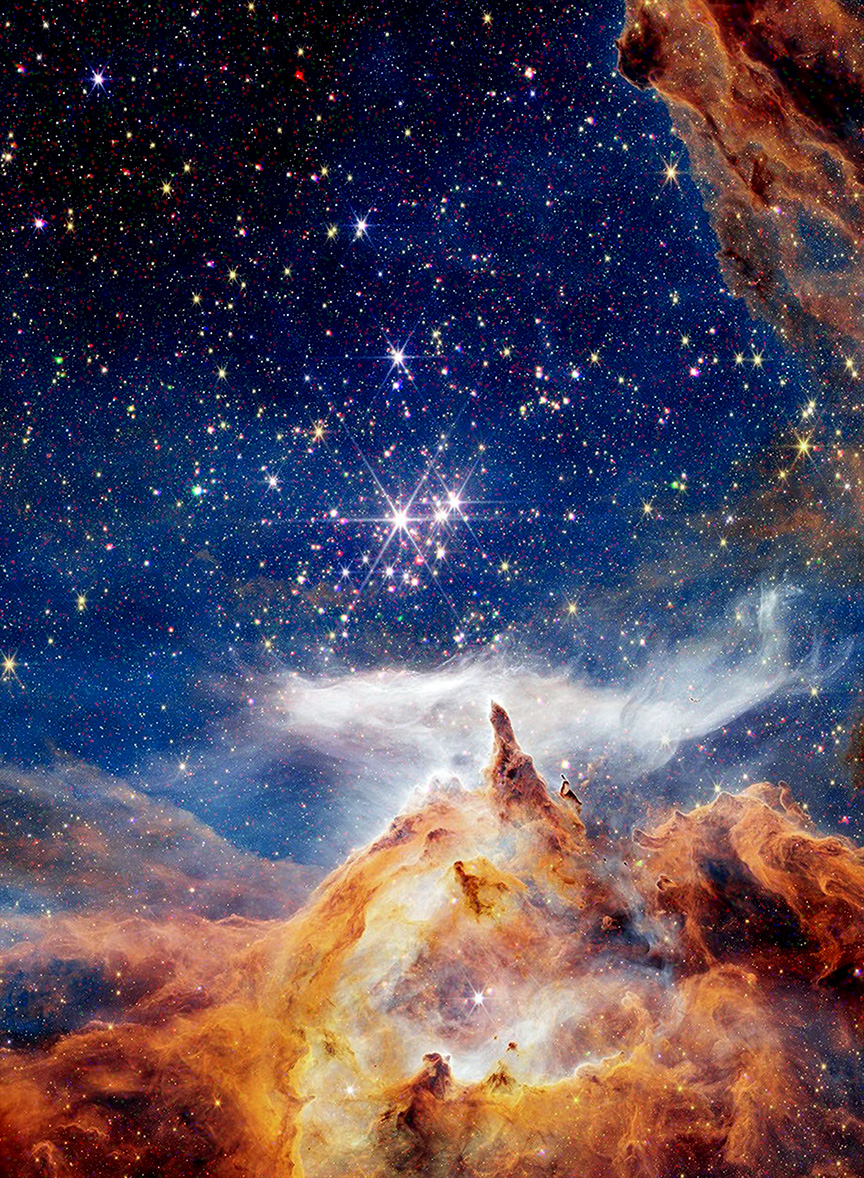
Dark stars could solve three major mysteries of the early universe
[ad_1] A new study led by Colgate Assistant Professor of Physics and Astronomy Cosmin Ilie, working with Jillian Paulin
[ad_1]
A new study led by Colgate Assistant Professor of Physics and Astronomy Cosmin Ilie, working with Jillian Paulin ’23 of the University of Pennsylvania, Andreea Petric of the Space Telescope Science Institute, and Katherine Freese of the University of Texas at Austin, proposes a single idea that could address three major mysteries from the universe’s earliest era. The researchers suggest that dark stars may help explain the appearance of unexpectedly bright “blue monster” galaxies, the presence of very massive black holes at extremely early times, and the strange objects known as “little red dots” seen in images from the James Webb Space Telescope (JWST).
The earliest stars formed in regions dominated by dark matter, specifically at the centers of small dark matter structures called microhalos. Several hundred million light-years after the Big Bang, clouds made of hydrogen and helium cooled enough to begin collapsing under their own gravity. This process led to the birth of the first stars and marked the start of the cosmic dawn, a formative period in the universe’s history.
During this time, conditions may have allowed a rare type of star to form. These stars could be powered not only by nuclear fusion, but also by energy released when dark matter particles annihilate. Known as dark stars, such objects could grow to enormous sizes and may naturally evolve into the seeds that later become supermassive black holes.
JWST Reveals Unexpected Early Galaxies
JWST has now observed the most distant objects ever studied, offering an unprecedented look at the early universe. These observations have challenged long standing theories about how the first stars and galaxies formed. One of the most surprising findings is a large population of galaxies known as “blue monsters.” These galaxies are extremely bright, very compact, and contain little to no dust.
Before JWST, no simulations or theoretical models predicted that galaxies with these properties should exist so early in cosmic history. Their discovery has forced astronomers to reconsider how quickly stars and galaxies could have formed.
Overmassive Black Holes and Little Red Dots
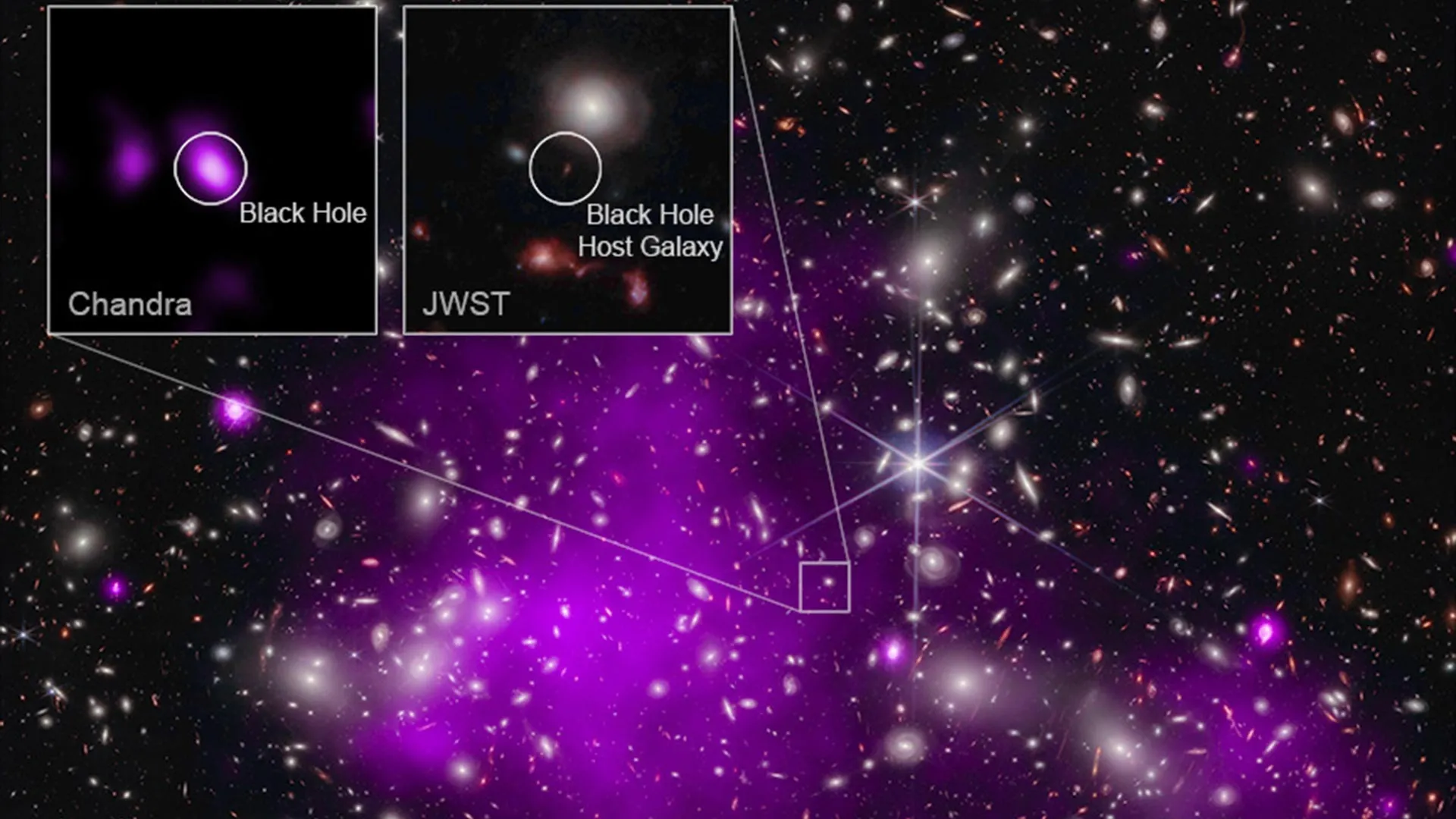
JWST data have also intensified an ongoing mystery involving supermassive black holes. Some of the earliest observed galaxies appear to host black holes that are far larger than expected for their age. Explaining how the seeds of these larger-than-expected supermassive black holes (SMBHs) formed so quickly remains a major challenge.
In addition, JWST has revealed a new category of compact objects known as “little red dots” (LRDs). These dust-free sources date back to cosmic dawn and are unusual because they emit little to no X-ray radiation, something astronomers did not anticipate based on existing models.
Why Current Models Fall Short
Taken together, the blue monster galaxies, early overmassive black holes, and little red dots point to serious gaps in pre-JWST theories of early galaxy and black hole formation. The findings suggest that widely accepted models need substantial updates to account for what JWST is now seeing.
“Some of the most significant mysteries posed by the JWST’s cosmic dawn data are in fact features of the dark star theory,” Ilie said.
Growing Evidence for Dark Stars
Although dark stars have not yet been confirmed through direct observation, the new study strengthens the case for their existence. It builds on photometric and spectroscopic dark star candidates identified in two separate PNAS studies published in 2023 and 2025, respectively.
The authors describe in detail how dark stars could account for the properties of blue monster galaxies, little red dots, and early galaxies hosting massive black holes. The paper also presents the most recent spectroscopic analysis, reporting evidence for distinctive helium absorption features in the spectrum of JADES-GS-13-0. A similar feature had previously been identified in JADES-GS-14-0.
Why Dark Stars Matter
Dark stars are among the most intriguing theoretical objects in modern astrophysics. If confirmed, they could offer a way to directly probe the properties of dark matter particles. This would complement ongoing efforts to detect dark matter in laboratory experiments on Earth, whether through direct detection or particle production, and could help connect cosmic observations with fundamental physics.
[ad_2]
Source link