Ukraine says more than 80% of enemy targets now destroyed by drones
[ad_1] PARIS — Ukraine says drones now account for more than 80% of enemy targets destroyed as the country’s
[ad_1]
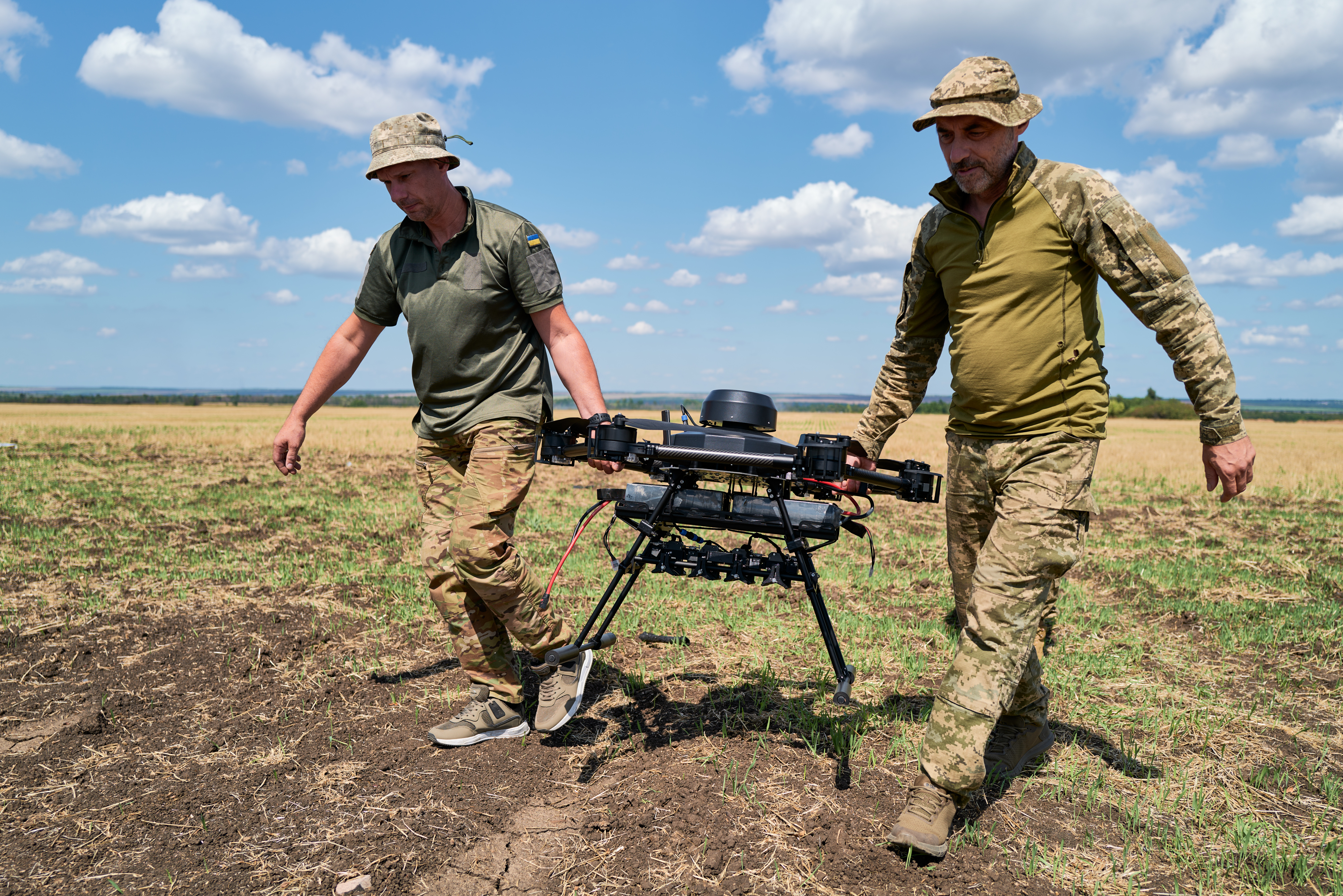
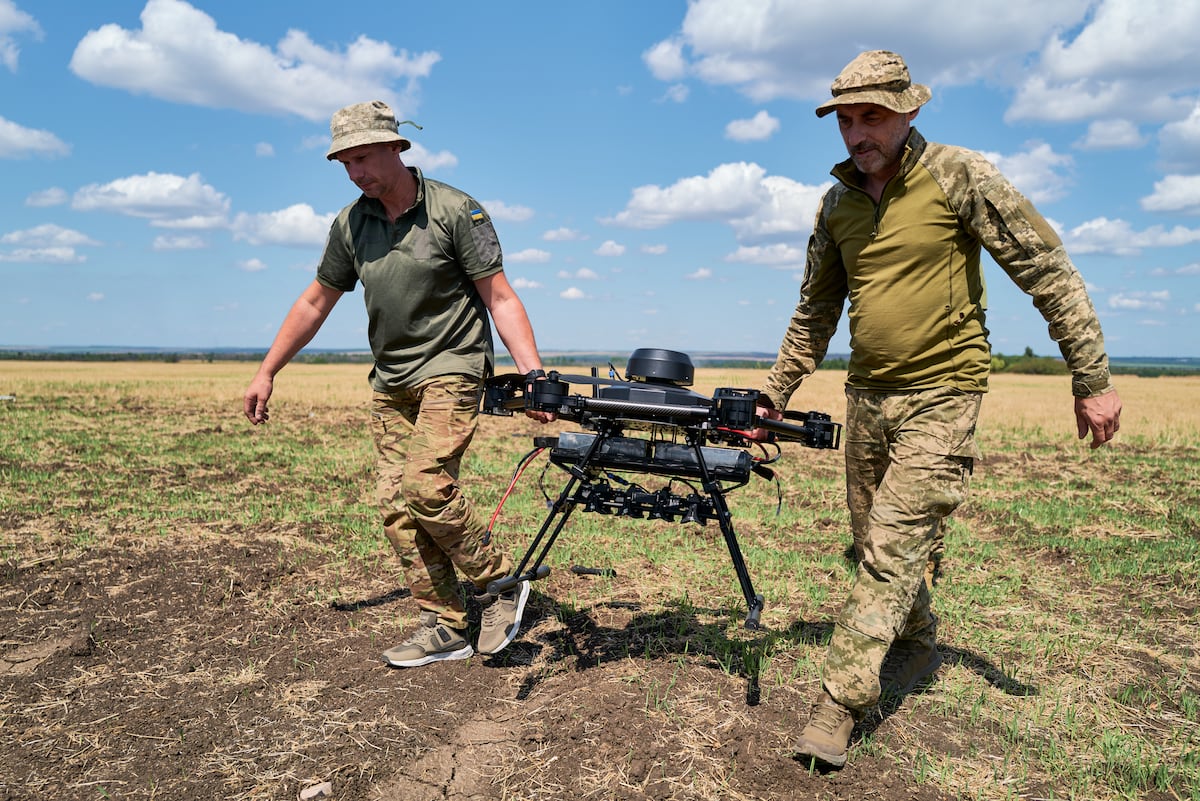
PARIS — Ukraine says drones now account for more than 80% of enemy targets destroyed as the country’s fight against Russia’s invasion approaches the five-year mark, with most of the drones manufactured locally.
Ukrainian forces recorded 819,737 video-confirmed drone hits in 2025, the Ministry of Defence said on Monday, at an event to award the most effective drone units. Almost a third of the drone strikes targeted enemy personnel, according to data tied to the armed forces’ internal bonus system that awards points for confirmed hits.
“We clearly record every single hit,” President Volodymyr Zelenskyy said at the event, in comments in Ukrainian translated by the president’s office. “We also have points awarded for every hit. Our bonus-based electronic points system is working to scale up the results our defense.”
Drones have become a defining feature of the war in Ukraine, with both sides scaling up production to millions of units per year and coming up with new ways to use them, leaving armed forces across Europe scrambling to learn the lessons. One Ukrainian innovation has been a system to verify drone strikes that awards points to successful operators, with an online marketplace where units can then spend points buy equipment, in what has been described as gamifying warfare.
Nearly 240,000 of the drone strikes targeted enemy personnel, in addition to 62,000 hits against light vehicles, 29,000 against heavy vehicles and 32,000 strikes against unmanned aerial vehicles for strike and reconnaissance, the MoD said.
Recording each strike allows for verification and assessing military performance, and units can spend their electronic points on drones, electronic warfare systems and other equipment on the Brave1 marketplace, according to the ministry.
Ukraine plans to expand the Army of Drones system to other areas, including giving points for the performance of air defense and army aviation against drones, as well as for snipers, according to the country’s new Minister of Defence Mykhailo Fedorov.
“For the first time, we have received real, verified battlefield data that can be used to support data-driven management decisions,” Fedorov said. “We will continue to develop the program.”
One goal is to increase depth of engagement to disrupt enemy logistics and neutralize enemy UAV crews, and the incentives program will introduce point-allocation coefficients depending on the range of engagement, according to the minister.
Germany’s Quantum Systems said its fixed-wing Vector drone was awarded third place for intelligence, surveillance and reconnaissance systems at the Army of Drones award. The Vector has been part of the Brave1 marketplace since August, and front-line units procure the drone directly from the company’s production facilities in Ukraine, Quantum Systems said.
Some Western think tanks have cautioned drones don’t replace human capacity, with Ukraine still needing infantry, armor and cannons.
The front line around the Ukrainian city of Pokrovsk and elsewhere has show drones can’t replace a soldier holding ground, retired Australian Army Maj. Gen. Mick Ryan at the Center for Strategic and International Studies wrote in a November report. He said drones haven’t replaced artillery, tanks or infantry in Ukraine, but have complemented them.
Drones alone are not enough, and they’re most effective when used in combination with artillery, the Royal United Services Institute wrote in a February 2025 report, citing discussions with multiple Ukrainian officers.
“Today, artillery matters, but in a different way,” Zelenskyy said. “War itself is undergoing an evolution, and everything is becoming extremely dependent on another important element as well: on who is the fastest and the strongest in applying technologies, in adapting technologies, and in truthful verification of what is happening on the battlefield.”
Rudy Ruitenberg is a Europe correspondent for Defense News. He started his career at Bloomberg News and has experience reporting on technology, commodity markets and politics.
[ad_2]
Source link