NASA’s Artemis II Mission to Fly Legacy Keepsakes with Astronaut Crew
[ad_1] As America approaches its 250th anniversary of declaring independence, NASA’s Artemis II mission will carry a host of
[ad_1]
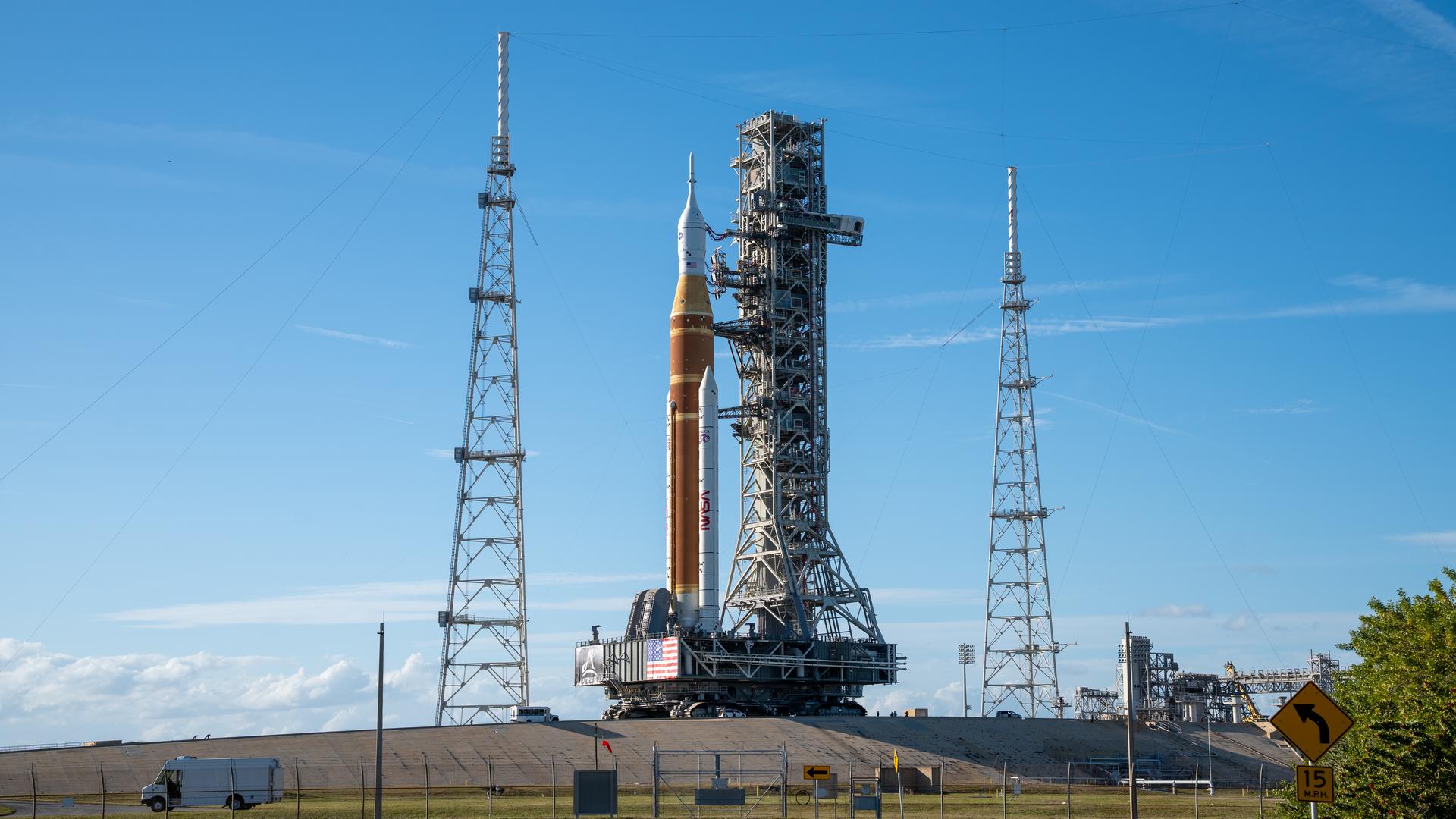
As America approaches its 250th anniversary of declaring independence, NASA’s Artemis II mission will carry a host of mementos that reflect the nation’s long tradition of exploration, innovation, and leadership in its official flight kit. The items will fly aboard the Orion spacecraft, launched on top of the Space Launch System (SLS) rocket, as it carries four astronauts around the Moon on the first crewed test flight of the agency’s Artemis campaign.
“Historical artifacts flying aboard Artemis II reflect the long arc of American exploration and the generations of innovators who made this moment possible,” said NASA Administrator Jared Isaacman. “This mission will bring together pieces of our earliest achievements in aviation, defining moments from human spaceflight, and symbols of where we’re headed next. During America’s 250th anniversary, Orion will carry astronauts around the Moon while also carrying our history forward into the next chapter beyond Earth.”
Selected to honor America’s historic achievements in space, inspire the next generation of explorers, and reinforce U.S. leadership through international cooperation in science and education, the mementos continue a proud tradition carried forward from Artemis I and earlier human spaceflight missions. Together, they highlight the freedom and innovation that have unlocked the Golden Age of human space exploration.
A 1-inch by-1-inch swatch of muslin fabric from the original Wright Flyer the Wright Brothers used to make the first powered flight in 1903 will be flying aboard Artemis II, lent by the Smithsonian’s National Air and Space Museum. A smaller square cut of the swatch previously flew aboard space shuttle Discovery on STS-51D in 1985 and will make its second journey into space. After the mission, the fabric will be reunited with two other 1903 Wright Flyer swatches at the museum, celebrating the nation’s history and innovation in aviation.
Also flying aboard the Artemis II mission will be a 13-by-8-inch American flag, which flew with the first shuttle mission, STS-1, the final shuttle mission, STS-135, and NASA’s first crewed test flight of SpaceX’s Crew Dragon spacecraft, SpaceX Demo-2.
A flag that was set to fly on NASA’s Apollo 18 mission is included in the flight kit and will make its premiere flight with Orion. The flag serves as a powerful emblem of America’s renewed commitment to human exploration of the Moon, while honoring the legacy of the Apollo pioneers who first blazed the trail.
Orion also will carry a copy of a 4-by-5-inch negative of a photo from the Ranger 7 mission, the first U.S. mission to successfully make contact with the lunar surface. NASA’s Jet Propulsion Laboratory in California managed the Ranger series of spacecraft, built to help identify safe Moon landing sites for Apollo astronauts. The photo represents a major turning point in the race to the Moon that will be echoed today through the success of Artemis.
On Artemis I, a variety of tree seeds flew and were distributed to educational organizations and teachers after the mission, following in the footsteps of tree seeds flown aboard the Apollo 14 mission sprouted into “Moon Trees” after being returned to Earth. The seeds have since taken root at 236 locations across the U.S. to become their own Artemis I Moon Trees. Soil samples collected from the base of established Artemis I Moon Trees planted at NASA’s 10 centers will fly aboard Artemis II, representing the full cycle of exploration: launch, flight, growth, and return to space again. The CSA (Canadian Space Agency) will fly various tree seeds in the kit with the intention of distributing them after the mission.
Also included in the kit will be an SD card including the millions of names of those who participated in the “Send Your Name to Space” campaign, bringing the public along on this journey. The kit will include a variety of flags, patches, and pins to be distributed after the mission to stakeholders and employees who contributed to the flight.
Additionally, NASA has included items from several of its partners in the kit. Stickers and patches from CSA will fly, and ESA (European Space Agency) will fly a flag in the kit for distribution after the mission, marking NASA’s international collaboration with other space agencies through Artemis. Orion’s European Service Module, the powerhouse of the spacecraft, is provided by ESA.
Carrying mementos on the NASA spacecraft has been a tradition since the 1960s, one that was continued on Artemis I, the first uncrewed test flight of Orion and the SLS. During this mission, Orion carried a symbolic flight kit including historical artifacts, from Apollo missions STEM, or science, technology, engineering, and math, items, digitized student essays and teacher pledges, and more.
The official flight kit for Artemis II, which contains about 10 pounds of mementos in total, augments important scientific research aboard Orion.
View a full list of the items included in kit:
Artemis II Official Flight Kit
[ad_2]
Source link