Defense tech startups had their best funding year ever in 2025
[ad_1] PARIS — Defense-technology startups had their best funding year ever in 2025, with investors keen to finance autonomous
[ad_1]
PARIS — Defense-technology startups had their best funding year ever in 2025, with investors keen to finance autonomous systems and artificial intelligence for the battlefield, according to data from business-intelligence providers that track venture capital funding.
The value of venture capital deals in defense technology jumped to a record $49.1 billion last year from $27.2 billion a year earlier, according to data compiled by PitchBook and shared with Defense News. The PitchBook data includes startups that provide dual-use technology, including companies whose primary markets are civilian but also have defense applications.
Equity funding for defense technology startups more than doubled to $17.9 billion last year from $7.3 billion in 2024, according to CB Insights, which uses its own classification method and also includes dual-use companies. Defense tech outpaced overall equity funding, which rose 47% to $469.3 billion on the back of rising funds for AI startups, based on CB Insights data.
Investor money is flowing into defense as military spending rises globally, with some of the biggest budget increases in Europe. Meanwhile, battlefield use of drones and AI-enabled systems in Ukraine has helped validate those technologies, with a focus on cheap, scalable systems and faster data processing and decision-making.
“Ukraine demonstrated drone and autonomous system effectiveness in real combat, fundamentally shifting how VCs view defense investments,” said Jason Saltzman, head of insights at CB Insights, in an emailed comment. He said the growing investor base and investment opportunities in dual-use artificial intelligence helped drive record defense-tech funding.
In 2026, defense-tech startups will have to prove to investors they can turn funding into actual production at scale, according to Saltzman.
Manufacturing scale is “the next competitive battleground” in the defense-tech space, said Ali Javaheri, senior analyst for emerging technology at PitchBook, in emailed comments. “We are going to see a concerted push to expand throughput through investments not just in new facilities, but in the production toolchain itself, including robotics and software-augmented manufacturing.”
American defense-technology startups attracted most of the money last year, with equity funding in the U.S. nearly tripling to $14.2 billion from $5 billion a year earlier, according to CB Insights. That compares to defense-tech equity funding in Europe rising 38% to $2.48 billion.
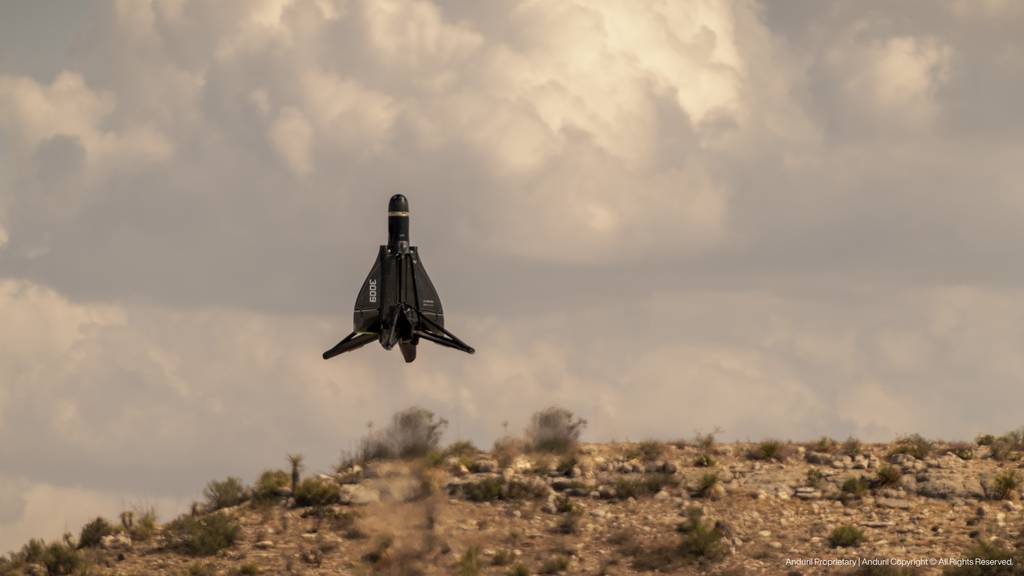
The difference is partly explained by more large funding rounds in the United States last year, including Anduril raising $2.5 billion in June, valuing the California-based maker of autonomous systems and battlefield software at $30.5 billion. Texas-based Saronic, which makes uncrewed surface vessels, raised $600 million in February at a valuation of $4 billion.
The comparison was more favorable for Europe in terms of the count of defense-tech startups that received investor backing, according to the CB Insights data, with the number of equity funding deals there rising 67% to 100, compared to the tally in the U.S. rising 30% to 155 deals.
Last year’s funding rounds for primarily defense-focused startups were led by Anduril, Helsing and Saronic, the same trio that topped the charts in 2024, according to Crunchbase, another company that compiles VC funding data. Helsing, which develops battlefield AI software, raised €600 million ($695 million) in June at a reported valuation of €12 billion.
The number of firms actively investing in defense tech increased 41% last year, with “mainstream venture” dropping previous ethical objections to investing in defense and reframing it as supporting democratic values, according to Saltzman at CB Insights. AI opened new funding opportunities in both pure defense applications and broader dual-use technology, he said.
The emphasis in 2026 is shifting towards the speed of getting systems fielded, and budgets this year will prioritize artificial-intelligence enabled systems, autonomous platforms and collaborative combat aircraft, according to Saltzman.
“Growth will depend on whether these startups can solve the harder problem: translating venture capital into large-scale manufacturing capacity and navigating supply-chain constraints that have kept most from reaching battlefield scale,” Saltzman said.
Manufacturing-focused defense investment rose to $4.7 billion across 39 deals in 2025 from $2.6 billion across 24 deals in 2024, according to PitchBook data published in a separate research note on Friday. Much of the scale-up capital for manufacturing between 2022 and 2025 went to drones, space systems and infrastructure, and defense electronics and sensing, according to the data.
The implication for investors going into 2026 will be that “execution, not invention, will determine returns,” Javaheri wrote. “Companies that convert facilities into repeatable output will disproportionately capture both capital and contract velocity.”
Defense tech investment will continue to grow in 2026, according to Javaheri, in comments to Defense News. He said autonomy will remain a core focus, but broadening beyond aerial systems into maritime and ground vehicles in particular, while industry consolidation will show a clear acceleration.
“I would not be surprised to see a major venture-backed defense tech startup acquired by a traditional prime contractor in the first half of the year as incumbents look to buy proven capabilities rather than build them from scratch,” Javaheri said.
Venture capital exits from defense-tech investments also jumped to a record last year, rising to $54.4 billion from $18.2 billion in 2024, PitchBook data show. Most of the exits were through acquisitions of defense-tech startups, led by Nvidia’s €20 billion purchase of Groq, which makes AI hardware and software for applications including military autonomous systems.
Rudy Ruitenberg is a Europe correspondent for Defense News. He started his career at Bloomberg News and has experience reporting on technology, commodity markets and politics.
[ad_2]
Source link