
How the frog meat trade helped spread a deadly fungus worldwide
[ad_1] The chytrid fungus (Batrachochytrium dendrobatidis), commonly called Bd, is widely recognized as a major factor behind the worldwide
[ad_1]
The chytrid fungus (Batrachochytrium dendrobatidis), commonly called Bd, is widely recognized as a major factor behind the worldwide decline of amphibians. Scientists have identified multiple genetic variants of this disease causing fungus across different regions. Together, these strains have already contributed to population crashes in at least 500 species of frogs and toads.
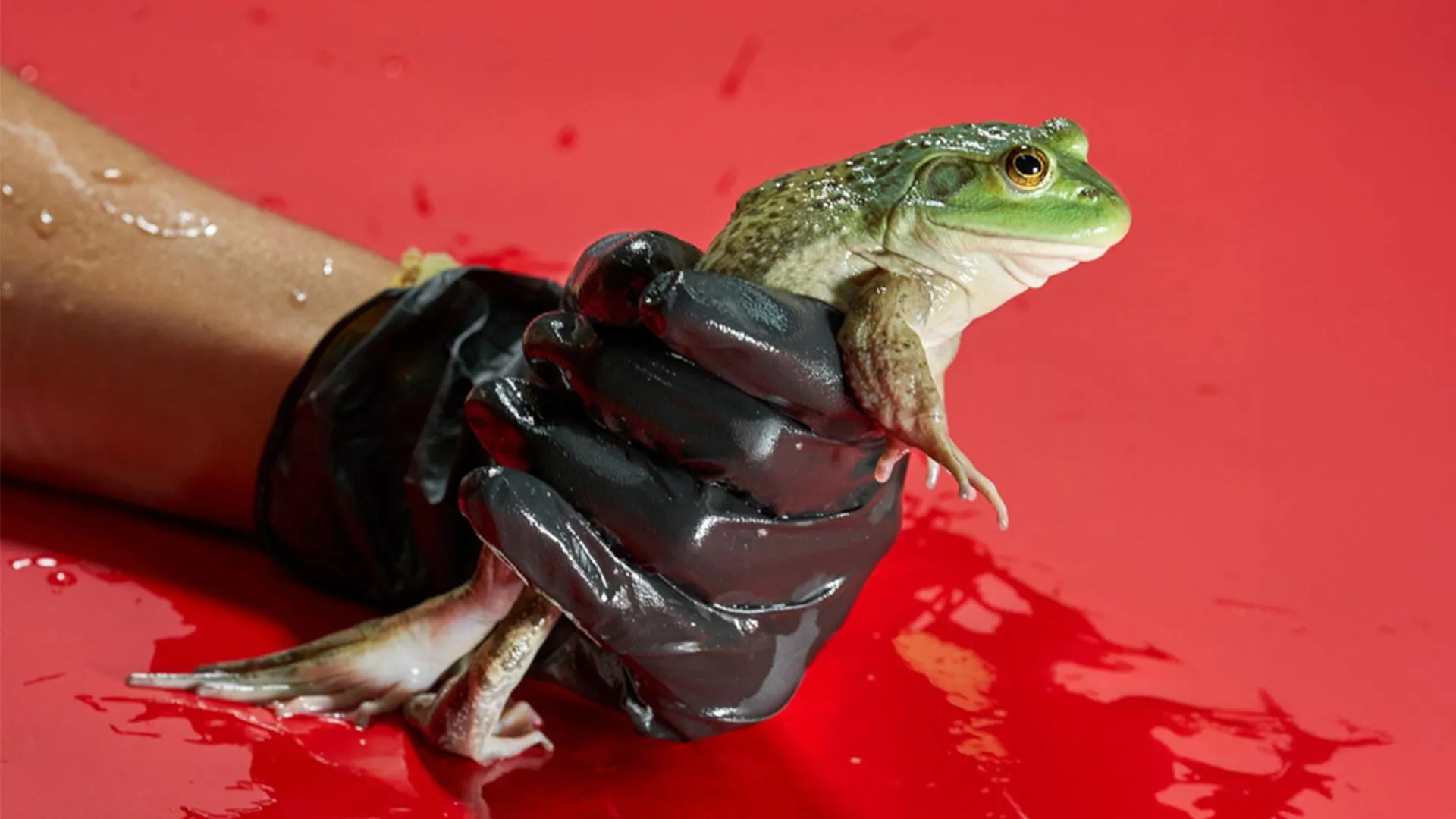
Researchers have linked the international spread of Bd to the commercial trade of bullfrogs (Aquarana catesbeiana), a species native to North America that is widely farmed for food. Bullfrogs were first brought to Brazil in 1935, with another introduction occurring in the 1970s. These movements created new pathways for the fungus to travel across borders.
A Disputed Origin Reexamined
One particular strain, known as Bd-Brazil, was named in 2012 after being identified in the country. Its origin soon became controversial. In 2018, a study published in the journal Science proposed that the strain actually emerged on the Korean Peninsula. As a result, it was renamed Bd-Asia-2/Bd-Brazil.
New findings now challenge that conclusion. A study published in the journal Biological Conservation and supported by FAPESP reports strong evidence that the strain originated in Brazil. The research was led by scientists from the State University of Campinas (UNICAMP) in São Paulo, Brazil. The strain has since been detected in the United States, Japan, and the Korean Peninsula.
Evidence From Museums and Genetic Records
According to earlier research published in Molecular Ecology in 2014, Bd-Brazil was already present in Brazil by 1916, about 20 years before bullfrogs were introduced. That study analyzed preserved frog specimens stored in museums since the 19th century and identified fungal strains through genetic testing.
The new study combined multiple lines of evidence. Researchers reviewed existing scientific literature, examined museum specimens from around the world, analyzed fungal genetics from Brazilian bullfrog farms, and studied bullfrogs sold internationally. Together, these data point to Brazil as the source of the strain and identify the global frog meat trade as the main route of its spread.
“This genotype is highly prevalent in different native Brazilian species, with very old records. When we look elsewhere, the records are much more recent and occur only in bullfrogs and other exotic species. Here, however, the strain is present both in frog farms and in the wild, including some native species that do not develop the disease,” says Luisa P. Ribeiro, the study’s first author. She conducted the research during her doctoral studies at the Institute of Biology (IB) at UNICAMP with funding from FAPESP.
The work is part of the project “From Natural History to the Conservation of Brazilian Amphibians,” supported by FAPESP and coordinated by Luís Felipe Toledo, a professor at IB-UNICAMP and Ribeiro’s doctoral advisor.
Tracing the Fungus Through History
“We were unable to identify the exact strain in a large sample of amphibians deposited in museums, since conservation isn’t always ideal for maintaining this information. Therefore, we only identified the presence or absence of the fungus in these individuals and sought other evidence that could indicate whether or not Bd-Brazil originated in Brazil,” says Toledo.
To reconstruct the fungus’s historical distribution, international collaborators examined 2,280 amphibian specimens collected between 1815 and 2014 and stored in zoological museums worldwide.
“Even without knowing the strain, we found records older than those previously reported in the literature and presented a review of historical records of Bd worldwide,” says Ribeiro, who is now a postdoctoral researcher at the Federal University of São Paulo (UNIFESP) with support from FAPESP.
Out of all the specimens analyzed, 40 tested positive for Bd. The earliest confirmed cases came from five frogs of the species Alytes obstetricans collected in 1915 in the Pyrenees region of France. These are the oldest known infected specimens from that country. The second oldest record involved a frog of the species Megophrys goeldii, currently found in Rio de Janeiro, collected in 1964.
Mapping Global Trade Routes
To further test the theory that Bd-Brazil spread internationally through bullfrog exports, researchers analyzed historical trade records, fungal genetics from Brazilian frog farms, and genetic data from bullfrogs sold in foreign markets.
Bd-Brazil is widespread within Brazil, with more than half of recorded cases linked to frog farms. The strain is considered less aggressive than Bd-GPL, the second most common variant, which likely originated in Asia.
The team examined 3,617 frog meat trade routes involving 48 countries. Of these, 12 countries acted solely as exporters, 21 as importers, and 15 served both roles. By combining trade data with genetic evidence and the timing of Bd-Brazil detections, researchers identified the most likely paths by which the strain spread.
Eight primary dissemination routes were identified. Brazil exported bullfrogs directly to the United States between 1991 and 2009, while the United States exported to South Korea in 2004 and 2008. Because there are no records of exports from South Korea to other affected countries, the findings strongly support Brazil as the original source of the strain.
A Call for Stronger Safeguards
The researchers conclude that their results highlight the need for stronger preventive actions. These include stricter import regulations, routine pathogen screening, quarantine measures, and coordinated global monitoring to better protect native amphibian species from future outbreaks.
[ad_2]
Source link