Paracetamol is safe in pregnancy, says new evidence against Trump autism claims
[ad_1] Philippa Roxby and Jim ReedHealth reporters Getty Images Taking paracetamol while pregnant is safe and there’s no evidence
[ad_1]
Philippa Roxby and Jim ReedHealth reporters

 Getty Images
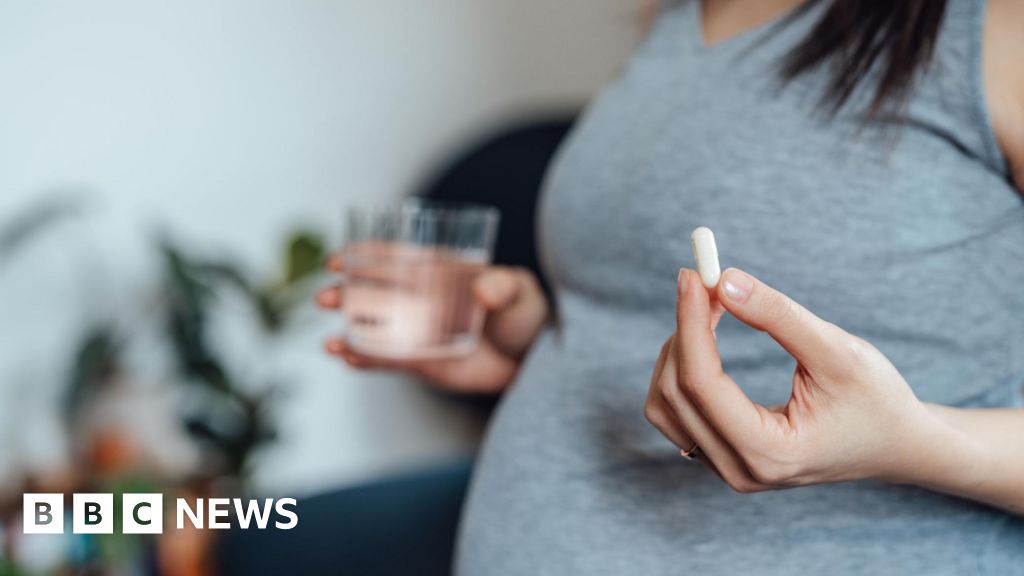
Taking paracetamol while pregnant is safe and there’s no evidence it raises the risk of autism, ADHD and developmental issues in children, say experts behind a major new review.
Pregnant women “should feel reassured” by the findings, they say, which contradict controversial claims from US President Donald Trump last year that paracetamol “is no good” and pregnant women should “fight like hell” not to take it.
His views were criticised at the time by medical organisations worldwide. Experts say this latest review, in a Lancet journal, is rigorous and should end the debate over its safety.
But US health officials maintain that “many experts” have expressed concern over its use during pregnancy.
The US President shocked many doctors worldwide when he and his administration claimed paracetamol or a branded version called Tylenol – which is seen as the go-to painkiller for pregnant women – could be linked to autism in children, if taken during pregnancy.
Those claims led to confusion among women and concern among health experts, and prompted this new research.
Published in The Lancet Obstetrics, Gynaecology & Women’s Health, it looked at 43 of the most robust studies into paracetamol use during pregnancy, involving hundreds of thousands of women, particularly those comparing pregnancies where the mother had taken the drug to pregnancies where she hadn’t.
The researchers say using these high-quality studies of siblings means they can dismiss other factors such as different genes and family environments, which makes their review “gold-standard”.
The research also looked at studies with a low risk of bias and those that followed children for more than five years to check for any link.
“When we did this analysis, we found no links, there was no association, there’s no evidence that paracetamol increases the risk of autism,” lead study author and consultant obstetrician Professor Asma Khalil, told the BBC.
“The message is clear – paracetamol remains a safe option during pregnancy when taken as guided,” she added.
This reinforces guidance from major medical organisations in the UK, US and Europe on the safety of the common painkiller.
Any previously-reported links between the drug and an increased risk of autism are likely to be explained by other factors, rather than a direct effect of the paracetamol itself, the review says.
“This is important as paracetamol is the first-line medication we recommend for pregnant women in pain or with a fever,” said Prof Khalil, professor of maternal fetal medicine at City St George’s, University of London.
Health advice warns that women can run the risk of harming their baby if they don’t take paracetamol to bring down a high temperature or relieve pain when pregnant. This can increase the risk of miscarriage, premature birth or developmental problems in babies.
Medical experts not involved in the research have welcomed the study’s findings, saying it will help reduce worry among women.
Prof Grainne McAlonnan, from King’s College London, said expectant mothers “do not need the stress of questioning whether medicine most commonly used for a headache could have far reaching effects on their child’s health”.
“I hope the findings of this study bring the matter to a close,” she said.
Prof Ian Douglas, from the London School of Hygiene and Tropical Medicine, said the review was “well-conducted” because it excluded studies of lower quality, where no account was taken of important differences between mothers who use or don’t use paracetamol during pregnancy, such as underlying illnesses.
According to Prof Jan Haavik, molecular neuroscientist and clinical psychiatrist at the University of Bergen, the study provides “strong evidence” that use of paracetamol during pregnancy does not increase the risk of autism, ADHD or intellectual disability and “should effectively put this question to rest”.
It is widely believed by scientists working in this field that autism is the result of a complex mix of factors, including genetic and environmental ones.
 Getty Images
A spokesman from the US Department of Health and Human Services said “many experts” had expressed concern over the use of acetaminophen – the US name for paracetamol – during pregnancy.
For example, a review in August 2025 led by Dr Andrew Baccarelli, dean of the Harvard T.H. Chan School of Public Health, found that using acetaminophen during pregnancy may increase children’s autism and ADHD risk, and urged caution over “especially heavy or prolonged use”.
Months earlier, Health Secretary Robert F Kennedy Jr had pledged to find out the cause of a steep rise in reported autism cases.
In a controversial speech in the Oval Office in September, the US president said doctors would be advised not to prescribe the pain reliever to pregnant women.
The US Food and Drug Administration (FDA) then issued a letter to clinicians urging them to be cautious about the use of acetaminophen in pregnancy, while also saying it was still the only drug approved for treating fevers during pregnancy.
On its website, the FDA says “a causal relationship” between the drug and neurological conditions “has not been established”.
Health officials in the UK have stressed that paracetamol remains the safest painkiller available to pregnant women.
[ad_2]
Source link