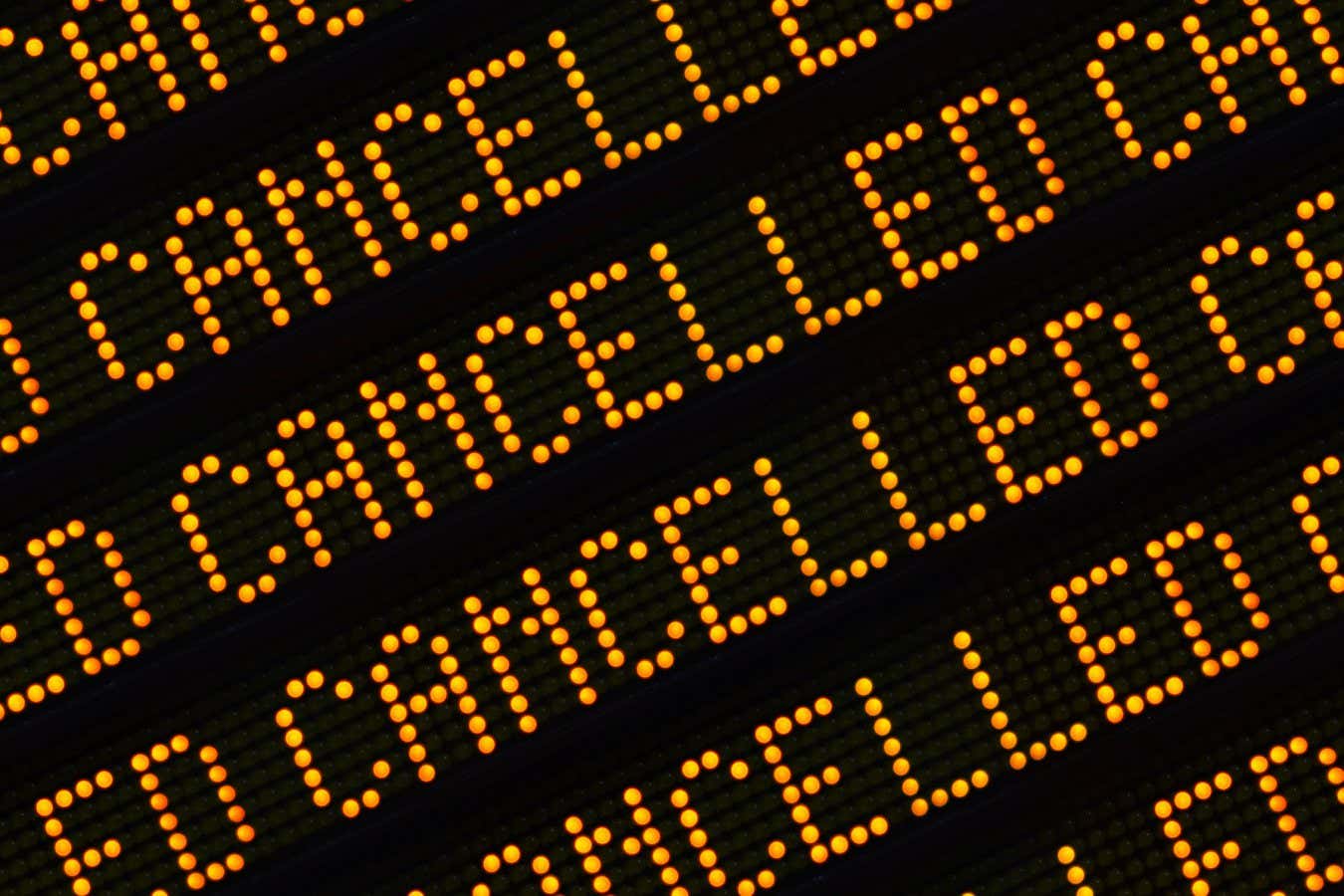
Cancelling plans may be more socially acceptable than you think
[ad_1] People can be surprisingly forgiving when someone cancels social plans Many of us feel bad about cancelling social
[ad_1]
People can be surprisingly forgiving when someone cancels social plans
Many of us feel bad about cancelling social plans, but it turns out that those on the receiving end of a cancellation may be more accepting than we think.
“It suggests people shouldn’t get so stressed about cancelling,” says Esra Aslan at the Norwegian School of Economics in Bergen.
Prior studies have explored how people react when someone cancels a social plan, but there has been little research exploring how accurately we predict those reactions when we are doing the cancelling – something that Aslan realised when she scrapped a planned meet-up.
“I was supposed to meet a friend after work, and I told my colleague I didn’t really feel like going anymore. His immediate reaction was it wasn’t OK to cancel because I should keep my promises,” says Aslan.
“Shortly after, we told Raj [another colleague] the story and asked for his take – he got very excited and suggested we should test this,” she says.
The researchers asked about 400 adults, aged 42 on average, in the US to judge a scenario where two best friends had arranged to meet up for dinner, but then one of them had to cancel at the last minute due to an urgent work issue, leaving the other to eat at home alone.
The participants had to imagine themselves in the shoes of the person making the cancellation or receiving it, and judge the acceptability of the action on a scale from 1 (completely unacceptable) to 7 (mostly acceptable).
Those who were asked to imagine making the cancellation typically thought the friend in the scenario would be unimpressed by their actions. They estimated that the friend would give the cancellation an acceptability score of just 4.96, on average. But those who were asked to imagine receiving the cancellation felt differently. They gave the cancellation an acceptability score of 6.22, on average.
The same perception gap appeared in further experimental scenarios exploring various relationships and social activities.
“We didn’t find much difference if you cancel a dinner plan with your neighbour or with your best friend or with your work colleague,” says Rajarshi Majumder at the GEM Alpine Business School in France. The perception gap remained when the plan was a more public event like a concert, rather than a dinner, and even when a vaguer excuse for cancelling was given – catching up on a work project, he says.
The team hopes the findings will make people less anxious about cancelling plans, and speculate that this could even make them more social. “If we have these kind of concerns and stress and anxiety about cancelling, we might not make so many plans [in the first place],” speculates Aslan.
But the findings may differ in other countries, such as parts of Asia, where people are known to judge cancellations more harshly, says Majumder.
It’s also still important to show care when you cancel, says Aslan. “If people reschedule things and make a small gesture [of goodwill] beforehand, I think it will keep the relationships strong,” she says.
Topics:
[ad_2]
Source link