US Navy leaders embrace Trump-class battleships
[ad_1] U.S. Navy leaders speaking at a military conference this week outlined what they described as the strategic opportunities
[ad_1]
U.S. Navy leaders speaking at a military conference this week outlined what they described as the strategic opportunities of the recently announced Trump-class battleships and why the service is embracing the development.
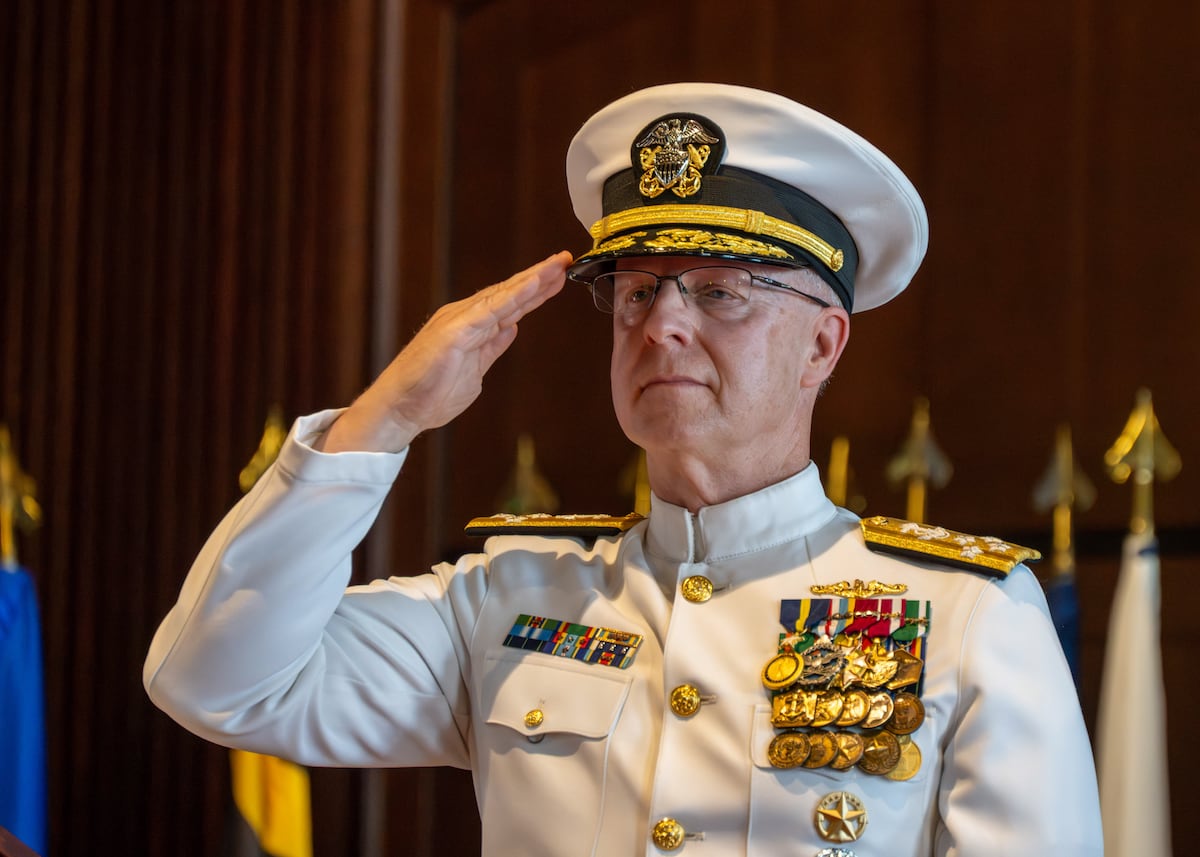
Chief of Naval Operations Adm. Daryl Caudle, speaking at the 38th Annual Surface Navy Association National Symposium in Arlington, Virginia, on Wednesday, explained that he understood the initial reticence to accept the inclusion of battleships as part of the Navy’s new Golden Fleet.
“We just have biases, cognitive biases, in our brain,” Caudle said. “And what comes to our brain is a thing that goes, like, ‘Why is the Navy building that?’ Well, everything’s an evolution.”
The battleships, which he labeled as “badass,” would afford the service multiple critical capabilities: massive payload volume, speed, the ability to get anywhere in the world, the ability to command and control operations and the ability to fulfill multiple missions.
President Donald Trump announced the Navy’s new Golden Fleet during a press conference at his Mar-a-Lago estate in Florida last month.
The fleet will include two Trump-class battleships, which Trump said would be the fastest and biggest battleships in the world and 100 times more powerful than any battleship ever built.
Caudle said he fielded many questions about unmanned technology but that autonomous technology didn’t always present the best capabilities for deterrence, especially when you had a battleship with a significant ability to attack waiting in the wing.
“If I want to shoot 100 things from 100 things, or I want to shoot 100 things from one thing, which is harder?” Caudle asked rhetorically.
RELATED
Enabling a general purpose force like the battleship, he said, was paramount for the success of the Navy’s future missions.
The battleship, however, won’t be nuclear powered, even though Caudle admitted it seemed logical for it be.
The Navy wanted to get the battleship into the water as fast as possible, and as a result, omitting nuclear power would speed up its production.
Rear Adm. Derek Trinque, the Navy’s surface warfare division director, was caught off-guard by Trump’s announcement of two new warships as part of the Golden Fleet.
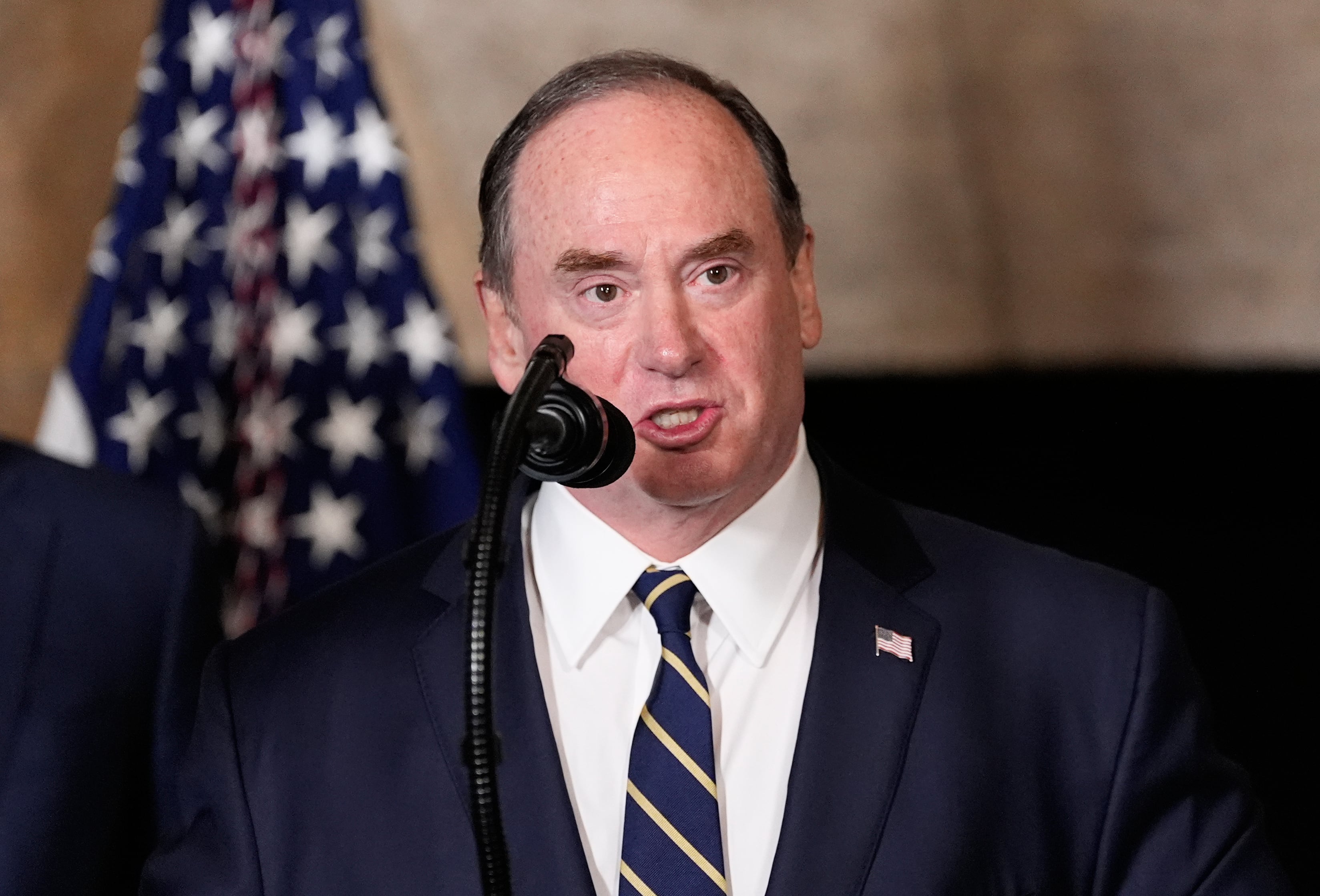
“I did not expect to be told to build a battleship when I got this job,” Trinque said Tuesday at the symposium.
But he said he was excited at the opportunity to tackle it headfirst because it allowed the Navy the opportunity to accelerate its DDG(X), or Next-Generation Destroyer, program, which seeks to build the next class of surface combatants and replace older Arleigh Burke-class vessels, which joined the fleet in 1993.
Over the years, the Navy has had to perform surgery on the destroyers to add capabilities, Trinque said, noting that the service is working to “get better at adding capability without cutting them open.”
But while the Navy continues to master that process, it still needs something “newer and bigger” with more power and more weapons, Trinque said.
The Trump-class battleship addresses that necessity and provides an overwhelming amount of offensive strike capability and more overall capacity than any other service ship that the Navy possesses, he said.
Riley Ceder is a reporter at Military Times, where he covers breaking news, criminal justice, investigations, and cyber. He previously worked as an investigative practicum student at The Washington Post, where he contributed to the Abused by the Badge investigation.
[ad_2]
Source link