How to extend and improve your life by getting more creative
[ad_1] FOTOGRAFIA INC./Getty Images Cut your sugar, get some exercise, stop smoking, eat your vegetables, take supplements, don’t stress,
[ad_1]
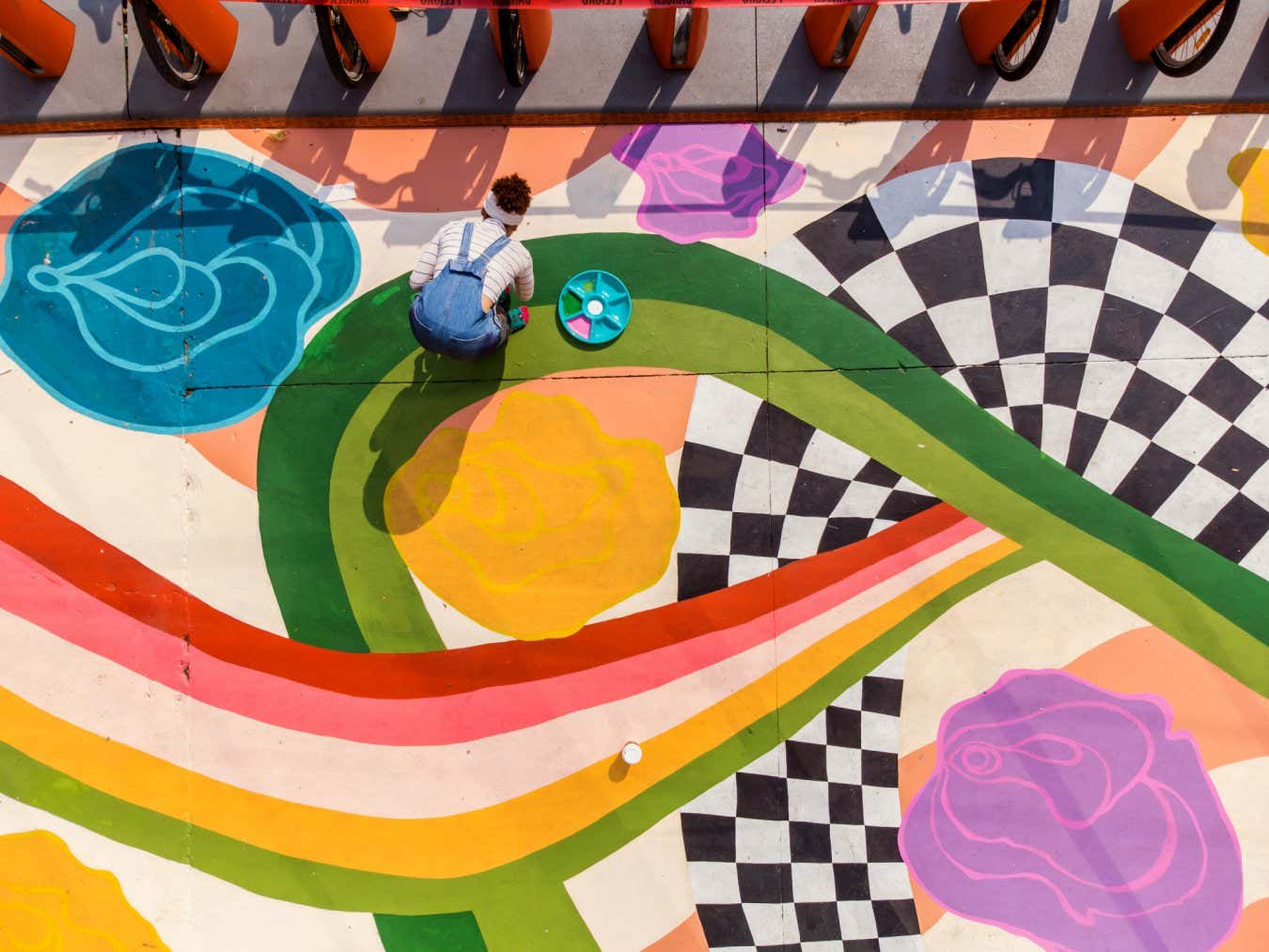
FOTOGRAFIA INC./Getty Images
Cut your sugar, get some exercise, stop smoking, eat your vegetables, take supplements, don’t stress, sleep well. Every day, we are bombarded with information about how to live longer, healthier, happier lives. But there is one crucial piece of health advice I bet you have never been given. It’s probably the most enjoyable health tip you could be told, but the data supporting it has – to date – remained a bizarrely well-kept secret: engage in the arts.
Over the past few decades, evidence has been accumulating to suggest that being more creative works wonders for our health. Programmes being developed around the world are starting to integrate the arts into healthcare, with astonishing results, from music in surgery reducing the amount of sedatives, opioids and anti-anxiety meds needed, to dance programmes helping people with Parkinson’s disease to walk.
But the arts aren’t just there for us when we are sick. Crafts, singing, theatre, dance, reading, writing and drawing are inherently good for us as part of our day-to-day lives, even if thoughts about our health are far from our minds. In my forthcoming book, Art Cure, I argue that they are a “health behaviour” akin to exercise, diet and sleep. Here’s why, and how, you should get more art into your life in 2026.
As an epidemiologist, I spend my days looking at data from cohort studies – massive datasets that contain thousands of individuals who have completed questionnaires, had nurse interviews, donated blood samples and undergone brain imaging every few years of their lives. Many of these studies in countries around the world contain buried questions on arts engagement. Using complex statistical methods, we can look at the long-term relationship between everyday arts engagement and dozens of health outcomes.
The results are remarkable. People who participate more frequently in the arts, watch artistic performances and visit cultural venues are happier and feel more satisfied with their lives over the years and decades that follow. Children who engage more with the arts have a reduced risk of developing problems like depression by the onset of adolescence. Among adults over the age of 50, those who regularly go to live music events, the theatre or museums and exhibitions have nearly half the risk of developing depression over the next few years.
You might be wondering if this isn’t about the arts at all. What if people who are creatively engaged are wealthier, healthier or also busy engaging in other health behaviours that might, in fact, be responsible for these effects? The statistics underpinning these analyses are sophisticated – we can not only take account of potential confounding factors like these, but also consider other factors like genetics, family environment and childhood experiences, and the results still hold.
The benefits aren’t just psychological either. Toddlers who engage in music activities have increased prosocial skills as they head into primary school. Adolescents who are involved in bands, dance and editing school newspapers are less likely to get involved in antisocial behaviours or crime. And older adults who go to cultural events have a 32 per cent lower likelihood of being lonely 10 years later.

Live events can be a great way to get more creativity into your life
Sean Gardner/Getty Images
The results are particularly strong as we age. Looking at data from nearly 100,000 people across 16 different countries, my team and I at University College London have found that having hobbies – things like gardening, baking, needlework and journalling – is related to higher self-reported health as we get older. Better balance, reduced pain levels, better sleep, longer preservation of cognition, reduced frailty, even a reduced risk of certain diseases like diabetes – the benefits accumulate the more we engage. And, notably, many of these studies have compared arts with better-known health behaviours like physical activity and found that the effect sizes are surprisingly similar. In fact, multiple studies have now found that people who spend more time reading books, making music, dancing and attending artistic events actually live longer than people who don’t engage with the arts.
How are all these incredible effects happening? There are psychological, social and behavioural mechanisms at play. But, personally, the mechanisms I find most exciting are the biological ones. Increasing numbers of studies show that people who regularly engage in the arts have lower blood pressure and heart rate, lower cholesterol, reduced inflammatory markers, better regulation of immune function and lower body-mass index.
In the past few years, major developments in the calculation of biological clocks – which compare if our bodies are ageing faster or slower than our chronological age – have enabled scientists to consider how health behaviours influence our “pace” of ageing. And various studies that combine data from our cardiovascular, respiratory, circulatory and musculoskeletal systems and even patterns of our gene expression suggest that regularly engaging in the arts could even help you to stay biologically younger. People who dance, make music and paint have brains that appear younger in age.
I want to be clear: I am not suggesting the arts are any kind of panacea. Arts can be inaccessible to people because of cost, and there are a whole host of myths about purported health benefits, from the improbable to the downright ridiculous. But the evidence remains that engaging regularly in creative activities that you enjoy is an investment in your health that is worth making this year. And doing so would be an altruistic act too – economists working with the UK government have estimated that the health benefits of arts engagement in the UK are worth over £18.6 billion each year to society.
“
Screen-based arts activities tend to be the ultra-processed foods of the arts world
“
So how can we all increase our arts consumption in 2026? It’s a question I come back to across every chapter of Art Cure, giving a “daily dose” of recommendations for how you can use the arts to achieve your health goals. Overall, my advice is to think about the arts as you think about food. Avoid the temptation to go out and binge on arts – in the same way that crash dieting doesn’t work, you aren’t going to experience long-term benefits from short-term engagement that then fizzles out. Instead, try to figure out what your arts equivalent of “five-a-day” fruit and veg is. Maybe that’s just 10 minutes of creative writing before you start work each day or putting aside 15 minutes for a crafts activity each evening. Make easy creative substitutions – swap a date-night dinner for a gig, a gym session for a dance class and reading the news on the train for reading a book of poetry.
Mix up your ingredients, too. Diversity of arts experiences is actually just as important as frequency of engagement. Each creative encounter brings different sensory treats for our brains and bodies that have their own health benefits. Experiment with new flavours of creative experience, heading for “moderate novelty” – something that is outside your comfort zone, but still something you think you will enjoy. Make your engagement real life, not virtual – screen-based arts activities tend to be the ultra-processed foods of the arts world.
Most of all, be a mindful chef. In our busy lives, it’s easy to want to distil the arts down to a pill that we can just pop and then forget about. But the very beauty of the arts is that they aren’t a pill. They are one of the most diverse, complex and personal behaviours we can engage in, one of the crowning glories of our species’ evolution. So we should all give the arts the time in our lives they deserve. And we should revel in our engagement – allow art to make us feel exhilarated, intoxicated, elated. Because it is fundamentally, measurably good for us.
This article is part of a series on easy changes you can make for better health in the new year.
Read the rest here
Topics:
[ad_2]
Source link