Dinosaur bones found almost on top of each other in Transylvania
[ad_1] The Hațeg Basin in Transylvania has long been known around the world for its dinosaur fossils, uncovered at
[ad_1]
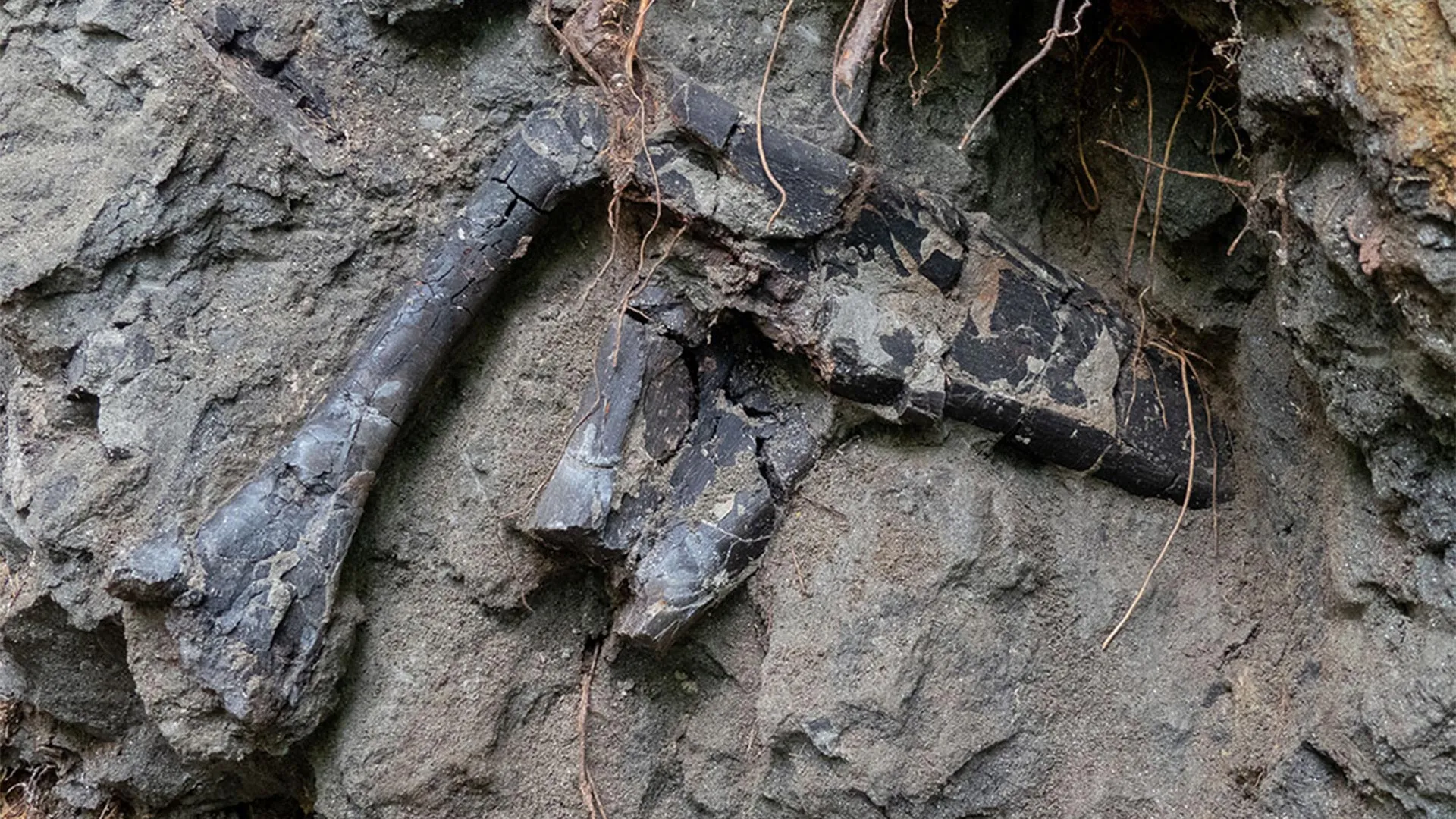
The Hațeg Basin in Transylvania has long been known around the world for its dinosaur fossils, uncovered at dozens of sites over the last hundred years. Even so, complete dinosaur discoveries are usually uncommon across the region. That pattern changed with the identification of a newly studied site where scientists documented more than 100 vertebrate fossils per square meter, including large dinosaur bones lying almost directly on top of one another.
Years of Fieldwork Lead to an Exceptional Fossil Find
For more than five years, the Valiora Dinosaur Research Group, made up of Hungarian and Romanian paleontologists, has been carrying out fieldwork in the western Hațeg Basin. The rocks examined there date back to the Upper Cretaceous and capture the final few million years before dinosaurs disappeared. Excavations have revealed fossil-rich deposits containing thousands of remains from amphibians, turtles, crocodiles, dinosaurs, pterosaurs, and mammals.
Among all the sites explored, one location known as K2 stands out. From an area measuring less than five square meters, researchers recovered more than 800 vertebrate fossils, making it the richest site documented so far. The full scientific analysis of this discovery was recently published in the journal PLOS ONE.
A Defining Moment in the Field
“In 2019, during our first field survey in the Hațeg Basin, we almost immediately came across the K2 site. It was a defining moment for us — we instantly noticed dozens of large, exceptionally well-preserved black dinosaur bones gleaming in the grey clay layers exposed in the streambed. We immediately began our work, and through several years of excavation we collected an extraordinarily rich vertebrate assemblage from the site,” explained Gábor Botfalvai, assistant professor at the Department of Paleontology, Eötvös Loránd University, and leader of the research group.
How Ancient Floods Created a Bone-Rich Landscape
About 72 million years ago, the region that is now the Hațeg Basin experienced a warm, subtropical climate shaped by temporary river systems. These rivers flowed from higher terrain toward the basin and frequently spilled over their banks during heavy rainfall. As floodwaters surged downstream, they gathered animal carcasses from the surface, along with living creatures and skeletal remains caught in their path.
“Detailed study of the rocks at the K2 site indicates that a small lake once existed here, which was periodically fed by flash floods carrying animal carcasses. As the flow of the rivers slowed rapidly upon entering the lake, the transported bodies accumulated in the deltaic environment along the shore, producing this exceptionally high bone concentration,” said Soma Budai, researcher at the University of Pavia and co-author of the publication.
Rare Dinosaur Skeletons Reveal New Scientific Insights
The K2 site produced far more than scattered bones. Researchers also identified several partial dinosaur skeletons that remained associated with one another. These fossils represent two separate plant-eating dinosaur species. One group belongs to a roughly two-meter-long dinosaur from the Rhabdodontidae family, a species commonly found in the Hațeg Basin that likely moved mainly on two legs.
The second group of skeletons marks a major breakthrough. These remains belong to a titanosaurian sauropod, a long-necked dinosaur for which no comparably well-preserved skeletons had ever been discovered in Transylvania. Ongoing analysis of these fossils is expected to improve scientists’ understanding of how this dinosaur fits into the broader evolutionary family tree.
The Oldest Known Vertebrate Accumulation in the Basin
“Besides the remarkably high bone concentration, another key significance of this newly described site is that it represents the oldest known vertebrate accumulation in the Hațeg Basin. Studying this fossil assemblage allows us to look into the earliest composition of the Hațeg dinosaur fauna and trace the evolutionary directions and processes leading toward the dinosaurs known from younger Transylvanian sites — revealing how these Late Cretaceous ecosystems were similar or different from one another,” added Zoltán Csiki-Sava, associate professor at the University of Bucharest and Romanian leader of the research team.
Reconstructing Dinosaur Life in Ancient Europe
The fossils described in this study, together with discoveries still emerging from ongoing excavations in the Hațeg Basin, are helping scientists refine their understanding of how dinosaur communities evolved across (Eastern) Europe during the Late Cretaceous. These finds provide valuable clues about how ancient ecosystems formed, changed, and responded to environmental forces near the end of the age of dinosaurs.
The research was supported by the National Research, Development and Innovation Office of Hungary (NKFIH), the Supervisory Authority for Regulatory Affairs of Hungary, the Romanian Ministry of Research, Innovation and Digitalization, and the University of Bucharest.
[ad_2]
Source link