Ancient oceans were ruled by super predators unlike anything today
[ad_1] Around 130 million years ago, the ocean’s most dominant hunters held far more power than any marine predator
[ad_1]
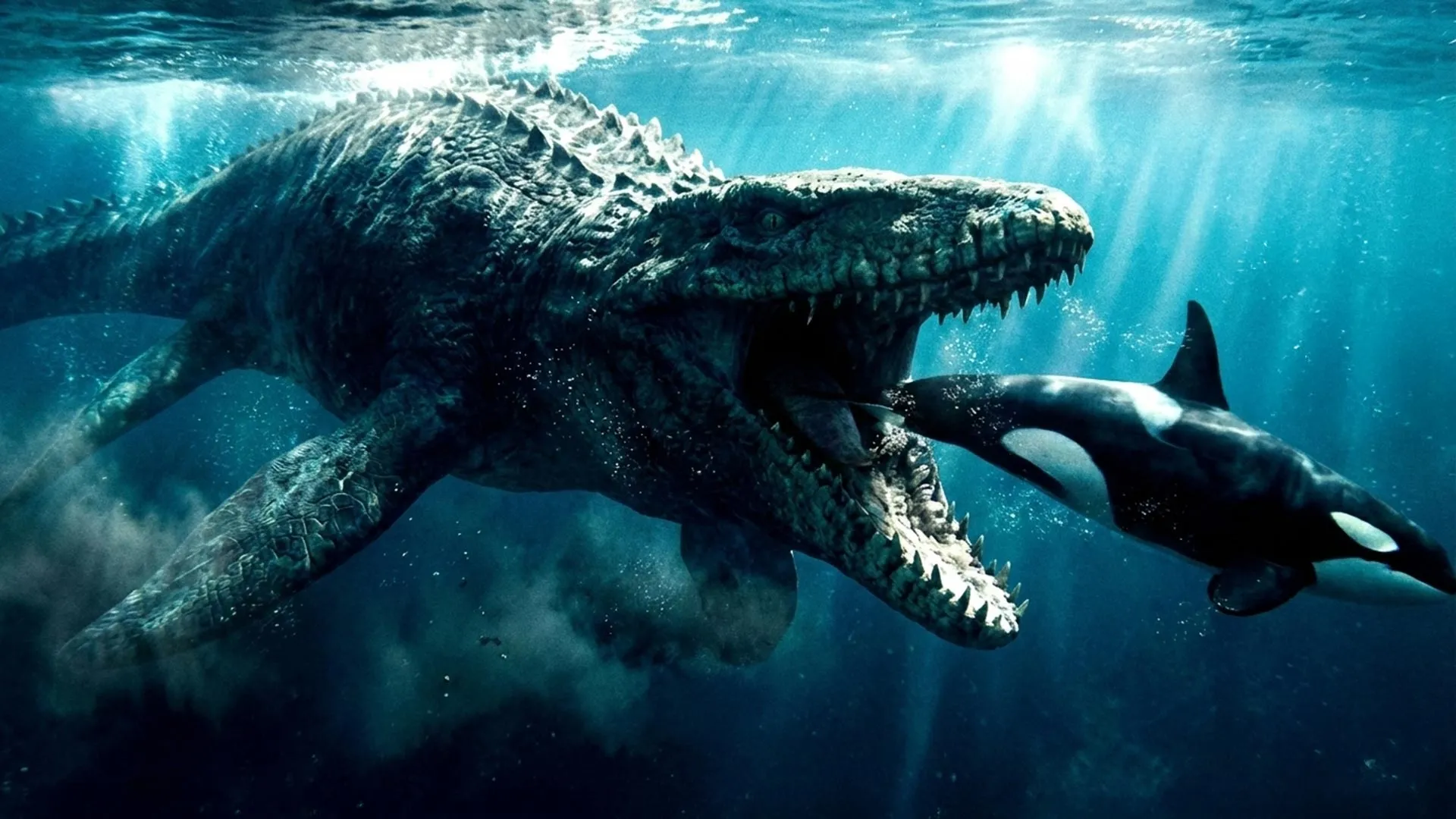
Around 130 million years ago, the ocean’s most dominant hunters held far more power than any marine predator alive today. Recent research from McGill University reveals that during the Cretaceous period, some sea creatures sat at the very top of an extraordinarily complex food chain, surpassing modern standards of ecological dominance.
The findings come from a study published in the Zoological Journal of the Linnean Society, which reconstructs the ancient marine ecosystem preserved in Colombia’s Paja Formation. According to the research, this prehistoric sea was filled with enormous marine reptiles, some growing longer than 10 meters, that occupied a previously unseen seventh level of the food chain.
What Trophic Levels Reveal About Food Chains
Trophic levels describe an organism’s position in a food chain based on how it gets energy and nutrients. Put simply, they explain who eats whom within an ecosystem. In today’s oceans, food chains typically reach only six levels, with animals such as killer whales and great white sharks sitting at the top.
The discovery of predators operating at a seventh trophic level highlights just how rich and complex the Paja ecosystem once was. It also offers rare insight into a deep evolutionary struggle, where predators and prey continuously adapted in response to one another.
Reconstructing a Lost Marine Ecosystem
To uncover this ancient food web, McGill researchers analyzed all known animal fossils from a single geological formation in central Colombia. They built a detailed ecological network using fossil body sizes, feeding traits, and comparisons with modern animals that fill similar roles today.
To ensure accuracy, the team compared their reconstructed network with one of the most comprehensive modern marine ecosystem models available, based on living Caribbean environments. This allowed them to test whether their ancient model behaved realistically when measured against present-day ocean systems.
A Time of Explosive Marine Diversity
The Paja Formation dates back to the Mesozoic era, a time that included the Cretaceous period and was shaped by rising sea levels and warmer global temperatures. These conditions fueled a surge in marine biodiversity. The region supported plesiosaurs, ichthyosaurs, and large numbers of invertebrates, creating one of the most intricate marine food webs ever identified.
“Our study is the first to examine these possible ecological interactions,” said Dirley Cortés, lead author and doctoral student in the Department of Biology. “Understanding this complexity helps us trace how ecosystems evolve over time, shedding light on the structures that support today’s biodiversity.”
“These findings illuminate how marine ecosystems developed through intense trophic competition and shaped the diversity we see today,” added Hans Larsson, co-author of the study and Professor in the Department of Biology.
Why This Discovery Matters
The researchers note that this work marks only an early step in understanding ancient marine ecosystems. Very few fossil sites have been studied in enough detail to rebuild entire food webs. As more discoveries emerge, scientists will be able to compare ecosystems across different regions and time periods, deepening knowledge of how ancient oceans influenced the modern seas we depend on today.
“Top of the food chains: an ecological network of the marine Paja Formation biota from the Early Cretaceous of Colombia reveals the highest trophic levels ever estimated” by Dirley Cortés and Hans Larsson, was published in the Zoological Journal of the Linnean Society.
The research was supported by funding from the McGill-STRI Neotropical Environment Option (NEO) and the Natural Sciences and Engineering Research Council of Canada (NSERC).
[ad_2]
Source link