
A flesh-eating fly once eradicated is moving back toward the U.S.
[ad_1] When the New World screwworm last spread across the United States, it caused widespread damage to livestock and
[ad_1]
When the New World screwworm last spread across the United States, it caused widespread damage to livestock and took decades to eliminate. That history is now driving a new effort by researchers at the University of California Riverside, who are working to stop the parasitic fly before it can reestablish itself.
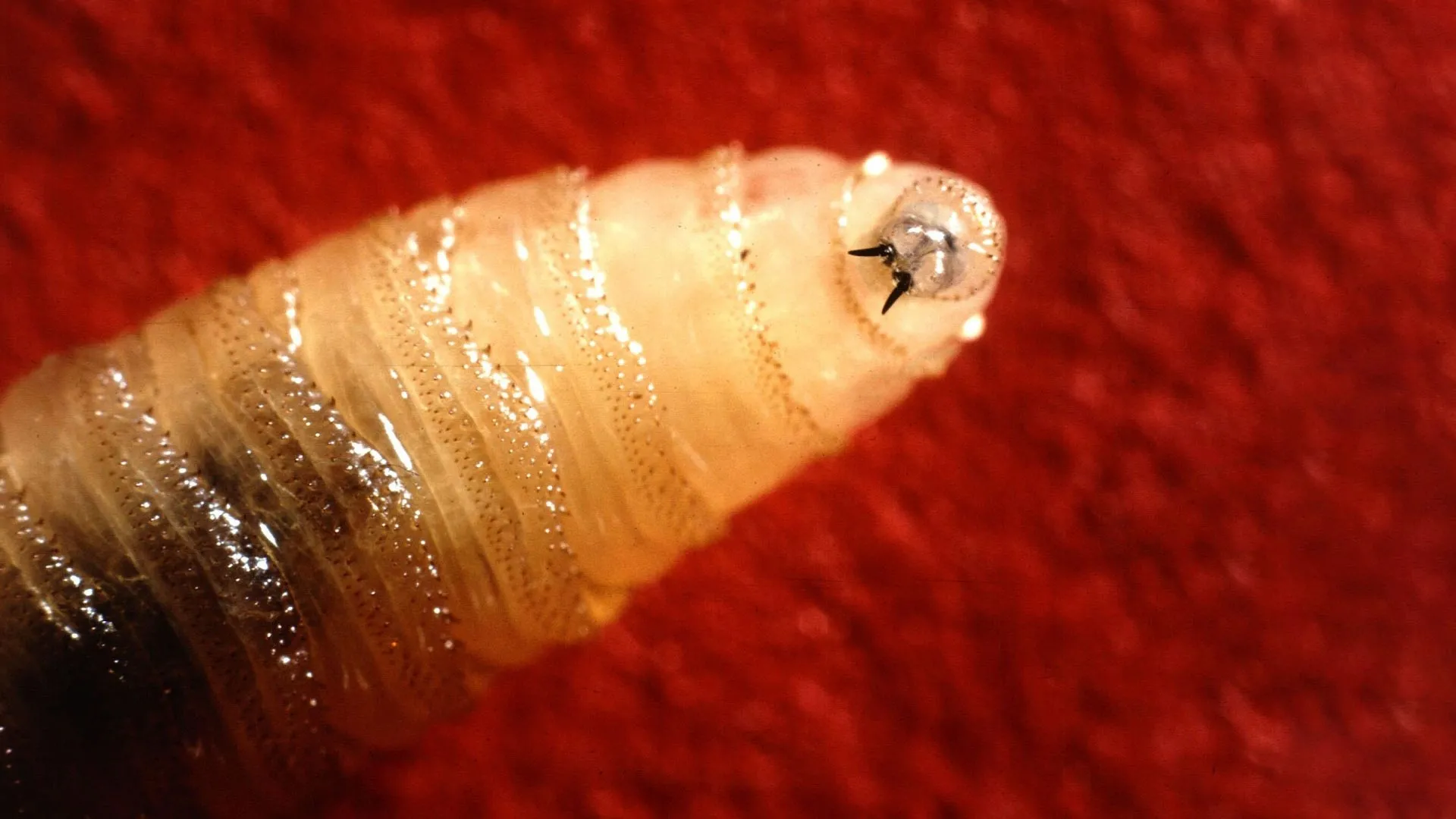
Despite its name, the New World screwworm is not a worm. It is the larval, or maggot, stage of a metallic-looking blowfly known as Cochliomyia hominivorax. Most blowflies are harmless and play an important role by breaking down dead animals. This species is different because it feeds on living tissue.
“Not all blowflies are this species. We don’t have to be afraid of all flies,” said Amy Murillo, UCR assistant professor of entomology and principal investigator of the project. “But this particular species isn’t one we want here.”
Monitoring California for Early Warning Signs
Backed by $507,000 from the California Department of Food and Agriculture, UCR entomologists are launching a statewide monitoring program to detect any early signs of the fly’s return. The screwworm lays its eggs in open wounds on warm-blooded animals, including humans. Once the eggs hatch, the maggots burrow into flesh in a corkscrew motion, which is how the insect got its name.
The New World screwworm was once common across California and much of the southern United States. About 60 years ago, it was successfully wiped out using a large-scale program that released millions of sterile male flies. Because female screwworms mate only once, the strategy caused the population to collapse. That effort pushed the species south to Panama, where the U.S. Department of Agriculture has maintained a protective barrier ever since.
A Growing Threat to the North
In recent years, the screwworm has started appearing again in parts of Central America and southern Mexico. Experts believe the resurgence is linked to the movement of infested animals, often transported by people who unknowingly help the pest spread.
“It hasn’t been found in California yet, but it’s within 70 miles of the Texas border,” Murillo said. “We need to be prepared.”
Traps, Lures, and Early Detection
Murillo is working with Alec Gerry, a UCR veterinary entomology professor and CE Specialist, to deploy traps across California. These traps use a lure developed by the USDA that mimics the smell of rotting flesh. While many blowfly species are attracted to it, the lure is also effective at drawing in the New World screwworm. Researchers will regularly check the traps for any sign that the invasive fly has crossed into the state.
The project also includes an outreach effort aimed at veterinarians, livestock handlers, and entomologists. These groups are the most likely to encounter screwworm infestations early, and catching an outbreak quickly is key to stopping it from spreading.
Why Livestock Face the Greatest Risk
Screwworms pose a serious threat to farm animals, especially those with common injuries from barbed wire, birthing, or procedures such as dehorning. Without treatment, infestations can quickly worsen as flies lay more eggs, enlarging wounds and sometimes leading to death.
California’s dairy and cattle industries are particularly vulnerable. “Most people think of citrus or avocados as being our top exports, but it’s actually dairy that leads our agricultural economy,” Murillo said.
Public Awareness as a Line of Defense
Even though the fly has not been detected in California, researchers say public awareness is an important part of prevention. “Not all blowflies are harmful, and many are beneficial,” Murillo said. “But if you notice something unusual on your pet or livestock, reach out to a vet. Don’t ignore it.”
If an outbreak were to happen again, Murillo said the same sterile insect technique used in the past would still be the most effective tool for stopping it.
Rare but Possible Human Infections
Although screwworms primarily target animals, humans can also be affected under certain conditions, particularly when open wounds go untreated. Infections have been documented in people who traveled to regions where the fly is active. Even so, livestock remain the primary concern.
“They need an opening in the flesh, and it doesn’t have to be large. They don’t make wounds, but they do exploit them,” Murillo said.
Staying Alert Without Panic
Murillo emphasized that the goal is preparedness, not fear.
“You don’t have to worry that they’re going to start eating your flesh,” Murillo said. “But we do hope that this project will help people to be more vigilant in recognizing and preventing screwworm infestations in animals should they return to California.”
[ad_2]
Source link