Belgium doubles down on drone defenses following mystery flights
[ad_1] MILAN — Belgium has embarked on a major acquisition push to accelerate the procurement of counter-drone systems, including
[ad_1]

MILAN — Belgium has embarked on a major acquisition push to accelerate the procurement of counter-drone systems, including surveillance radars and drone guns.
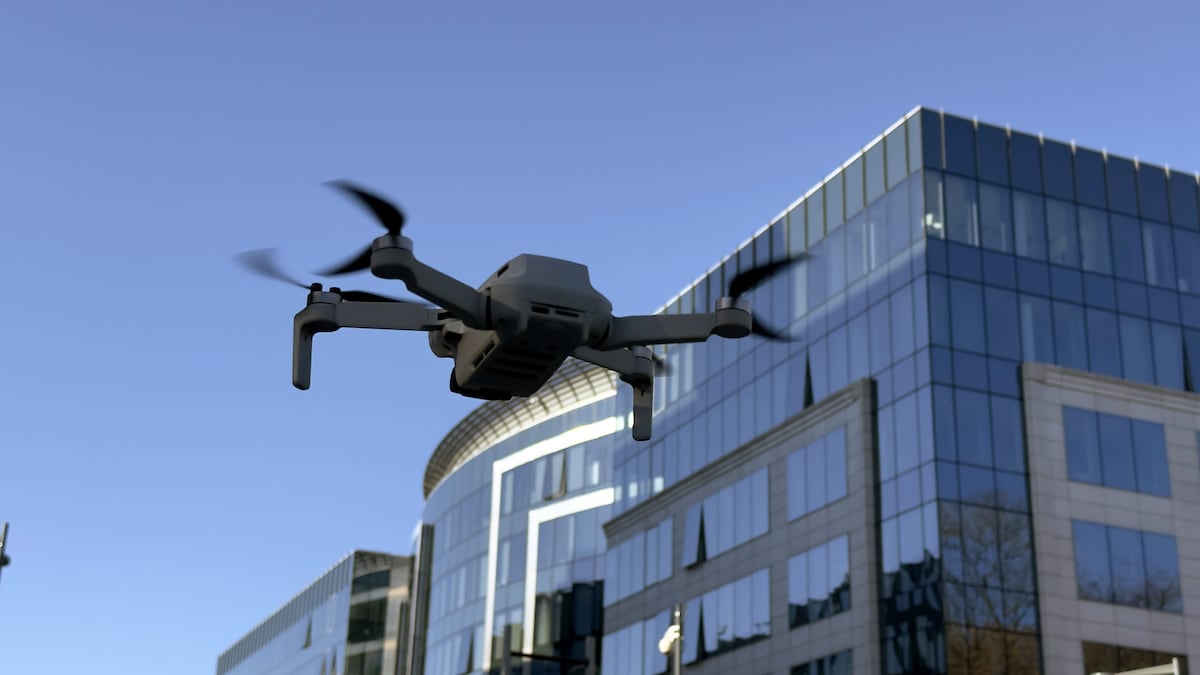
The ramp-up is part of the country’s €50 million ($59 million) anti-drone plan following a recent surge in illegal drone overflights near or above airports, military bases, and nuclear-weapons storage sites.
Belgian defense minister Theo Francken announced two contracts this week: one for Saab’s Giraffe 1X surveillance radar and one for portable drone jammers from Australian manufacturer DroneShield.
An undisclosed amount of the Swedish-made Giraffe 1X radar was purchased as part of a contract valued at €9.2 million. The system operates by tracking aerial targets and feeding target data to air-defense systems.
According to the contract information, the radars are to be located in the Halle-Vilvoorde district surrounding the capital Brussels.
Belgium also concluded a €2.8 million deal with Droneshield for handheld drone guns that can detect and jam hostile unmanned aerial systems using artificial intelligence. The guns are also in service in Ukraine.
Francken said the country will receive its first National Advanced Surface-to-Air Missile System from Norway in the second half of 2027. Belgium plans to acquire ten of these systems from manufacturer Kongsberg together with the Netherlands.
Data published by EuroNews’ The Cube, a fact-checking program based on publicly available reports of drone-related interference at European airports, cases quadrupled between January 2024 to November 2025. The analysis concludes that the most affected country during this time was Belgium.
Many of the European countries that have experienced drone intrusions over the last few months have subsequently been criticized for their security shortfalls.
In a recent interview with Defense News, the chief executive of the Danish defense firm Terma, Henriette H. Thygesen, said that one of the gaps in the response to the incidents was the slow speed in verifying that a given threat is, in fact, a drone
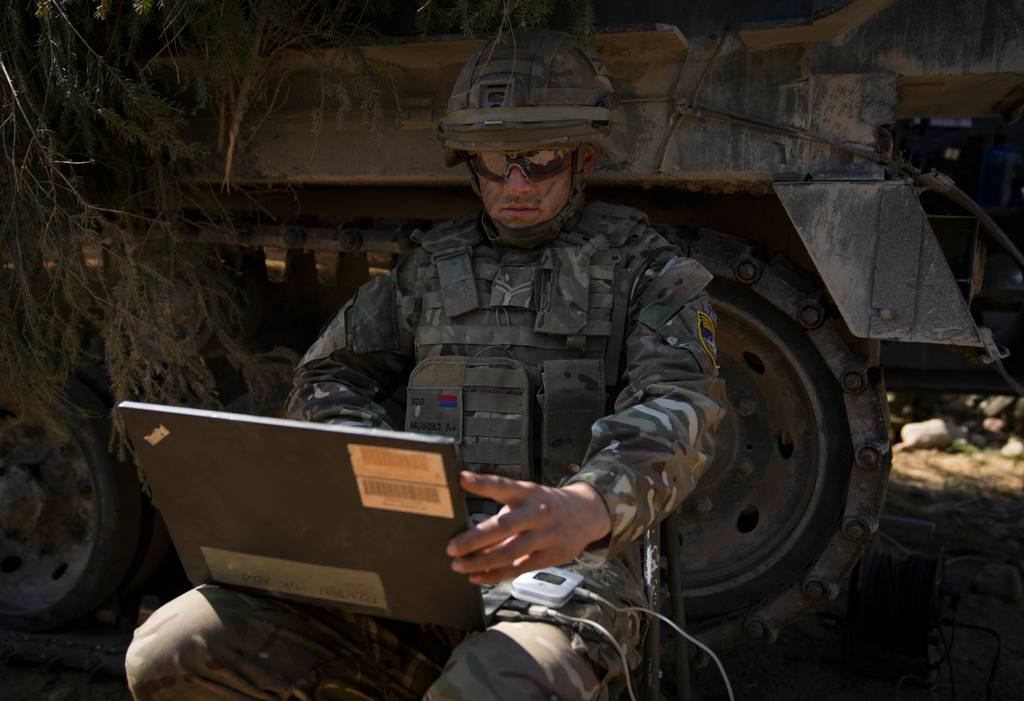
NATO and allied countries are testing counter-drone technologies in field trials such as the U.S.-led Project Flytrap 4.5 series, which is designed to assess scalable defensive systems for rapid procurement and integration into broader air defense frameworks.
A two-week event held last month in Germany brought together troops, procurement teams and industry representatives to evaluate candidate systems against simulated drone threats, including a live-fire engagement.
Citing a classified internal security report, German newspaper Bild has reported that since the beginning of this year there have been 1,955 unidentified drone flights recorded, often over or near military and NATO facilities, in Germany alone.
Elisabeth Gosselin-Malo is a Europe correspondent for Defense News. She covers a wide range of topics related to military procurement and international security, and specializes in reporting on the aviation sector. She is based in Milan, Italy.
[ad_2]
Source link