



750-year-old Indian poems reveal a landscape scientists got wrong
In the oldest known writing in Marathi, a language spoken by millions in western and central India, a 13th-century
In the oldest known writing in Marathi, a language spoken by millions in western and central India, a 13th-century religious leader named Cakradhara points to an acacia tree as a symbol of death and rebirth. While his words were meant to convey spiritual meaning, they have taken on new significance centuries later.
Researchers now say that writings like these can help explain the long history of India’s landscapes. Ancient stories, poems, and songs may hold clues to how vast savannas and grasslands formed and endured across the region.
Rethinking the History of Grasslands
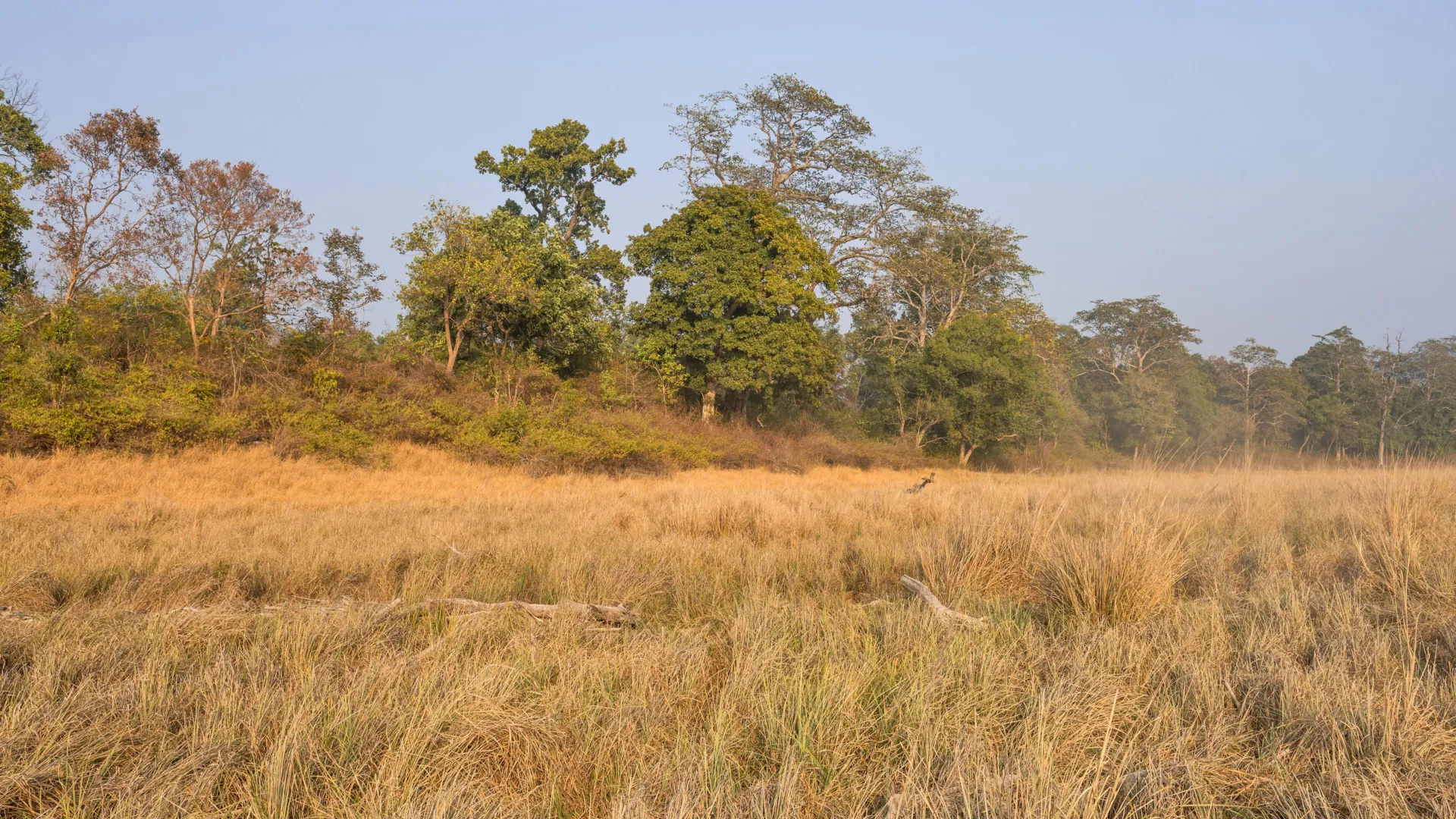
Savannas and grasslands cover nearly 10% of India and more than one third of Earth’s land surface. For decades, many scientists and policymakers assumed these open areas were once forests that had been cleared or degraded by human activity. That belief has shaped conservation strategies, including large-scale tree planting.
New research suggests a different story. Evidence from historical literature indicates that tropical grasslands are not ruined forests at all, but long-standing ecosystems in their own right. This distinction matters when deciding where reforestation efforts should focus.
Using Stories as Scientific Evidence
In a study published in the British Ecological Society journal People and Nature, scientists examined references to plants in historical narratives set in western India. Their goal was to reconstruct what kinds of vegetation existed there in the past.
“The take-home for me is how little things have changed,” said study author Ashish Nerlekar of Michigan State University. “It’s fascinating that something hundreds of years old could so closely match what is around today and contrast so much with what people romanticize the past landscape to be.”
The idea emerged during casual conversations between researchers from different fields. Digvijay Patil, a PhD student in archeology at the Indian Institute of Science Education and Research in Pune, noticed repeated mentions of unusual plants while studying Sanskrit and Marathi texts related to sacred sites. Nerlekar, a plant scientist, recognized many of those plants as species still common in today’s savannas.
Mapping Plants From Folk Songs and Poems
The research team began reviewing folk songs, poems, and myths written or performed in Marathi, some dating back to the 13th century. Much of this material is not stored in modern databases, making it an untapped source of ecological information.
Many of the works are set in Maharashtra, where roughly 37,485 square kilometers are now open grasslands. That area is about two thirds the size of Lake Michigan.
“These areas are frequently misunderstood,” said Nerlekar, a postdoctoral fellow in MSU’s Ecology, Evolution, and Behavior Program.
Challenging the “Wasteland” Label
In both public perception and official policy, savannas in India and elsewhere have often been labeled “wastelands.” They are commonly viewed as damaged forests and targeted for tree planting projects aimed at capturing carbon dioxide and slowing climate change.
The historical evidence tells a different story. The researchers identified references to 44 wild plant species in ancient texts, nearly two thirds of which are typical of savanna ecosystems.
One example appears in the epic poem “Adi Parva,” dated to about the 16th century. The text describes cowherders drawn to the “empty” and “thorny” Nira River valley because of its rich grass. Another account describes a taraṭī tree, known to scientists as Capparis divaricata, growing from the grave of a 15th-century poet-saint at the pilgrimage site of Pandharpur.
The acacia tree mentioned by Cakradhara also appears repeatedly. The team found eight references to this thorny species, known as Vachellia leucophloea, which has feathery leaves, pale yellow bark, and white flowers.
“It’s a pretty iconic tree in the region, and it was common at that time also,” Nerlekar said.
A Landscape With Deep Roots
Together, these historical accounts suggest that India’s savannas have existed for at least 750 years. They were already established long before widespread deforestation during British rule.
Other scientific evidence points to an even deeper history. Fossil pollen and remains of grass-eating animals such as hippos indicate that savanna plants dominated the region tens of thousands of years ago, rather than dense forests.
Why Savannas Matter Today
Preserving savannas and grasslands is important for many reasons, Nerlekar said. In India alone, these ecosystems support more than 200 plant species found nowhere else on Earth. Many were only recently identified by scientists and face growing threats from farming and development.
“A lot of savanna biodiversity is also sacred, which means they have cultural value in addition to ecological value,” Nerlekar said.
Savannas also help store carbon by absorbing carbon dioxide that would otherwise remain in the atmosphere. Across Asia, Africa, Australia, and South America, they provide grazing land for hundreds of millions of cattle, sheep, and other livestock.
About 20% of the world’s population depends on savannas and grasslands for their livelihoods. Researchers warn that these benefits could be lost if climate solutions involve planting trees in places where forests never existed.
“These centuries-old stories provide us a rare glimpse into the past, and that the past was a savanna past, not a forested past,” Nerlekar said.
This research was supported by grants from Michigan State University and IISER Pune.